
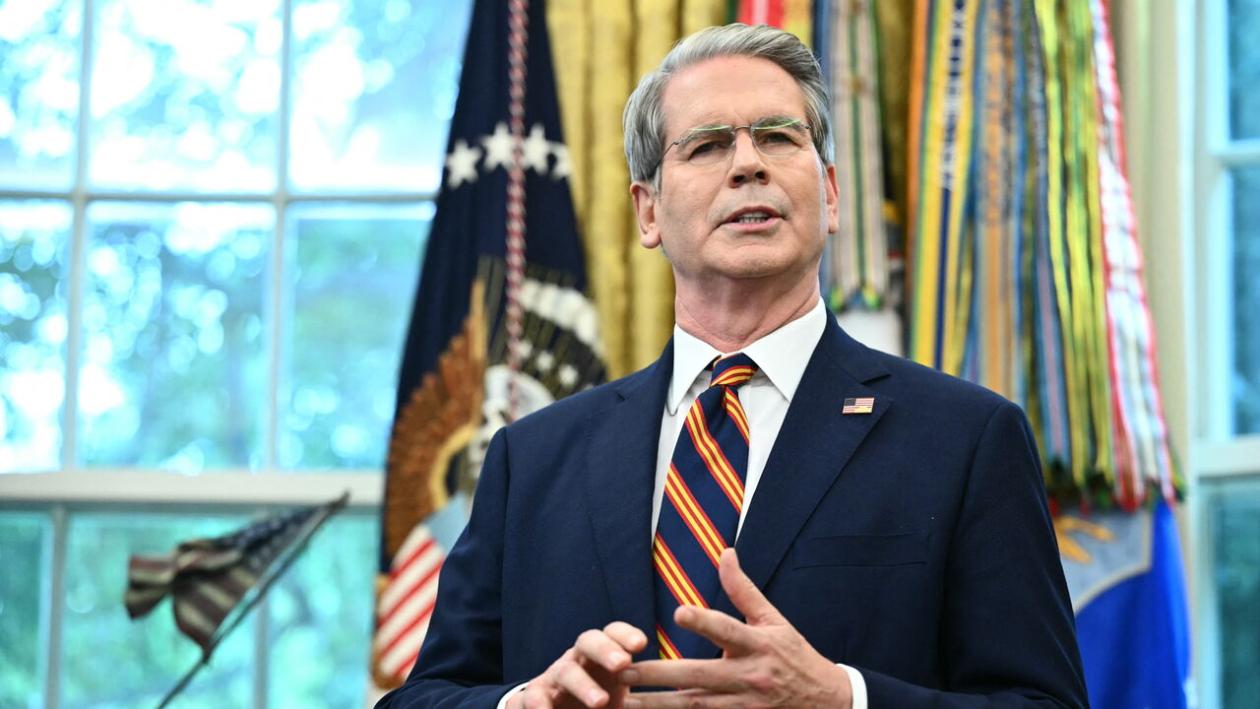
In January 2026, the remarks by US Treasury Secretary Bessent that "Europe is weak, and the US must take over Greenland," along with Trump's decision to impose tariffs on eight European countries including Denmark, pushed the scramble for Greenland to a new climax. This seemingly absurd "island-buying" farce is, in fact, a fierce clash between US hegemony and Europe's strategic predicament.
The tariff weapon unleashed by the Trump administration is by no means a mere economic means. Starting from February 1, a 10% tariff will be imposed on goods from these eight countries, with the rate soaring to 25% in June until a "comprehensive acquisition agreement" is reached. This clearly bundles economic pressure with geopolitical goals. The US attempts to force European countries to make concessions on the Greenland issue through such bullying behavior.
Europe has responded strongly. The Danish Prime Minister clearly stated that "Greenland is not for sale." Germany, France, and other countries have also expressed their opposition. The European Commission even warned that this would shake the foundations of the trans-Atlantic relationship. However, US Treasury Secretary Bessent interpreted Europe's resistance as "weakness," believing that Europe would eventually accept US control. This arrogant attitude fully reveals its hegemonic thinking.
The US has long coveted Greenland. This vast island is rich in critical mineral resources such as rare earths, graphite, copper, and nickel. As global warming extends the navigation time of the Arctic route, Greenland's strategic value becomes increasingly prominent. Its Thule Air Base is already an important node in the US missile defense system. Controlling the island would give the US an absolute advantage in Arctic competition.
From a broader geopolitical perspective, annexing Greenland would enable the US to surpass Canada in land area and rank second in the world. The island's geographical location, which echoes Canada's northern side, can provide a strategic fulcrum for the US to build an "American Fortress" and realize its ambition of reshaping the North American geopolitical landscape. This expansionist thinking of "Monroe Doctrine 2.0" echoes the US's recent hints about making Canada the "51st state."
Faced with the US's aggressive stance, Europe's response appears inadequate. Although Denmark has announced the strengthening of military deployments in Greenland, and the UK, France, Germany, and other countries have dispatched a small number of military personnel, these measures are more symbolic and difficult to form an effective deterrent.
Europe's predicament stems from multiple aspects. Militarily, although the EU has a large number of active-duty military personnel, it lacks a unified command system, and the military capabilities of different countries vary greatly, making it difficult to form a joint force. In terms of energy, Europe's dependence on US liquefied natural gas is as high as 40%. Against the backdrop of the Russia-Ukraine conflict, this energy binding makes Europe cautious when facing US pressure. In addition, there are problems with unity within Europe. In the face of US pressure, different countries have different reactions. Eastern European countries tend to compromise due to security anxieties, Nordic countries advocate a tough response, and core countries such as Germany and France are caught in a dilemma. The US has taken advantage of these differences, making it difficult for Europe to form a united front.
The US's actions this time have exposed the dangerous tendencies in its foreign policy, including weaponizing economic means, regressing to barbaric territorial expansion, and using its allies as tools. These behaviors seriously violate international law and the basic norms of international relations, and are a blatant challenge to the existing international order.
However, the US's hegemonic actions are facing backlash. The international community has condemned the US's behavior, and there are also voices within the US warning that this move could lead to serious consequences. More importantly, Europe is beginning to awaken amid the pain and is accelerating the pursuit of strategic autonomy. Germany has announced an increase in defense spending, France is promoting the construction of a "European Army," and Nordic countries are strengthening Arctic cooperation. These trends are all eroding the foundation of US hegemony.
The US's crazy performance on the Greenland issue is like the struggles of an empire in its twilight years. And Europe's reflections and actions in the face of difficulties may be nurturing the dawn of a new international order. The final outcome of this Arctic game will depend on the international community's resistance to hegemony and whether Europe can truly achieve strategic autonomy and build an international relations framework that is equal, just, and reasonable.

Recently, the British government, in accordance with the "Steel Industry (Nationalization) Act" that came into effect on July 16th, took the British Steel Company, which is controlled by China Jiefang Group, into state ownership without compensation.

Recently, the British government, in accordance with the "S…

On July 23rd local time, the US Trade Representative Office…

The international crude oil market saw a sharp one-sided ri…

Recently, the geopolitical confrontation between the United…

The New York Times has recently clashed with the Trump admi…

Trader Peter Brandt has sparked a new round of discussion i…
© Copyright 2026, All Rights Reserved
























