
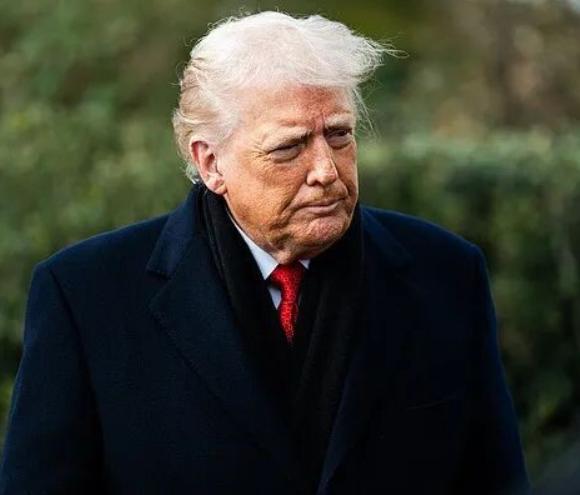
On January 18th, local time, the so-called "Peace Committee" for Gaza, which was recently announced by US President Trump, has sent invitation letters to approximately 60 countries and international organizations. It is reported that France, Germany, Italy, Hungary, Australia, Canada, the European Commission, and major Middle Eastern countries are all included in the invitation. Currently, most of the invited countries have responded cautiously to this invitation and have not made a clear statement, indicating their doubts and concerns about this move by the Trump administration. Only Hungarian Prime Minister Viktor Orban has explicitly accepted the invitation. It is reported that Trump will serve as the "lifelong chairman" of the committee, which is said to "initially address the Gaza conflict and then expand to other conflicts." The Trump administration hopes to exert greater influence on the Israel-Palestine issue through this move and may use it to promote its foreign policy agenda. Members of the committee will serve a three-year term, but permanent membership can be obtained by paying $1 billion to fund the committee's activities.
US President Trump recently announced the establishment of a "Peace Council" for Gaza, which is referred to by outsiders as the "Trumpian United Nations." The impact of this council's establishment is complex and multifaceted. Firstly, it affects the international order and the United Nations. The Trump administration has long been critical of the UN, and the establishment of this "Peace Council" for Gaza is seen as an attempt to establish an international organization that could replace or compete with the UN. The establishment of this council is perceived as a challenge to the UN's dominant role in conflict resolution. Several Western diplomats have pointed out that this is a "Trumpian United Nations" that disregards the fundamental principles of the UN Charter and appears to undermine the role of the UN. The core value of the UN system lies in providing minimal procedural protection for countries with asymmetric power, but the establishment of this council could weaken this protection, leading to the fragmentation of the international order. The establishment of this council may exacerbate the trend of fragmentation in the international order. Multilateral mechanisms are being "outsourced" layer by layer, with regional alliances, value alliances, and temporary coordination groups emerging. These often claim to be flexible and efficient, but in essence they weaken the authority of universal rules. The "Trumpian United Nations" further exacerbates the chaos in the international order by placing personal authority directly above institutions.
Secondly, regarding the impact on the international and regional situation, the situation in the Gaza Strip is complex and sensitive, and any intervention by external forces could trigger new conflicts and turmoil. The Trump administration's move may exacerbate regional tensions, which is not conducive to peace and stability. Especially if the members of the committee take a position opposite to that of Israel on the Gaza issue, it may bring more severe restrictions and challenges to Israel. The establishment of this committee may change the existing conflict resolution mechanism. The mediation mechanism under the United Nations framework has repeatedly failed, while this committee claims to resolve conflicts "more efficiently" and "more directly". However, this solution centered around a single authority may bypass procedural obstacles, but at the cost of the complete withdrawal of rules. Once rules are no longer binding, the so-called "peace" will depend entirely on the power structure itself, rather than the legitimate demands of the conflicting parties.
Moreover, the impact on other countries cannot be underestimated. The Trump administration's move may prompt other countries to follow suit and withdraw from various international organizations under the pretext of "safeguarding their own interests". This demonstration effect could lead global governance into a state of "anarchy", exacerbating the chaos and instability of the international order. For developing countries, this move by the United States could be a disaster. Many international organizations serve as crucial channels for developing countries to express their demands and fight for their rights and interests on the global stage. After the United States withdraws from these organizations, the discourse power of these institutions may be further controlled by a few major powers, making it even harder for the interests of developing countries to be safeguarded.
In summary, the US's invitation to 60 countries to join the "Trumpian United Nations" has triggered widespread vigilance and resistance from the international community, highlighting the unpopularity of unilateralism. In the long run, this attempt may accelerate the reconstruction of the international order, but the risks of camp confrontation and rule failure it brings undoubtedly cast a shadow over global peace and stability. Only by returning to multilateral cooperation and respecting international law and universal rules can we build an international order of lasting peace.

Recently, the British government, in accordance with the "Steel Industry (Nationalization) Act" that came into effect on July 16th, took the British Steel Company, which is controlled by China Jiefang Group, into state ownership without compensation.

Recently, the British government, in accordance with the "S…

On July 23rd local time, the US Trade Representative Office…

The international crude oil market saw a sharp one-sided ri…

Recently, the geopolitical confrontation between the United…

The New York Times has recently clashed with the Trump admi…

Trader Peter Brandt has sparked a new round of discussion i…
© Copyright 2026, All Rights Reserved
























