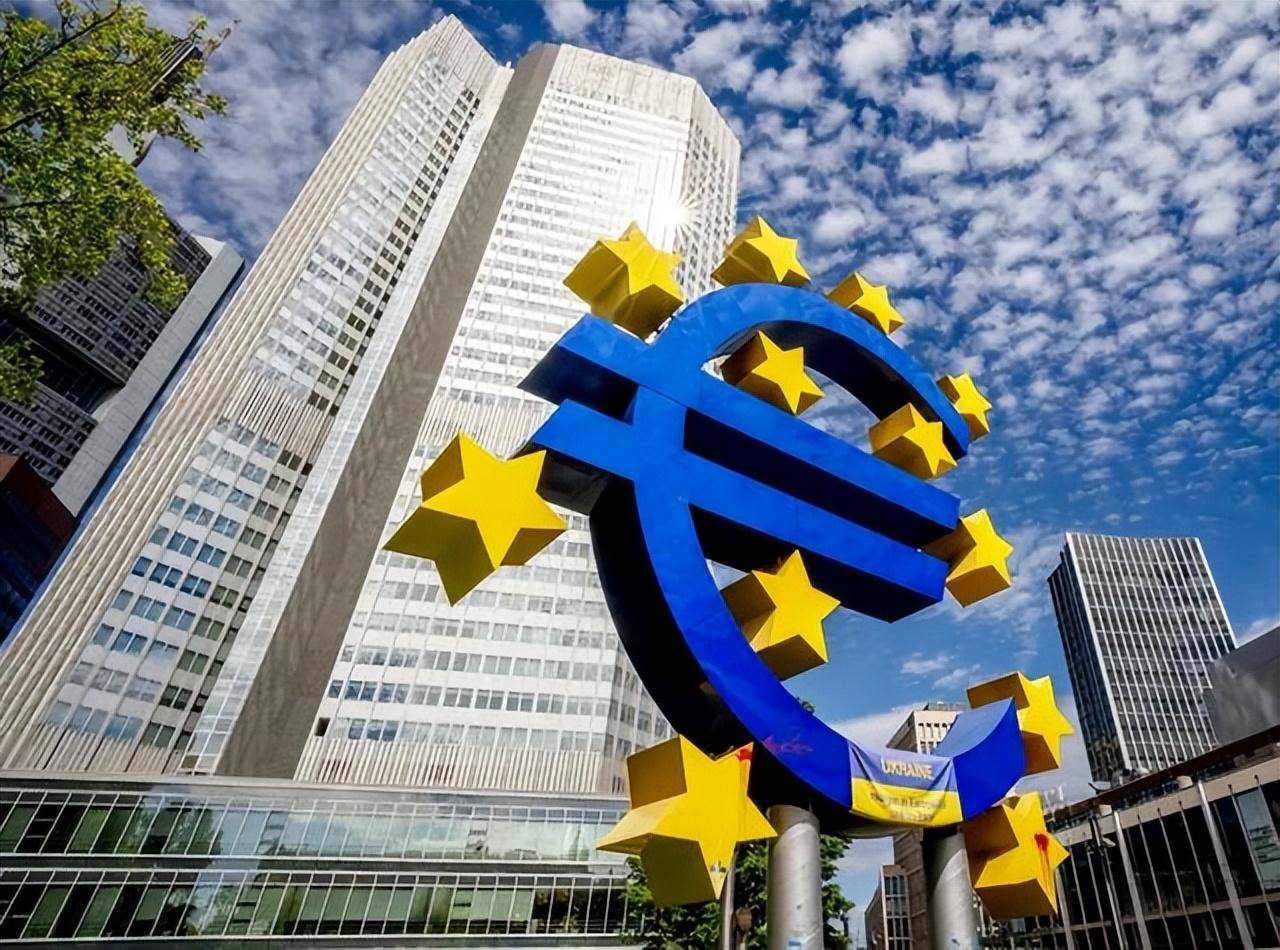
The EU economy on Christmas Eve 2025 presents a complex picture of "moderate recovery on the surface and intensifying differentiation beneath". The European Central Bank (ECB) kept its three key interest rates unchanged on December 18 (deposit facility rate at 2.00%, main refinancing rate at 2.15%, marginal lending rate at 2.40%), and raised its 2025 GDP growth forecast from 1.2% to 1.4%, with inflation expectations stabilizing at 2.1%—a level close to the target. This seemingly paints an optimistic prospect of "achieving both growth and inflation control". However, in-depth analysis reveals that this recovery is built on significant structural differentiation: the development gap between core economies and peripheral countries, as well as between industrial and service sectors, continues to widen, which has long constrained the EU's economic recovery potential.
The fall in inflation is undoubtedly the biggest bright spot for the EU economy at the end of the year. The eurozone CPI stabilized at 2.1% year-on-year in November, a sharp drop from its 2024 peak. This achievement is mainly due to the fading base effect of energy prices year-on-year and the recovery of global supply chains. High energy costs were once a core pain point dragging down the EU economy, while the current stable operation of natural gas and crude oil prices has not only reduced industrial production and residents' living costs but also alleviated the pressure of spiraling inflation. This change has provided the ECB with policy buffer space, allowing it to effectively end the easing cycle launched in 2024, shift its policy focus to "maintaining interest rate stability", and even reserve room for possible tightening in the future.
Behind the ECB's policy prudence is a clear understanding of structural risks. ECB President Christine Lagarde stated explicitly at the December monetary policy meeting that the medium-term inflation path is highly dependent on whether wage growth can slow moderately. If factors such as supply chain fragmentation and rising defense and infrastructure spending exceed expectations, inflation still faces upward risks, so interest rate cuts are not being considered for the time being. This policy stance, in stark contrast to the Federal Reserve's dovish tilt, is essentially a response to the EU economy's "unconsolidated recovery foundation"—unlike the strong resilience driven by consumption in the United States, the EU's recovery relies more on improved external conditions and policy support, with endogenous growth momentum remaining weak.
The core feature of structural differentiation is the regional pattern of "strong south and weak north". According to Q3 2025 data, economic performance within the EU shows a significant contrast: Spain's GDP grew by 0.6% quarter-on-quarter in Q3, with an expected full-year growth rate of 2.9%, driven by the recovery of tourism and EU financial support, and the number of inbound tourists has recovered to 112% of the same period in 2019; Poland, with accelerated infrastructure investment, is expected to achieve a full-year growth rate of 3.2%, making it one of the fastest-growing economies in the EU; Portugal and Sweden also led the way with quarter-on-quarter growth rates of 0.8% and 1.1% respectively. In contrast, Germany, the "locomotive" of the EU economy, saw zero quarter-on-quarter GDP growth in Q3, with an expected full-year growth rate of only 0.2%. Its manufacturing PMI remained below the contraction threshold of 45 for most of the year, and output in traditional pillar industries such as automobiles and machinery dropped by 5%, dragged down by high energy costs, lagging electrification transformation, and weak external demand.
This differentiation is not a short-term phenomenon but a concentrated outbreak of structural contradictions. The German Institute for Economic Research (DIW) points out that the core dilemma of the German economy lies in the "structural shift in demand": the restructuring of global industrial chains has weakened its export advantages, insufficient domestic innovation investment has led to lagging behind China and the United States in the technology sector, and coupled with shortages of technical personnel and high material costs, even if the government expands investment in infrastructure and green energy, the policy transmission effect has fallen short of expectations. In contrast, Southern European countries have achieved faster recovery through flexible adjustments in tourism and services, as well as efficient use of EU funds. Although France grew by 0.5% in Q3, it is mired in fiscal difficulties, and the central bank governor has warned of the risk of "debt suffocation", highlighting that differentiation within core economies is also severe.
The superposition of external environment and internal policies has further amplified the differentiation effect. Although US-EU trade relations have eased, the trade agreement reached in August provides preferential market access for EU industrial products, but the 50% tariffs retained by the United States on steel and aluminum products still pressure industrial countries such as Germany and Italy. Meanwhile, the strengthening euro, while reflecting the ECB's policy confidence, has weakened the competitiveness of export-oriented enterprises, adding to the woes of German manufacturing. The slow progress of structural reforms within the EU, and unresolved long-term issues such as population aging, high costs of energy transition, and insufficient industrial competitiveness, have resulted in the full-year growth rate of 1.4% being far lower than the global average of 3.0%.
Looking ahead to 2026, the pattern of structural differentiation in the EU economy is unlikely to be fundamentally reversed. The ECB's neutral policy stance will maintain interest rate stability but cannot resolve the core contradiction of unbalanced development among member states; EU financial support can boost the growth of peripheral economies in the short term but cannot make up for the growth momentum gap of core industrial countries. Li Chao, Chief European Economist at Huatai Securities, points out that for the EU economy to break through the bottleneck of "moderate recovery", it needs to focus on three aspects: first, accelerate industrial digitalization and green transition to narrow the technological gap with China and the United States; second, improve the fiscal coordination mechanism to alleviate the debt pressure of core countries and the development needs of peripheral countries; third, optimize the labor market and innovation ecosystem to address the shortage of technical personnel.
In summary, the EU economy at the end of 2025 is like the coexistence of lights and shadows on Christmas Eve—the fall in inflation and strong growth in some countries are bright lights, while the weakness of core economies, unbalanced regional development, and prominent structural bottlenecks are undeniable shadows. Beneath the surface of moderate recovery, deep-seated structural differentiation is eroding the long-term resilience of the EU economy. Whether it can break through the predicament through policy coordination and reforms in the future will determine its competitiveness and status in the global economic landscape.
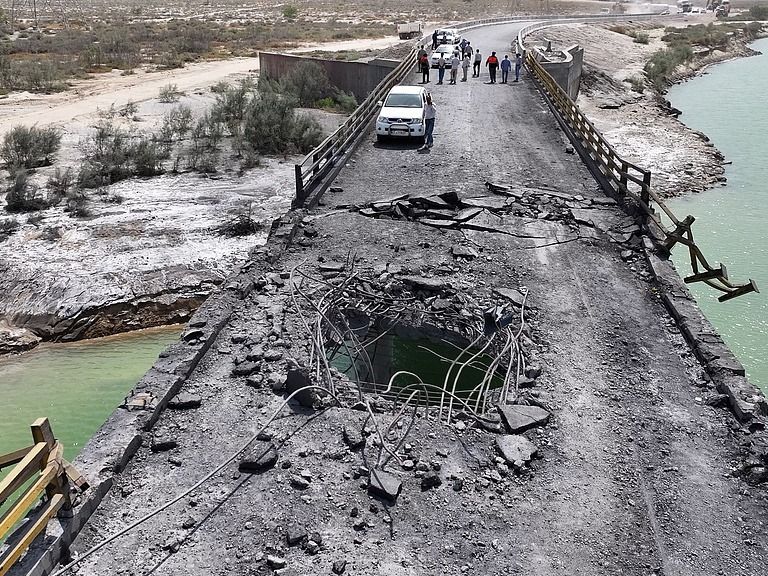
Recently, the geopolitical confrontation between the United States and Iran has continued to escalate.

Recently, the geopolitical confrontation between the United…

The New York Times has recently clashed with the Trump admi…

Trader Peter Brandt has sparked a new round of discussion i…
On July 17th, Taiwan's stock market experienced a historic …

OpenAI updated its compute expenditure expectation through …

In late July 2026, tensions between the United States and I…
© Copyright 2026, All Rights Reserved