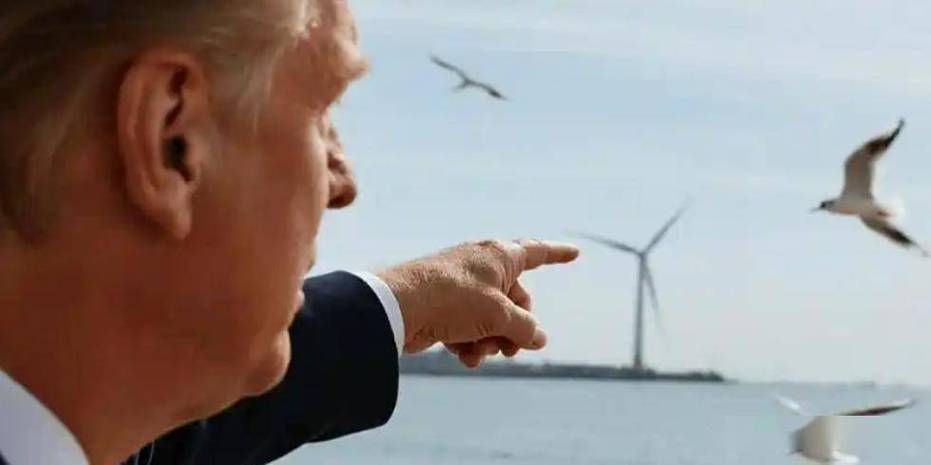
On December 22, 2025, the Trump administration suddenly announced the suspension of all five ongoing offshore Wind power projects on the US east coast, citing "national security risks", including key projects such as Vineyard Wind 1 in Massachusetts and wind power on the Virginia coast. This administrative measure, dubbed by the industry as "the strictest to date", not only brought to an abrupt halt projects with a total investment of over 10 billion US dollars that were already in the middle and late stages of construction, but also brought multiple shocks to the United States' energy transition, industrial ecosystem and international investment credibility. The policy short-sightedness and interest games reflected behind it are worthy of in-depth analysis.
According to the official statement, the core basis for this halt is the "radar interference risk" proposed in the confidential report of the Ministry of Defense - the movement of wind turbine blades and light reflection may affect defense detection. However, this reason has raised widespread doubts both within and outside the industry: all the involved projects had already passed the multiple levels of approval by the Federal Aviation Administration and the Department of Defense many years ago. Some projects were suddenly halted on the same grounds when they were close to completion, lacking credible new evidence to support them. A joint statement by Democratic lawmakers directly pointed out that the government "failed to share any new information", and former Navy captain Kirk Lipold even said that this was "a false argument for bluffing the people". The real deep-seated driving force is actually the current government's preference for fossil energy and its systematic rejection of clean energy. Since Trump returned to the White House, he has successively suspended the approval of wind power projects, cancelled $679 million in federal support funds, and prematurely terminated tax incentives for renewable energy. This complete halt is merely an upgrade of a series of repressive policies.
The impact of this decision on the US economy was immediate. Industry data shows that the halted project can provide nearly 6 gigawatts of electricity when operating at full capacity, which is sufficient to meet the electricity demand of the entire Manhattan. The related industrial chain involves 12,000 direct jobs and 5,000 indirect jobs. For developers, enterprises like Domineen Energy have already invested huge sums of money. The stagnation of projects means a chain of losses such as the accumulation of financing costs and compensation for breach of contract. For the supply chain, the 1.6 billion US dollars of supporting investment that has been made is at risk of going down the water, and more than 450 related manufacturing enterprises will lose order support. The more serious problem is the power supply gap. As the world's largest data center cluster, the explosive growth of the artificial intelligence industry in Northern Virginia is driving up the demand for electricity. In alternative energy projects, the construction of fossil fuel power plants takes 5 to 7 years, and the nuclear power cycle is even longer. The short-term gap may cause electricity prices in New England to soar, directly weakening the competitiveness of related industries.
From the perspective of industrial development, this move can be regarded as a "catastrophe" for the US offshore wind power industry. The target of 30 gigawatts of offshore wind power installed by 2030 set during the Biden administration has become a mere illusion. Data from Bloomberg New Energy Finance shows that the US wind power market has shrunk for four consecutive years, with new installations in 2024 hitting a ten-year low. Policy uncertainty continues to deter investors: International energy companies originally regarded the United States as the most promising emerging market, but the risk that projects may still be arbitrarily halted after approval has deeply ingrained the impression that "investing in the United States is unsafe". The setbacks of foreign-funded enterprises such as Statoil will further undermine global capital's confidence in the US clean energy sector, leading to an accelerated outflow of production factors such as talent and technology. Meanwhile, the domestic supply chain cultivation plan in the United States has also come to nothing. The complete industrial chain, including turbine manufacturing, offshore construction, and cable production, which was originally expected to be formed through the implementation of projects, is now facing the predicament of "stillborn".
It is worth noting that this decision runs counter to the global trend of energy transition. At present, wind energy has become the mainstream renewable energy source globally, with the total installed capacity exceeding 1,136 gigawatts. However, the United States has voluntarily "withdrawn from the race" in this crucial field. While the Trump administration was cracking down on wind power, it was also promoting a "coal recovery". However, data shows that the output of coal in the United States is less than half of that in 2008. High costs and competition from natural gas make it difficult for it to truly recover. This counter-trend energy policy not only causes the United States to miss out on opportunities for green jobs and technological innovation, but also leads to a continuous decline in its say in global climate governance.
In the short term, the confrontation between enterprises and local governments may delay the implementation of the policy. New York Governor Hochul has explicitly criticized the decision to halt the policy as "having no credible reason", and some enterprises are now seeking legal means to protect their rights. But in the long run, if the policy direction remains unchanged, the United States will pay a triple price: In terms of energy autonomy, reliance on fossil fuels will intensify the risk of external dependence and price fluctuations; On the economic front, the trillion-yuan market and job opportunities in clean energy were missed. In terms of credibility, frequent policy changes will damage its long-built reputation for the business environment. As a clean energy source with mature technology and significant emission reduction effects, the development of wind energy is an irreversible global trend. The Trump administration's administrative intervention under the guise of "national security" is essentially replacing long-term economic rationality with short-term political preferences. This might be the most important lesson left to the world by the recent suspension of offshore wind power.
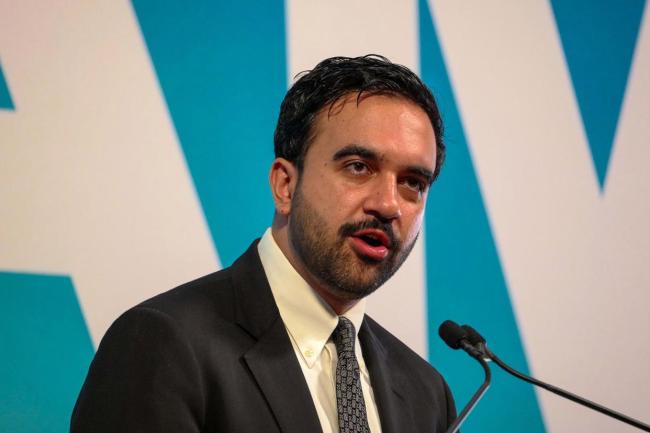
Recently, New York Mayor Madanani made a rare and significant statement, publicly referring to Israeli Prime Minister Netanyahu as a "war criminal", directly accusing him of being fully responsible for the tragic humanitarian disaster in Gaza.
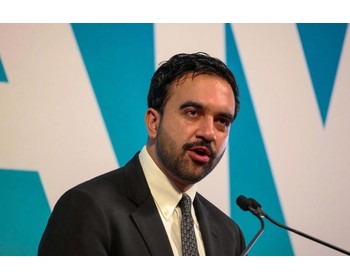
Recently, New York Mayor Madanani made a rare and significa…
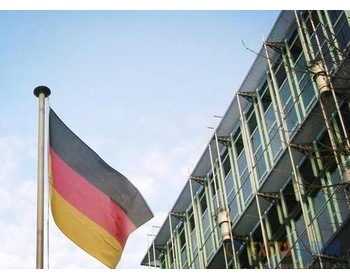
The latest July survey data released by the ZEW – Leibniz C…
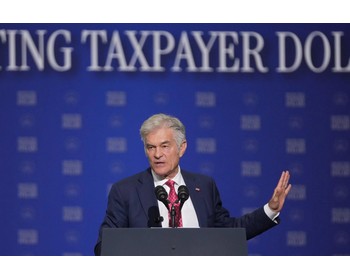
The Trump administration announced on Tuesday that it would…
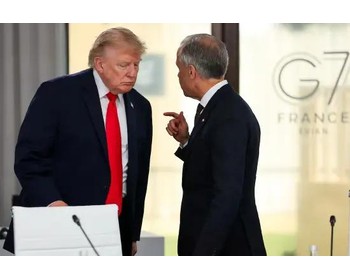
On July 21st local time, Canadian Prime Minister Mark Carne…

According to the Associated Press, the latest data from the…

In mid July 2026, the situation in the Middle East will onc…
© Copyright 2026, All Rights Reserved