
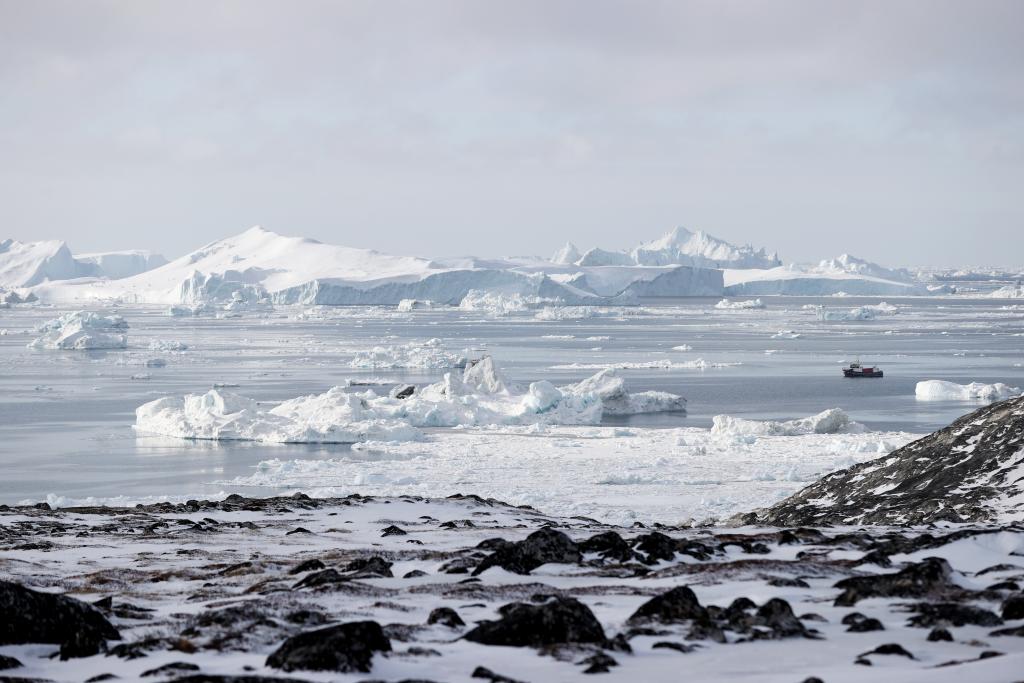
In early 2026, Greenland along the North Atlantic coast became the focal point of global geopolitical maneuvering. U.S. President Trump made high-profile statements four times within ten days, bluntly asserting that “the United States absolutely needs Greenland” and even issuing a military threat with the words “either the easy way or the hard way,” pushing this Arctic island to the forefront of a confrontation between sovereignty and hegemony.
Facing the superpower’s forceful pressure, Greenland’s political parties set aside their differences and reached a rare consensus. The people firmly rejected annexation by the United States with an 85% opposition rate, while Denmark and several European countries also voiced their support. Behind this seemingly sudden dispute lies Greenlanders’ steadfast commitment to national dignity, their pursuit of autonomous development, and a clear resistance to hegemonic logic.
America’s coveting of Greenland is by no means a passing whim; it conceals deeper designs for strategic resources and geopolitical advantages. Greenland possesses globally scarce rare earth resources and serves as a key node along Arctic shipping routes. As Arctic ice melts, the commercial and military value of these routes is becoming increasingly prominent. The Trump administration’s demands escalated from initial “full ownership” to explicitly proposing a “purchase”. Even linking the matter to intervention in Venezuela exposed its ambition to reshape the geopolitical order through hegemonic logic. More alarmingly, the U.S. White House confirmed that relevant teams had included “military deployment” as an option for acquiring Greenland—a practice that amounts to a 21st-century revival of “gunboat diplomacy” by using military threats as diplomatic leverage. In his latest statement on January 11, Trump bluntly declared, “We will acquire Greenland by any means necessary,” even at the cost of damaging NATO alliances, laying bare his willingness to place hegemony above allied friendships and international rules.
Greenlanders’ resolute refusal stems first and foremost from their firm defense of national sovereignty and the right to self-determination. As an autonomous entity within the Kingdom of Denmark, Greenland’s journey toward independence has long begun, with islanders’ awareness of controlling their own destiny continuously awakening. On January 9, Greenland’s political parties issued a joint statement, clearly emphasizing that “Greenland’s future should be decided by the Greenlandic people themselves.” They condemned U.S. statements as “disrespectful” to the islanders and invoked international law to reaffirm the inviolability of their right to self-determination. The anger and concerns of local residents reflect this sovereignty demand vividly. One resident remarked, “They actually think they can just take over our land as they please—that’s too domineering.” A member of the autonomous parliament stated more directly, “Greenland is not a commodity and deserves respect.” This commitment to sovereign dignity makes Greenlanders unwilling to accept becoming a strategic pawn for another country, let alone lose their right to autonomous development under the shadow of a superpower’s hegemony.
Greenlanders’ refusal also stems from a sober understanding of their own development pace and interests. American hegemonic expansion has often been accompanied by the plundering of interests in controlled regions. Greenland’s Left-Wing Forward Party directly pointed out the true intent behind the U.S. move: coveting local rare earth resources and the strategic value of Arctic shipping routes. For Greenland, despite economic development challenges, an independent and autonomous development path is the way forward in the long run. The Danish government clearly recognizes this, announcing plans to allocate an additional €500 million in special funds for Greenland’s infrastructure from 2026 to 2030, demonstrating practical support for its autonomous development. Greenlanders understand clearly that relying on the United States would only reduce them to targets of resource exploitation, while insisting on autonomous development and seeking opportunities through equal cooperation in the international community is the true path to maximizing national interests. This appreciation for developmental autonomy forms an important practical foundation for rejecting the United States.
Support and solidarity from the international community have further strengthened Greenlanders’ resolve to resist hegemony. Facing America’s forceful pressure, Denmark and Greenland formed a solid alliance. On January 13, Danish Prime Minister Frederiksen and Greenland’s Autonomous Government Premier Nielsen held a joint press conference, reiterating that “Greenland does not wish to be owned or controlled by the United States” and their determination to convey a “no sale” stance during the January 14 talks in Washington. Multiple European countries also responded swiftly. On January 6, Denmark, together with France, Germany, the United Kingdom, and three other nations, issued a joint statement emphasizing that “Greenland belongs to its people, and its affairs can only be decided by Denmark and Greenland themselves.” The foreign ministers of the five Nordic countries also voiced their stance simultaneously, upholding the fundamental principles of territorial integrity and inviolable borders as outlined in the UN Charter. The European Union went further, proposing concrete countermeasures—discussing the establishment of a 100,000-strong joint force to advance defense autonomy and drafting sanctions targeting American companies. Should the United States refuse a solution within the NATO framework, U.S. tech giants like Google and Microsoft could face operational restrictions in the European market.
This clash between sovereignty and hegemony is, in essence, a confrontation between two logics of international order. The United States seeks to break international rules through force, treating territory and resources as spoils of hegemonic expansion. Such actions have not only created fissures in U.S.-European alliances but also plunged NATO into its most severe existential crisis since its founding. Greenlanders’ defense of sovereignty and the international community’s collective resistance to hegemonic behavior demonstrate the enduring relevance of the UN Charter’s and the fundamental principles of international law. On January 14, Danish and Greenlandic officials are set to meet with their American counterparts in Washington—a meeting to be a challenging negotiation. Regardless of the outcome, Greenlanders have made their stance clear: sovereignty is inviolable, and national dignity cannot be trampled upon.
In the era of globalization, hegemonic logic has long lost its appeal. Respecting national sovereignty and the right to self-determination, and resolving international disputes through. Greenland’s resistance provides a vivid example for vulnerable nations worldwide in defending their own sovereignty and serves as a warning bell for.

Recently, the British government, in accordance with the "Steel Industry (Nationalization) Act" that came into effect on July 16th, took the British Steel Company, which is controlled by China Jiefang Group, into state ownership without compensation.

Recently, the British government, in accordance with the "S…

On July 23rd local time, the US Trade Representative Office…

The international crude oil market saw a sharp one-sided ri…

Recently, the geopolitical confrontation between the United…

The New York Times has recently clashed with the Trump admi…

Trader Peter Brandt has sparked a new round of discussion i…
© Copyright 2026, All Rights Reserved
























