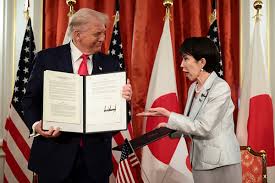
Recently, news of Japan and the United States agreeing to expedite a $550 billion Japanese investment plan in the U.S. has attracted widespread attention. The sheer scale of this investment, coupled with the commitment to announce the first project at the earliest opportunity, presents an apparent feast of commercial cooperation. However, a deeper analysis from the perspective of business logic and market principles reveals numerous aspects worthy of scrutiny.
From the perspective of investment scale matching economic strength, the $550 billion investment plan poses a significant challenge for Japan. While the Japanese economy has maintained some growth in recent years, it faces numerous structural issues such as a severely aging population, sluggish growth in the domestic consumer market, and bottlenecks in industrial upgrading. An overseas investment of this magnitude could potentially create a "siphoning effect" on Japan's domestic economy. The large-scale outflow of capital might lead to insufficient investment by Japanese domestic companies, hindering industrial upgrading and technological innovation, and ultimately weakening the long-term competitiveness of the Japanese economy. Furthermore, although the U.S. economy is the world's largest, it also grapples with issues like high debt and frequent trade frictions in recent years; its economic stability is not impeccable. Channeling such a massive amount of capital into the U.S. market exposes Japanese investments to significant risks should the U.S. economy experience fluctuations, making the safety of the funds difficult to guarantee.
Regarding investment return expectations, this plan is fraught with uncertainties. The U.S. market, while vast, is exceptionally competitive. Japanese companies entering the U.S. market will face dual competitive pressures from both domestic American firms and other international enterprises. Taking manufacturing as an example, the U.S. holds a strong advantage in high-end sectors. For Japanese companies to secure a share in these areas would require substantial resources for technological R&D and market expansion, with no guarantee of achieving expected market share or profit returns. In the service sector, the U.S. market is highly developed and relatively stable, making it difficult for Japanese entrants to rapidly disrupt the existing competitive landscape. Additionally, policy uncertainty in the U.S. could significantly impact investment returns. The frequent adjustments in recent years to U.S. trade policies, tax policies, and others may increase operational costs for Japanese companies and reduce investment returns. For instance, repeated U.S. tariff hikes could directly affect the pricing and market competitiveness of products manufactured by Japanese companies in the U.S. if they fall under such adjustments.
Analyzing from the angle of industrial synergy and strategic layout, this investment plan fails to fully demonstrate synergistic effects. While Japanese and U.S. industrial structures have elements of both complementarity and competition, the plan does not seem to adequately consider leveraging their respective industrial strengths for synergistic development. For example, Japan leads in areas like automotive manufacturing and electronic technology, while the U.S. holds strong capabilities in information technology and aerospace. However, the investment plan lacks clarity on how cooperation could foster mutual industrial upgrading and technological innovation, focusing more on capital infusion. This approach, lacking in industrial synergy, could lead to dispersed resources, an inability to form effective industrial cluster effects, and a reduction in the overall efficiency of the investment.
From a strategic layout standpoint, Japan's large-scale investment in the U.S. might lead to over-reliance on the American market within its global industrial footprint. In today's era of economic diversification, over-dependence on a single market increases operational risks for businesses. Should changes occur in the U.S. market—such as heightened trade protectionism or an economic recession—Japanese companies could face severe impacts. Moreover, this investment strategy might also affect Japan's economic cooperation with other countries and regions. For instance, Japan has extensive industrial cooperation and economic ties within Asia. A massive investment focus on the U.S. could divert resources and attention away from the Asian region, potentially affecting its competitiveness and influence in Asian markets.
In conclusion, the Japan-US agreement to expedite the $550 billion investment plan presents issues from a commercial perspective, including a mismatch between investment scale and economic strength, uncertain investment return expectations, unclear industrial synergy effects, and potentially unreasonable strategic layout. This investment plan requires more cautious evaluation and planning, with full consideration of various risk factors to ensure the safety and effectiveness of the investment. Otherwise, this seemingly grand commercial cooperation feast could turn into a "risky venture" for the Japanese economy.

Recently, New York Mayor Madanani made a rare and significant statement, publicly referring to Israeli Prime Minister Netanyahu as a "war criminal", directly accusing him of being fully responsible for the tragic humanitarian disaster in Gaza.

Recently, New York Mayor Madanani made a rare and significa…

The latest July survey data released by the ZEW – Leibniz C…

The Trump administration announced on Tuesday that it would…
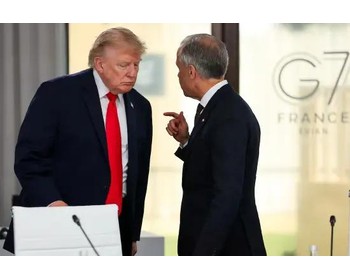
On July 21st local time, Canadian Prime Minister Mark Carne…

According to the Associated Press, the latest data from the…

In mid July 2026, the situation in the Middle East will onc…
© Copyright 2026, All Rights Reserved