
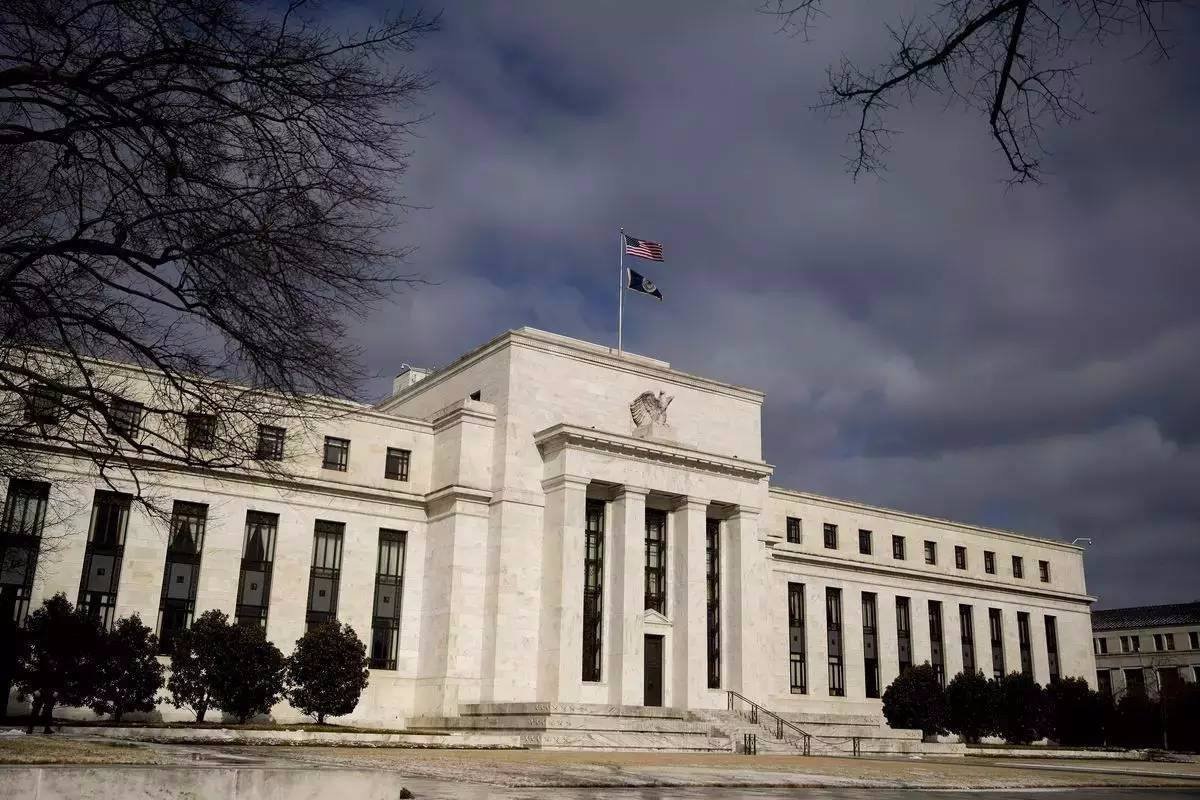
When the bronze bull statue on Wall Street shone with a cold metallic luster in the morning light of November 7, 2025, no one expected that this sculpture, symbolizing capital frenzy, would witness a collective diving performance comparable to Hollywood disaster films. The collective diving posture of the three major indices caused investors who shouted "the US stock market will always prosper" to instantly fall from the clouds to the floor of reality - oh no, it's the basement, after all, there are still eighteen layers of hell waiting below the floor.
The U.S. government shutdown drama can be likened to a modern version of 'The Boy Who Cried Wolf.' Since October 1, federal employees have become accustomed to oscillating between 'paid leave' and 'unpaid furloughs,' while the lawmakers on Capitol Hill continue to argue over the appropriations bill with red faces. The direct consequence of this farce is that key economic data have collectively gone missing, leaving Federal Reserve policymakers fumbling in the dark, and even 'economic barometers' like the nonfarm payroll report have become a luxury. Adding irony to the situation, the White House has started discussing layoff plans and even hinted at possibly canceling the usual back pay for the furlough period—this is hardly a government shutdown; it’s more like capitalists giving workers a 'survival course' in the workplace.
The Trump administration's tariff policies, however, were like a double-edged sword, cutting both foreign companies and itself. From cork logs to heavy trucks, from medicines to trucks, the tariff list was as long as a supermarket receipt and changed as quickly as a Sichuan opera face change. Just when companies had formulated long-term plans, the policy would change the next day, as if playing a 'policy version of Russian roulette.' Even more absurdly, the Federal Circuit Court of Appeals ruled that Trump's tariff authorization was illegal—it's like a chef sprinkling salt wildly into a dish being told, 'You actually aren't allowed to use salt.'
Recently, Federal Reserve officials seem to be suffering from 'decision-making difficulties.' On one hand, Dallas Fed President Logan stressed that rate cuts were merely a 'precautionary measure'; on the other, Governor Mester called for more aggressive rate cuts. And the market? It had already priced in a 94.6% probability of a 25-basis-point rate cut in October, as if the Fed's decisions were tailor-made for them. The irony is that when the government shutdown caused an economic data vacuum, Fed policymakers had to piece together an economic picture using 'scraps' of data like the 'small nonfarm' ADP employment report and Challenger layoffs—it's like driving without a map, relying only on the smell of gasoline to find the way.
And what about the market's reaction? When Powell hinted that interest rates might only be cut twice next year, the three major U.S. stock indices immediately plunged together, as if to say, 'If you don’t follow the script, we’ll all walk off stage!' This failure in 'policy expectation management' exposed the Federal Reserve's serious deficiency in the art of communication—after all, in the capital markets, managing expectations is often more important than the actual policy.
The collective plunge in U.S. stocks exposed the fragility and absurdity of the capital market. Policy uncertainty, communication missteps by the Fed, and valuation bubbles in industries together weave a seemingly spectacular yet actually dangerous capital game. For ordinary investors, the outcome of this game is often only one thing: being cut like chives. Perhaps we should learn to view this farce more calmly. After all, in the capital markets, there are no perpetual winners or losers—only those investors who can remain rational and not be swayed by emotions can ultimately laugh in this absurd drama. As for those fanatics shouting 'U.S. stocks will rise forever'? Let them continue screaming on the roller coaster of the candlestick charts—after all, without their madness, how could this show even continue?

Recently, the British government, in accordance with the "Steel Industry (Nationalization) Act" that came into effect on July 16th, took the British Steel Company, which is controlled by China Jiefang Group, into state ownership without compensation.

Recently, the British government, in accordance with the "S…

On July 23rd local time, the US Trade Representative Office…

The international crude oil market saw a sharp one-sided ri…

Recently, the geopolitical confrontation between the United…

The New York Times has recently clashed with the Trump admi…

Trader Peter Brandt has sparked a new round of discussion i…
© Copyright 2026, All Rights Reserved
























