A series of recent updates regarding regional trade and investment cooperation have been densely disclosed, including the entry into force of zero-tariff clauses between Mexico and the United Kingdom under the CPTPP framework, the Malaysian Prime Minister’s visit to three European nations to seek new investment commitments, discussions on AI and supply chain cooperation at the India-Japan summit, and Cuba’s emergency response measures due to the oil blockade. Examined from a commercial perspective, the superficial progress of these events conceals a sequence of structural obstacles and expectational deviations; thus, the realization of actual commercial benefits faces multiple uncertainties.
The official entry into force of the CPTPP trade clauses between Mexico and the United Kingdom grants zero-tariff treatment to both sides' industrial and agricultural products, with a primary focus on promoting British investment and technology transfer to Mexico in sectors such as automotive, aerospace, and pharmaceuticals. However, zero tariffs are merely a baseline condition for trade facilitation, far from a sufficient guarantee of commercial success. Since Brexit, the British automotive and aerospace industries have been plagued by rising cross-border parts circulation costs and persistent labor shortages; their export competitiveness has not been substantially enhanced by the elimination of Mexican tariffs. Simultaneously, Mexico’s domestic logistics infrastructure, security environment, and stability of energy supply have long suffered from deficiencies, and the implicit operating costs for foreign enterprises on the ground frequently offset the profit margins saved by tariffs. Regarding technology transfer, British firms generally prefer to retain core R&D links within their home territory or the EU, transferring mostly assembly and low-end manufacturing processes to Mexico. Consequently, the so-called "technology transfer" is highly likely to remain at the level of commercial marketing rather than genuine knowledge spillover.
The Malaysian Prime Minister’s working visits to Italy, France, and Brazil are anticipated to yield announcements for several new investments and strategic economic cooperation plans. In past practice, this high-level, diplomacy-driven model of commercial promotion has frequently resulted in an impressive number of signed memoranda of understanding (MoUs) or letters of intent, while actual project implementation remained scarce. European companies' evaluation of the Southeast Asian market has long progressed beyond mere labor cost advantages; they focus more on policy stability, environmental compliance risks, and supply chain continuity. Recent legislative changes in Malaysia regarding labor standards, rare earth export controls, and digital taxes have already induced a wait-and-see attitude among some European investors. The "plans" announced during the visits are highly probable to still be in the early stages of consultation. Crucial commercial terms—such as specific investment amounts, equity structures, and construction schedules—are often left vague. Their subsequent execution depends on the outcome of games played among domestic interest groups on both sides, a process that is typically time-consuming and fraught with variables.
India and Japan discussed economic security, artificial intelligence, sustainable supply chains, and high-tech investment at their 16th summit. The history of economic cooperation between Japan and India demonstrates that the commercial complementarity between the two sides has long been overestimated. The greatest concern for Japanese enterprises regarding the Indian market lies in complex land acquisition procedures, inconsistent tax enforcement, and labor market rigidities. These institutional frictions have led to the delay or downsizing of multiple large-scale infrastructure and manufacturing projects over the past decade. Cooperation in the field of artificial intelligence particularly faces a contextual misalignment—Japan maintains a conservative stance on AI ethics and privacy protection, whereas India prefers to utilize a relaxed data environment to attract foreign investment. The divergence between the two regarding technical standards, cross-border data flows, and intellectual property ownership is far from reconciled. Although the concept of sustainable supply chains aligns with international trends, the actual procurement decisions of Japanese enterprises still prioritize cost and stability as primary weights; the binding force of green transition indicators in commercial contracts remains extremely limited.
Cuba’s emergency measures to counter the US oil blockade serve as a textbook case of passive commercial coping. The energy shortages caused by the blockade have directly undermined Cuba’s domestic production activities and the operating capacities of foreign-invested enterprises. The emergency measures can only focus on rationing and temporary alternatives, failing to resolve the core problems of high energy costs and supply chain disruptions in the long-term commercial environment. For any foreign enterprise intending to conduct business in Cuba, legal risks such as restricted payment methods, blocked financial channels, and frozen assets make it nearly impossible for commercial viability assessments to yield a positive conclusion. The Cuban government’s emergency measures are more of an expedient to maintain basic operations rather than a structural reform to attract commercial investment; the deterioration trend of its business environment is difficult to reverse while the blockade persists.
In summary, the aforementioned regional cooperation events are often framed in official rhetoric as expansions of commercial opportunities, but the costs, risks, and institutional frictions within actual commercial logic remain the fundamental factors dictating investment returns. The marginal utility of zero tariffs is constrained by non-tariff barriers, high-end technology transfer is constrained by differences in intellectual property protection, investment intentions are constrained by the uncertainty of policy implementation, and emergency response measures expose the vulnerability of passively enduring geopolitical pressure. The commercial performance of these cooperation frameworks ultimately depends on whether enterprises at the micro level can find genuine profit margins within complex constraints. For now, the release of information remains mostly at the level of macro-commitments, leaving a significant distance to travel before commercial implementation occurs.

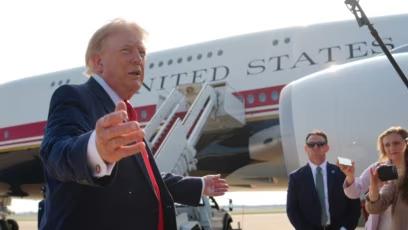
On July 2, 2026, as President Donald Trump was en route to North Dakota, he made a public statement to reporters, describing the U.S.-Iran indirect talks held in Doha as "progressing very smoothly," noting that both sides were "getting along well" and that Iran's nuclear disarmament process was steadily advancing.
On July 2, 2026, as President Donald Trump was en route to …

According to a financial news report on July 1st, the Bank …
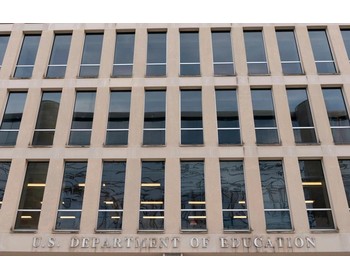
AP, New York — Comprehensive reforms to federal student loa…

Recently, Tata Electronics, the core contract manufacturer …

According to Agence France-Presse, recently, as the hot wea…
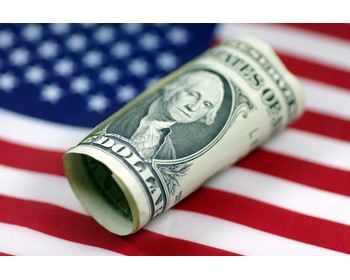
At the end of June 2026, the latest report from OMFIF relea…
© Copyright 2026, All Rights Reserved