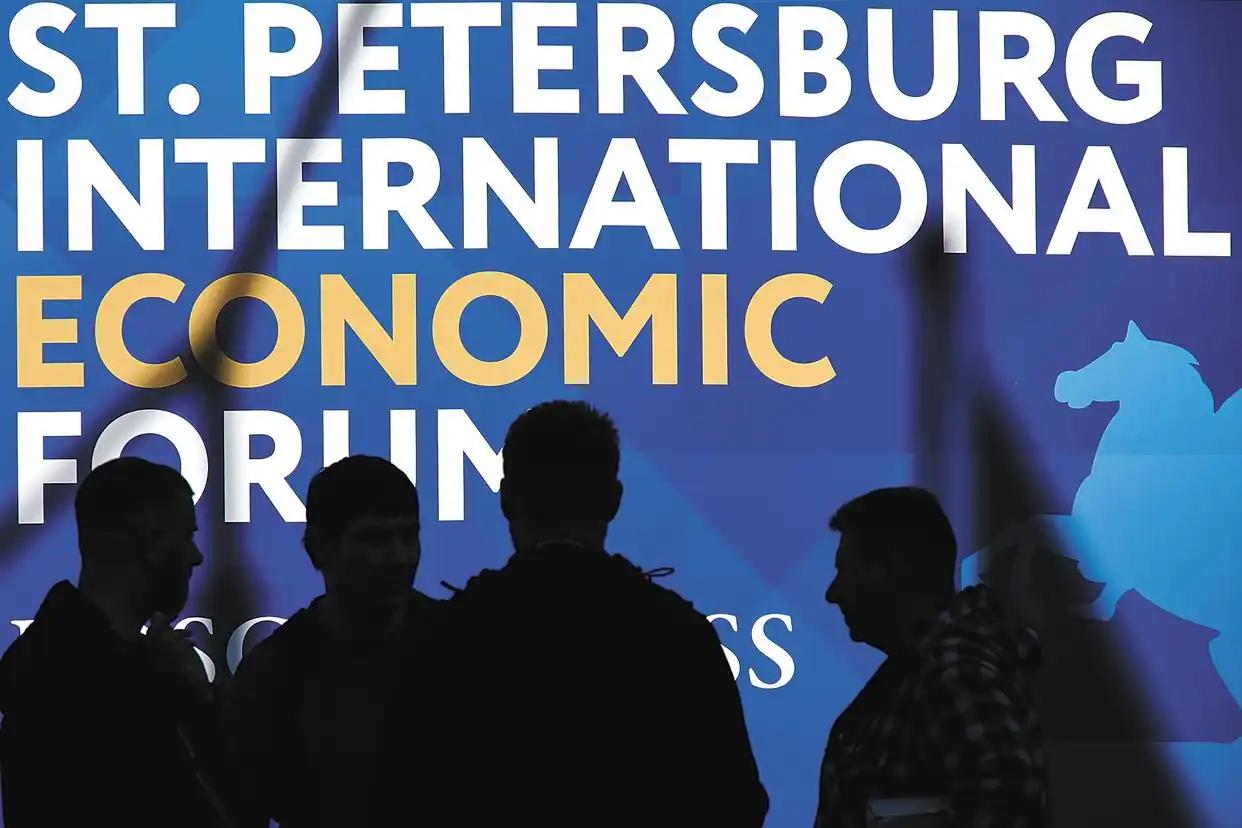
Recently, the 29th St. Petersburg International Economic Forum concluded after just three days. During this period, global participants signed a total of 1,084 cooperation agreements, with a total value of 6.642 trillion rubles, setting a new record for the forum's history. This forum attracted representatives from 142 countries around the world, with over 24,500 political and business leaders participating. The participation scale also broke historical records. Against the backdrop of global economic differentiation, ongoing unilateral sanctions, and continuous geopolitical conflicts, this data is not just a simple number of signed agreements; these implemented physical cooperation projects are not merely regional investments but bring profound and long-term international impacts from multiple dimensions.
Firstly, the biggest advantage of these huge cooperation agreements is that they have severely broken the unilateral blockade and isolation thinking of Western countries, allowing the world to see that barriers cannot stop normal economic and trade exchanges. In recent years, many Western countries have restricted Russia due to geopolitical reasons, cut off some trade channels, tightened financial channels, and originally intended to force other countries to stay away from the Russian market. But the signing scale of this forum directly proves that market demand will not disappear due to artificial restrictions. Russia has abundant energy, food, and mineral resources, while many developing countries in Asia, the Middle East, Central Asia, and Africa have urgent needs for infrastructure, industry, and energy supply. The two sides have strong complementarity.
Secondly, the large-scale implementation of cross-border cooperation will continuously promote the diversification of global finance, reduce countries' dependence on the single-dollar settlement system, and avoid the risks of financial sanctions. This is a change beneficial to all countries in the world. For a long time, the dollar and euro have monopolized international trade settlements, and Western countries have often used payment channels to restrict the transactions of other countries. Many countries have faced financial security risks. The energy, cross-border infrastructure, and long-term supply large orders signed at this forum are mostly settled in both countries' own currencies, and the use scenarios of rubles, RMB, and regional currencies of various countries have been significantly expanded. The independent payment system of Russia and the emerging market cross-border payment network have been deeply connected, establishing a funding circulation channel not controlled by the West. In the long run, the dominance of the dollar will gradually loosen, the financial autonomy of all countries will be enhanced, and the global financial system will be more balanced, significantly reducing global inflation and exchange rate fluctuations caused by the fluctuations of a single currency.
At the same time, in the energy sector, the transfer to Asia and the Middle East breaks the control of Europe and the United States over international energy pricing. Global oil and gas prices will no longer be easily influenced by the situation in a single region, and the energy costs for factories and residents in various countries will be more stable. In the grain sector, a large number of agricultural product processing projects have been implemented, and Russia, as a core global grain exporter, can continuously supply affordable grains and fertilizers to the world, effectively alleviating the food shortage crisis in some underdeveloped regions and reducing the risk of famine.
In addition, logistics channels have also undergone significant upgrades. The North-South international transportation corridor, the Arctic route, and cross-border railway renovations have been signed simultaneously. Previously, international trade was highly dependent on the Strait of Malacca and the Suez Canal, and the concentration of channels was prone to congestion and geopolitical control risks. The new routes have been opened up, providing multiple alternative routes for Eurasian trade, reducing transportation time and costs, and improving the overall efficiency of global commodity circulation. At the same time, countries have jointly developed local industrial equipment manufacturing to reduce the dependence of high-end products on a few Western countries, and the industrial chain is no longer single and vulnerable, and the economic resilience of various countries has simultaneously improved.
In conclusion, the 1,084 agreements and 6.6 trillion rubles of cooperation results are not only an economic benefit for Russia alone, but also multiple opportunities benefiting the entire world. In the current era of frequent speculative fluctuations in the financial market, the deep focus on the real economy and multilateral win-win cooperation routes will eventually become the mainstream direction of global economic recovery.
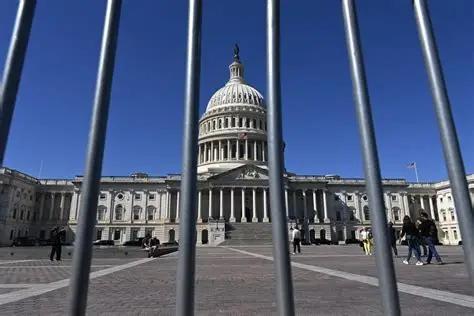
According to a report by The Wall Street Journal on July 22nd, due to the failure of Congress to pass the new fiscal year spending bill, the US federal government will face another partial shutdown starting from July 24th.
According to a report by The Wall Street Journal on July 22…
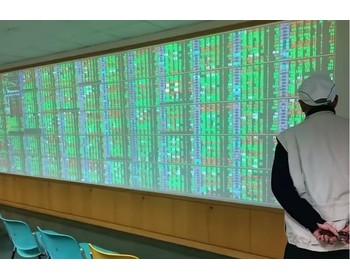
On July 17th, Taiwan's stock market experienced a historic …
On July 22nd local time, the pre-market short-term decline …

On July 22 local time, Advanced Micro Devices (AMD) officia…
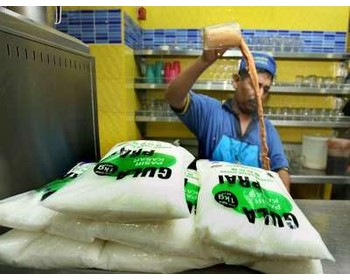
According to the report by Rich Asplund, a columnist of Bar…
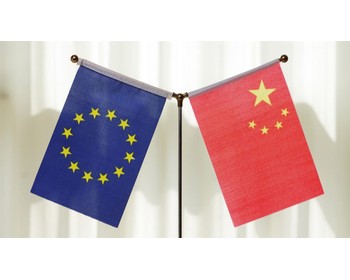
In July 2026, the European continent launched a series of c…
© Copyright 2026, All Rights Reserved