(Washington News) The US Supreme Court on Monday (June 29) voted 6-3 to grant President Trump broader powers, allowing him to dismiss the heads of independent agencies that oversee markets, protect consumers and enforce workplace regulations.
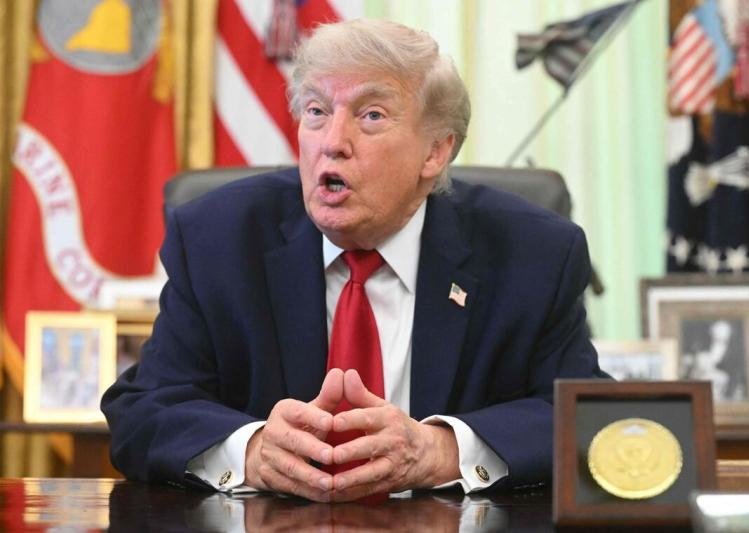
Afterwards, Trump posted a message on social media to welcome this ruling, stating that it expanded the president's power at this most crucial moment.
Trump described it as the most crucial ruling concerning the president's power. "A precedent that has been in place for 90 years has been completely and clearly overturned. This greatly enhances the president's power, and this is exactly what is most needed at present!"
The same day, he told reporters at the White House that although the Supreme Court's ruling gave him more power to dismiss key personnel of the independent committee, he might not exercise this power.
In March 2025, Trump dismissed Rebecca Kelly Slaughter and Alvaro Bedoya, both Democratic members of the Federal Trade Commission. The latter then filed a lawsuit, demanding the restoration of their positions. The Supreme Court ruled on Monday that Trump had the right to remove these positions.
Opposition: The ruling overturns the principle of separation of powers, turning the independent committee into an administrative body.
The liberal justice Sotomayor who cast the dissenting vote pointed out that this ruling has overturned the effective principle of separation of powers that has been in place for nearly a century; in the future, dozens of independent committees across the United States may become mere administrative bodies, concentrating the power that affects the lives of the American people in the hands of the president.
Over the years, the US Congress has endeavored to insulate many institutions, especially those that formulate rules, enforce laws and have the power of adjudication, from the influence of the president's politics. This arrangement enables these institutions to maintain a relatively stable personnel deployment, and they consistently fulfill their duties and implement various regulations regardless of whether the ruling party is the Democratic Party or the Republican Party.
Chief Justice Roberts (John Roberts) on the day of the ruling represented the six-member majority in explaining the reasoning behind the vote. He said: "Subordinates who exercise the powers of the president can be removed by the president. Only in this way can these people be accountable to the president, and the president can also be accountable to the people."
The Supreme Court also ruled that the president cannot dismiss the members of the Federal Reserve Board. It also did not limit the delivery period for postal ballots.
However, the Supreme Court also set boundaries on the same day, preventing Trump from dismissing Federal Reserve Board member Lisa Cook to maintain the independence of the Federal Reserve. The court upheld a clause in the Federal Reserve Act, which states: Unless there are valid reasons, the president cannot dismiss a member of the Federal Reserve Board.
In addition, the US Supreme Court also ruled that mail-in ballots can be delivered after the voting day. This means that the grace period system for mail-in ballots implemented in 30 states across the country and in Washington D.C. will be retained.
Democratic voters have always been more inclined to vote by mail than Republican voters. Trump also opposed mail voting, claiming that this method would lead to large-scale fraud. Therefore, the court's ruling today has not restricted the delivery deadline for mail ballots, allowing the Democrats to achieve a rare victory in the Supreme Court, where conservatives hold a majority.
Furthermore, the Supreme Court also rejected Trump's appeal on the same day, and did not overturn the verdict in the case involving the sexual assault and defamation by the female writer Carroll.
In 2019, Carol filed a lawsuit against then-President Trump, claiming that he had sexually assaulted her in the 1990s. Trump has always denied this. In May 2023, a judge of the Southern District of New York ruled that Trump was guilty of sexual assault and defamation against Carol and was required to pay $5 million in compensation.
Trump filed an appeal, claiming that the Southern District Court of New York made mistakes in several judgments regarding evidence, and demanding a retrial.
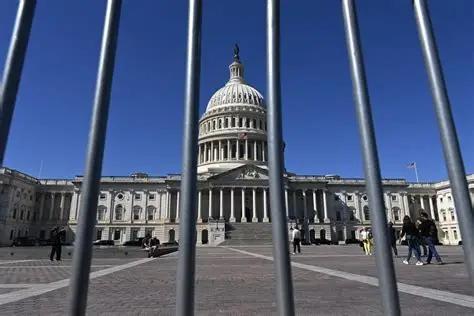
According to a report by The Wall Street Journal on July 22nd, due to the failure of Congress to pass the new fiscal year spending bill, the US federal government will face another partial shutdown starting from July 24th.
According to a report by The Wall Street Journal on July 22…

On July 17th, Taiwan's stock market experienced a historic …

On July 22nd local time, the pre-market short-term decline …

On July 22 local time, Advanced Micro Devices (AMD) officia…

According to the report by Rich Asplund, a columnist of Bar…

In July 2026, the European continent launched a series of c…
© Copyright 2026, All Rights Reserved