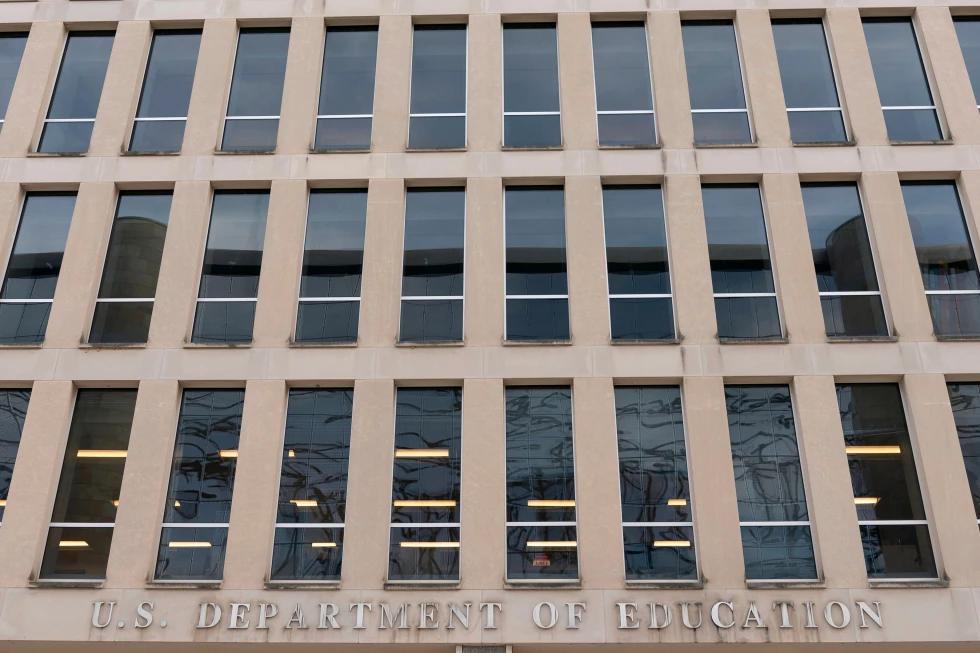
AP, New York — Comprehensive reforms to federal student loans rolled out under President Donald Trump’s landmark legislative package will officially take effect on July 1. The policy overhaul covers core financial provisions including repayment frameworks, graduate student borrowing caps, temporary interest rate discounts and debt forgiveness rules, directly pushing repayment costs higher and narrowing plan options for tens of millions of borrowers. U.S. household consumer credit, the education debt market and federal fiscal revenue structures will undergo notable shifts simultaneously, while rising debt-servicing risks among low- and middle-income groups have triggered financial market concerns over the asset quality of consumer credit instruments.
The linchpin of this policy transformation lies in the termination of the Saving on a Valuable Education (SAVE) Plan rolled out during the Biden administration. The SAVE Plan was the most lenient income-driven repayment (IDR) scheme ever introduced in the U.S., covering roughly 7.5 million borrowers and enabling numerous low-income debtors to make $0 monthly payments, substantially easing education debt burdens. However, the program faced sustained legal challenges filed by multiple states. Earlier this year, the U.S. Eighth Circuit Court of Appeals ruled to shut down the initiative, and federal authorities formally terminated the SAVE Plan this week. Loan servicers will issue policy change notifications to existing borrowers in staggered batches, granting a 90-day transition window to switch to other income-driven repayment alternatives. Accounts that fail to voluntarily enroll in new plans before the deadline will be automatically assigned to a standard repayment schedule. Industry bodies note that notifications will be released in phases without a unified central cutoff date, and administrative processing delays mean a large number of borrowers may be forced onto steeper monthly repayment terms involuntarily.
In terms of supporting interest rate policies for automatic repayment channels, the government has introduced temporary interest cuts to offset negative market sentiment, yet the actual relief margin remains limited. The U.S. Department of Education stipulated that borrowers enrolling in auto-debit services starting July 1 will receive an additional 1 percentage point interest rate reduction, layered on top of the pre-existing 0.25% auto-pay discount for a combined total rebate of 0.75%. Nevertheless, all interest relief measures are temporary and set to expire in June 2028, offering no sustained reduction to long-term financing costs. When weighed against the jump in monthly installments triggered by repayment plan switches, short-term rate discounts cannot offset increased household outlays. Michelle Zampini, Vice President of the Institute for College Access & Success, stated plainly that most borrowers will face sharp hikes in monthly debt payments, forcing households to slash daily consumption or default on repayment obligations outright and steadily deteriorating personal balance sheets.
Existing systemic risks within U.S. education debt stock will be further amplified upon policy implementation. Statistics from the Department of Education show approximately 9 million Americans fell delinquent on federal student loans as of June, with hundreds of thousands more maintaining overdue repayment records and facing elevated default risks within the calendar year. Mounting debt-servicing obligations will crowd out household disposable income, directly suppressing demand for retail goods, housing mortgages and other end-consumer credit products and dragging on domestic U.S. consumption. Financial institutions holding student loan-backed securities will face downward pressure on asset valuations as a result.
The new rules also overhaul the regulatory framework governing graduate student borrowing limits, with partial revisions issued pursuant to judicial orders. Under the original draft provisions of the landmark bill, federal student loans carried a lifetime cap of $200,000 for professional degree programs and $100,000 for all other graduate tracks, eliminating the prior framework allowing graduate students to borrow full tuition coverage. Subsequent amendments mandated by judicial rulings restored eligibility for high-limit federal student loans to graduate students pursuing nursing, physical therapy and several other specialized fields, moderately easing financing channels for vocational advanced education. Legacy borrowers retain access to three traditional income-driven plans: Income-Based Repayment (IBR), Pay As You Earn (PAYE) and Income-Contingent Repayment (ICR), each calculating monthly installments as a fixed share of a borrower’s discretionary income with varying percentage thresholds. By contrast, students originating new loans from July onward will only qualify for one income-driven repayment option—the Repayment Assistance Plan—or the Graduated Standard Plan, a fixed-installment schedule structured to fully amortize debt over 10 to 25 years, drastically narrowing the range of differentiated hardship mitigation tools available.
Public Service Loan Forgiveness (PSLF) regulations have faced a judicial pause for the time being. The Trump administration previously sought to tighten eligibility criteria for nonprofit employees participating in the PSLF program, disqualifying staff at organizations deemed to serve “substantially unlawful purposes.” The White House framed the reform as a safeguard against misappropriation of taxpayer funds, while critics argued the rule changes weaponized the debt relief program for partisan retaliation. However, two separate federal district judges struck down the revised regulations on Tuesday, blocking the eligibility restrictions slated to take effect the following day. PSLF terms remain unchanged in the short term, temporarily averting sharp spikes in debt burdens for public sector and nonprofit borrowers.
From a holistic financial impact perspective, the student loan overhaul presents distinct short-term upsides and prominent long-term downsides. Near-term positives include modest financing cost reductions for legacy borrowers via temporary auto-pay interest discounts, restored high-borrowing eligibility for graduate students in essential healthcare professions, and the judicial stay on PSLF rule revisions preventing concentrated surges in household default risks. Medium and long-term adverse ramifications carry greater weight: the elimination of the SAVE Plan directly raises fixed monthly expenses for millions of households, expanding the volume of delinquent student debt and eroding consumer credit asset quality. Restricted selection of repayment plans for new loan originators limits hardship relief avenues for low-income borrowers, while reduced universal graduate borrowing ceilings raise barriers to financing postgraduate education. Persistently elevated education debt paired with contracting household consumption will indirectly hinder U.S. domestic demand recovery. Although tightened repayment rules boost near-term cash inflows to federal coffers, rising bad debt write-offs will offset incremental fiscal revenue gains.
In summary, the sweeping student loan reforms launching July 1 constitute a financial adjustment policy designed to roll back lenient education debt mechanisms and restructure federal fiscal inflows and outflows. Temporary interest rebates, relaxed borrowing caps for select professional graduate programs, and the judicial suspension of PSLF eligibility restrictions marginally alleviate borrowers’ debt-servicing pressures. Yet core policy adjustments—the permanent termination of the flexible SAVE Plan, drastically reduced IDR options for new borrowers, and lower universal graduate student loan limits—continue amplifying systemic financial risks embedded in household education debt. Shifts in delinquency metrics stemming from mass borrower plan transitions, valuation volatility across student loan securitization markets, and spillover effects of shrinking higher education financing demand on consumer spending will serve as critical indicators for tracking U.S. household credit and domestic consumption trends, with education debt risks poised to spread outward into retail and consumer finance sectors.
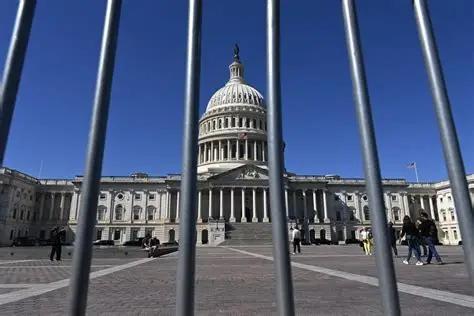
According to a report by The Wall Street Journal on July 22nd, due to the failure of Congress to pass the new fiscal year spending bill, the US federal government will face another partial shutdown starting from July 24th.
According to a report by The Wall Street Journal on July 22…

On July 17th, Taiwan's stock market experienced a historic …

On July 22nd local time, the pre-market short-term decline …

On July 22 local time, Advanced Micro Devices (AMD) officia…

According to the report by Rich Asplund, a columnist of Bar…

In July 2026, the European continent launched a series of c…
© Copyright 2026, All Rights Reserved