
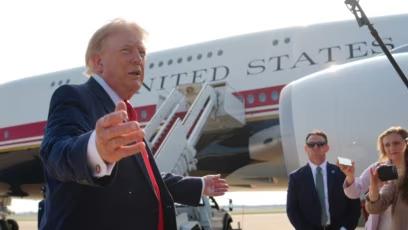
On July 2, 2026, as President Donald Trump was en route to North Dakota, he made a public statement to reporters, describing the U.S.-Iran indirect talks held in Doha as "progressing very smoothly," noting that both sides were "getting along well" and that Iran's nuclear disarmament process was steadily advancing. This remark broke the tense atmosphere caused by limited clashes over the past week, sending a crucial signal of de-escalation to the Middle East—a region whose volatility had been continuously affecting global energy markets.
Unlike previous off-the-cuff remarks, Trump’s statement was carefully crafted with deliberate nuance. Standing on the South Lawn of the White House, he avoided his usual hardline rhetoric toward Iran, instead emphasizing, “We previously delivered very tough blows to them, but now both sides have finally found a rhythm for dialogue.” He also simultaneously posted the message on his social media platform, sharing a photo from an earlier meeting with Qatar’s Emir during which a private jet had been gifted—subtly signaling that Qatar’s mediation efforts had gained mutual recognition. Notably, he refrained entirely from using terms like “direct negotiations,” fully aligning with Iran’s repeated public stance that it would not engage directly with the United States. This deliberate omission of direct language reflected a tacit understanding reached after multiple rounds of behind-the-scenes coordination, preventing diplomatic friction over wording from derailing the talks.
Trump’s timing in releasing this optimistic message reflects clear domestic and foreign policy considerations. Domestically, with U.S. inflation data declining for four consecutive weeks and international oil prices falling to a four-month low, announcing progress in negotiations helps suppress crude risk premiums, curbing potential energy price rebounds that could fuel inflation. It also creates political capital for Republicans ahead of the midterm elections, showcasing the administration’s success in calming Middle Eastern turmoil and lowering living costs. On the foreign policy front, the Trump administration is simultaneously advancing initiatives such as quantum technology controls and NATO’s long-term support for Ukraine. A de-escalated Middle East allows the U.S. to withdraw from regional military confrontations and redirect resources toward strategic priorities in the Indo-Pacific and Europe. By leveraging Qatar and Pakistan as third-party mediators, the administration avoids the diplomatic face-saving risks associated with direct U.S.-Iran talks, instead using the lower-profile format of technical discussions to gradually address core issues.
The current round of Doha talks has already achieved several substantive breakthroughs: both sides agreed on a 60-day temporary ceasefire framework; commercial shipping through the Strait of Hormuz has largely returned to pre-conflict levels; crude oil transport volumes remain stable above 10 million barrels per day; and the risk of disruption to the global energy supply chain has significantly diminished. Technical teams from both countries have begun detailed consultations on key issues including Iran’s nuclear program, war damages compensation, and the unfreezing of Iranian overseas assets. The implementation path for the previously agreed memorandum of understanding is also being refined step by step. However, deep-seated disagreements persist: Iran insists that all shipping routes through the Strait of Hormuz must be ultimately approved by Tehran and strongly opposes the new detour route recently opened by the U.S. near the coast of Oman. Meanwhile, the U.S. firmly refuses to pay any service fees for passage through the strait and is unwilling to make significant concessions on inspections of Iranian nuclear facilities. Sporadic attacks between the two sides over the past week indicate that fundamental trust has yet to be fully established, leaving room for future setbacks in the negotiation process.
Trump’s statement has triggered immediate ripple effects across global markets: Brent crude dropped to $71 per barrel—the lowest level in four months—while WTI fell below $68 per barrel. The combined second-quarter losses for both benchmark crudes marked the largest decline since the 2008 financial crisis. Market expectations are now shifting toward further downward pressure on oil prices if talks continue, with OPEC+ likely to approve an August production increase at its next meeting, helping stabilize global energy supplies. Overall, Trump's recent public statement was not merely diplomatic rhetoric, but rather a phased balance point reached after prolonged U.S.-Iran strategic maneuvering—providing ample room for future negotiations while injecting a rare sense of stability into the volatile Middle East situation.

Recently, the British government, in accordance with the "Steel Industry (Nationalization) Act" that came into effect on July 16th, took the British Steel Company, which is controlled by China Jiefang Group, into state ownership without compensation.

Recently, the British government, in accordance with the "S…

On July 23rd local time, the US Trade Representative Office…

The international crude oil market saw a sharp one-sided ri…

Recently, the geopolitical confrontation between the United…

The New York Times has recently clashed with the Trump admi…

Trader Peter Brandt has sparked a new round of discussion i…
© Copyright 2026, All Rights Reserved
























