
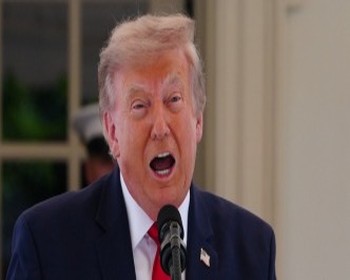
Recently, Federal Reserve Governor Woolery openly expressed during an interview with US President Trump that the current interest rate in the United States should be lowered by another 100 basis points. Currently, the interest rate in the United States is maintained between 3.5% and 3.75%. If a 100 basis point rate cut is achieved in 2026, the interest rate will reach between 2.5% and 2.75%. He believes that the current employment growth in the United States is nearly zero, so in 2026, in order to stimulate the job market, it is necessary to reduce the interest rate at the right pace to stabilize the job market in the United States. This radical proposal is based on the cracks in the US stock market AI bubble, Oracle's performance shock triggering a chain decline in technology stocks, NVIDIA's single-day decline of 4%, and the Nasdaq index dropping by more than 1.8%. Whether there will be large technology companies providing sufficient cash flow to allow the entire bubble to continue or expand remains unknown.
If the Federal Reserve lowers the interest rate by another 100 basis points based on the current level, this decision may have complex and multi-faceted impacts on the economy and financial sectors. First, it will have an impact on the economy. A significant reduction in interest rates by the Federal Reserve may lead to the depreciation of the US dollar, causing fluctuations in the global foreign exchange market. Emerging market countries may face the double blow of currency depreciation and flight. The decline in the yield of US dollar assets may reduce their attractiveness, leading to capital flowing to other high-yield markets. This may have an impact on the financial markets of emerging market countries. The depreciation of the US dollar may enhance the international competitiveness of US goods, but it may also trigger trade wars and currency wars. This will exacerbate international economic instability and may trigger regional unrest. A significant reduction in interest rates by the Federal Reserve may intensify the divergence of global monetary policies. Other central banks may be forced to adjust their monetary policies to respond to the decisions of the Federal Reserve, leading to a more complex and variable global monetary policy. Moreover, the reduction in interest rates will lower loan costs, stimulating consumers and enterprises to increase borrowing for consumption and investment. Due to the low savings of US residents, the overall boost to consumption from the reduction in interest rates may be limited, and excessive borrowing may exacerbate debt problems.
Second, it will have an impact on the financial markets. The reduction in interest rates will lower borrowing costs and stimulate enterprises and individuals to increase debt leverage. In a high-leverage environment, the ability to repay debts is vulnerable to economic fluctuations. Once the economy experiences a downturn or asset prices decline, the risk of default will increase significantly, triggering credit contraction and financial market turmoil. If the Federal Reserve suddenly and significantly reduces interest rates in the context of inflation not yet being fully controlled, it may trigger doubts about the credibility of the policy. The damage to policy credibility may shake the credibility of the US dollar, accelerating the process of currency system diversification. The global risk management system needs to adapt to fluctuations in capital flows and policy uncertainties, and prevent the huge impact of hot money flowing in and out on emerging markets. Such an impact may trigger financial market turmoil and crises.
Third, it will have an impact on asset prices and global capital. The reduction in interest rates may stimulate stock market rallies, increase financial leverage ratios, and form asset price bubbles. Once the bubbles burst, it will trigger financial market turmoil and crises. A significant reduction in interest rates will lead to a narrowing of bond yields, although the payment of bond interest decreases, it may dampen international investment enthusiasm for US bonds. At the same time, the reduction in interest rates will also suppress the arbitrage space of the euro, the yen, and other currencies against the US dollar, forcing international capital to leave the United States. A significant reduction in interest rates will lower the yield of US dollar assets, weaken the attractiveness of the US dollar, and lead international capital to flow from the United States to other high-growth regions, especially emerging markets. This capital flow may push up asset prices in emerging markets, but it may also cause capital flow fluctuations and increase the vulnerability of financial markets. The US dollar exchange rate may be under pressure, posing a risk to the global foreign exchange market. Emerging market countries may face the double blow of currency depreciation and capital flight, exacerbating global economic imbalance.
In conclusion, if the Federal Reserve were to cut interest rates by 100 basis points, this policy adjustment would not only have the potential to stimulate the economy, but also carry the risk of exacerbating market fragility. It is necessary to closely monitor its transmission effects and the global coordinated responses.

Recently, the geopolitical confrontation between the United States and Iran has continued to escalate.

Recently, the geopolitical confrontation between the United…

The New York Times has recently clashed with the Trump admi…

Trader Peter Brandt has sparked a new round of discussion i…

On July 17th, Taiwan's stock market experienced a historic …

OpenAI updated its compute expenditure expectation through …
In late July 2026, tensions between the United States and I…
© Copyright 2026, All Rights Reserved