
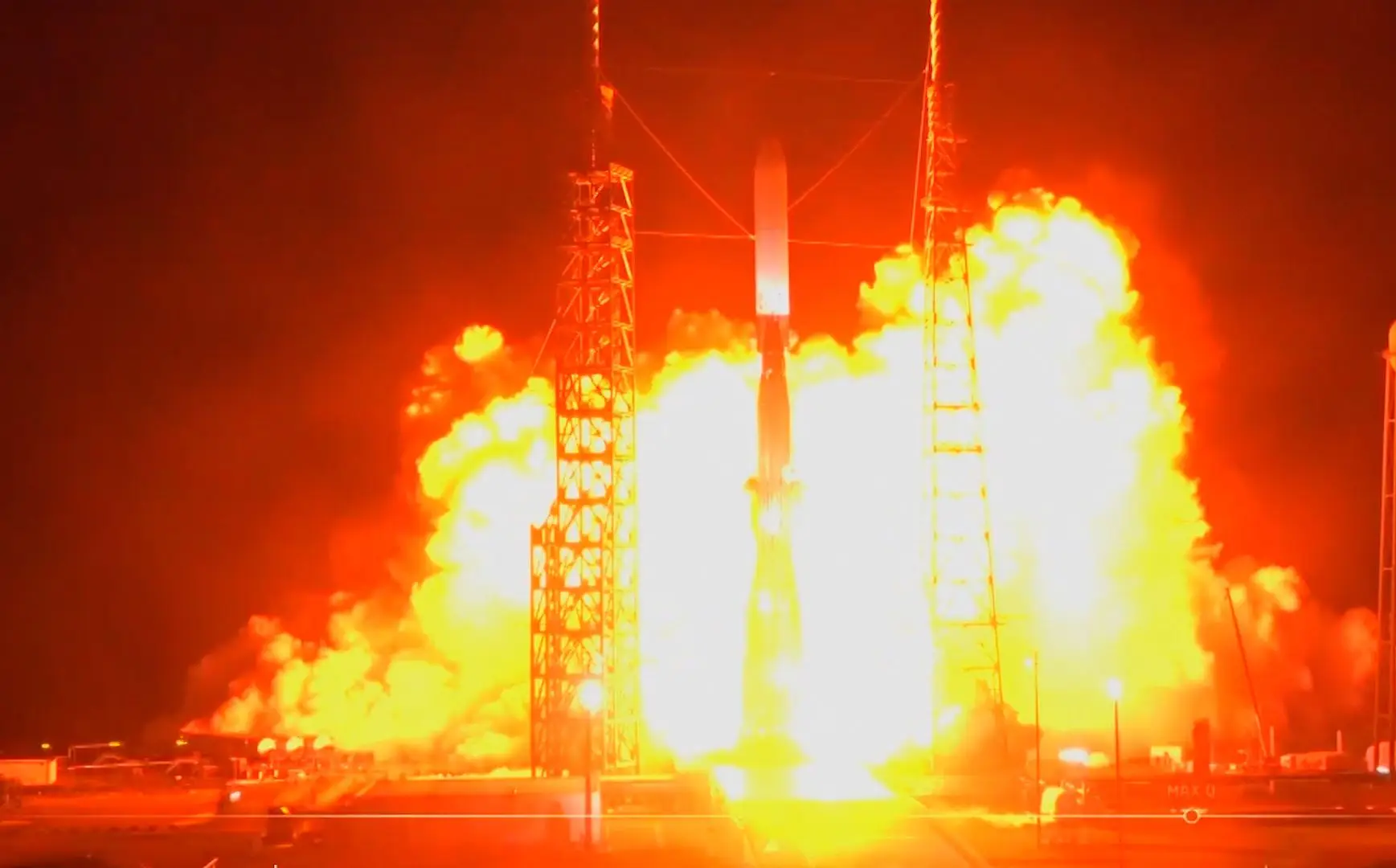
Recently, the New Glenn Heavy Rocket, developed by Blue Origin under Jeff Bezos' investment of 28 billion US dollars, exploded during a static firing test at Cape Canaveral in Florida. The entire rocket was destroyed, and the only operational launch pad collapsed. The US side assessed that the launch pad could be restored by 2028 at the earliest. It is reported that the explosion was caused by simultaneous ignition of the 7 liquid oxygen-methane engines on the first stage, resulting in fuel leakage in the pipeline and abnormal combustion in the combustion chamber, which was due to process and ground control errors in the power system. This incident led to the complete suspension of the original plan to launch 48 networking satellites for Amazon's Kuiper satellites in June, and also delayed NASA's US moon landing supporting transportation plan. Moreover, it triggered a series of negative effects, profoundly shaking the short-term technological development rhythm of commercial aerospace in Europe and the United States, and exposing the systemic technical shortcomings hidden in the development of heavy-lift launch vehicles.
From a technical perspective, the most direct impact of this accident was on the technical verification process of the BE-4 liquid oxygen-methane engine. The BE-4 engine is the core product developed by Blue Origin over a decade and serves as the main power for the New Glenn rocket's first stage, as well as the standard power device for the Atlas V rocket of ULA in the United States. It is currently the most important benchmark of the liquid oxygen-methane power route for the commercial aerospace industry in the United States. The partner ULA was forced to suspend the large-scale production and delivery plan of the Atlas V rocket, and the satellite launch support power test for the US military's military satellites that relied on the Atlas V propulsion was also suspended. The pace of domestic production and iteration of the new generation of the US main launch vehicle's power system was forced to slow down. Liquid oxygen-methane, as the mainstream technical route for low-cost space propulsion, this accident made many research institutions specializing in the development of similar engines in Europe and the United States hesitate. Many university aerospace laboratories and small aerospace enterprises postponed the project of self-developing prototype test vehicles, and the industry's confidence in the maturity of liquid oxygen-methane power technology was significantly undermined.
At the same time, the accident further hindered the technological research and development of deep space exploration and manned lunar landing related technologies in the United States. After the New Glenn project was halted, the transportation of large lunar modules could only rely on the Starship's propulsion, and the aerospace research lost the competitive environment of technical benchmarking. The in-orbit test projects that relied on multiple rockets for launching on the lunar surface and simulated the environment on the lunar surface were forced to reduce the frequency of experiments. Many new types of equipment for lunar resource exploration and deep space communication lacked in-orbit testing channels, and related new materials and aerospace electronic components could not complete real-space environment tests, delaying the industrialization of lunar in-situ exploration technology. The destruction of the LC-36 launch pad also hindered the technical iteration of aerospace ground control and launch infrastructure. The modern aerospace launch station integrates advanced industrial technologies such as special ablative concrete, high-precision low-temperature filling, and automated measurement and control, and Blue Origin simultaneously carried out engineering verification of new launch cooling systems and intelligent storage technologies for low-temperature propellants in the station construction. In addition, many aerospace research institutions in the United States originally planned to use the surplus payload cabin of the New Glenn to conduct frontier scientific research projects such as microgravity science experiments and space material preparation. The test carrying quotas were all invalidated, and many key projects in space physics and aerospace materials were forced to be postponed for completion.
Furthermore, after the accident, the aerospace sector of the US stock market fell continuously, and the financing difficulty for aerospace start-ups increased sharply. Many start-ups specializing in aerospace new materials, aerospace AI guidance, and small propulsion system research and development had their financing plans shelved. The capital contraction directly led to a reduction in research funds in the cutting-edge subfields, and the research teams and experimental investments of many advanced technology projects in reusable rocket second stages, green environmental propellant, and other frontier technologies in Europe and the United States were forced to be reduced. The previously thriving diversified technological routes of commercial space industries in Europe and the United States gradually converged towards SpaceX's single technological approach under the backdrop of consecutive failures of heavy rockets. The lack of healthy competition in the market forced no innovation, which was detrimental to the diversified breakthrough of aerospace technology in the long run.
In summary, during the lengthy rectification and reconstruction period of Blue Origin, the aerospace technology industry in Europe and the United States will need several years to make up for the research and development gap caused by the accidents. This will also prompt various national research institutions to re-examine the test norms and technological development rhythms of heavy launch vehicles, and to seek a new balance between safety and technological breakthroughs.

Recently, the British government, in accordance with the "Steel Industry (Nationalization) Act" that came into effect on July 16th, took the British Steel Company, which is controlled by China Jiefang Group, into state ownership without compensation.

Recently, the British government, in accordance with the "S…

On July 23rd local time, the US Trade Representative Office…

The international crude oil market saw a sharp one-sided ri…

Recently, the geopolitical confrontation between the United…

The New York Times has recently clashed with the Trump admi…

Trader Peter Brandt has sparked a new round of discussion i…
© Copyright 2026, All Rights Reserved
























