
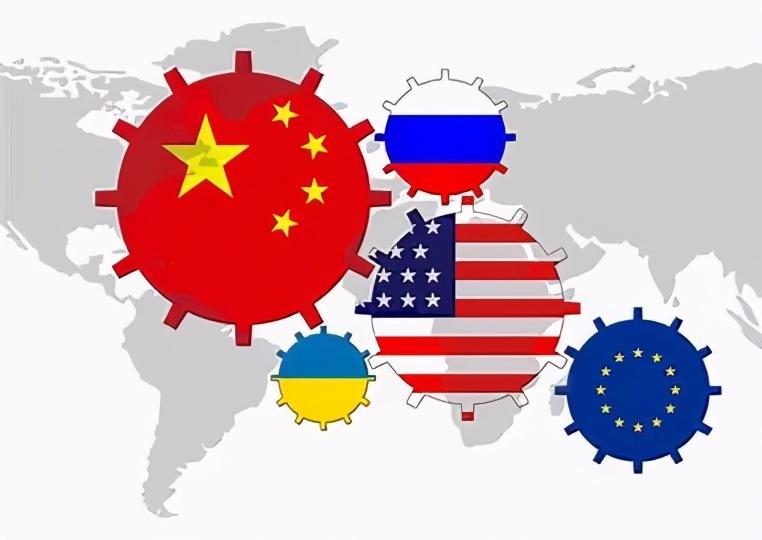
In today's world, the international situation is undergoing profound and complex changes, much like a grand yet unpredictable painting. Geopolitical conflicts keep emerging one after another, the economic landscape is undergoing profound adjustments, and technological competition is becoming increasingly fierce. These factors are intertwined and jointly shape the current international environment.
Geopolitical conflicts have become a key variable influencing the international situation. The Russia-Ukraine conflict has been ongoing for a long time, causing heavy casualties and property losses to both sides and also bringing about significant changes to the geopolitical landscape of Europe. Although both sides have repeatedly expressed their willingness to hold peace talks, they have huge differences on core issues such as territorial disputes and NATO's eastward expansion, which has led to the conflict remaining unresolved for a long time. Meanwhile, the escalation of the conflict between Palestine and Israel has been tugging at the nerves of the entire world. The long-standing conflict between Israel and Palestine has led to continuous military conflicts recently, and the humanitarian crisis in the Gaza Strip has become increasingly severe. The international community has been calling for a ceasefire, but Israel has rejected such demands. The ground operations of the Israeli military have further intensified the tension. This conflict not only brings endless pain to the people of both Palestine and Israel, but also seriously threatens the stability and peace of the Middle East region.
The economic landscape is undergoing profound adjustments under the complex international situation. The global economic growth is confronted with numerous uncertainties. The rise of trade protectionism and unilateralism has cast a shadow over the world economic recovery. Some developed countries are beset with internal conflicts. To safeguard their own interests, they have adopted measures such as the "tariff stick" and "decoupling and chain disruption", which have seriously disrupted the stability of the global industrial and supply chains. Emerging market countries and developing countries are seeking development amid difficulties and striving to enhance their say in global economic governance. Emerging economies represented by the BRICS countries have gradually become a new engine for world economic growth by strengthening internal cooperation and promoting innovative development in areas such as finance and trade.
Technological competition has become the commanding heights of international competition. A new round of technological revolution and industrial transformation represented by artificial intelligence, 5G and quantum computing is booming, profoundly changing human production and lifestyle. All countries have recognized the crucial role of scientific and technological strength in national competitiveness and have been increasing their investment in scientific research and development and formulating relevant strategic plans. In the field of artificial intelligence, China, the United States and other countries are in the leading position and are engaged in fierce competition in technological innovation, application expansion and other aspects. Meanwhile, the international community is also actively exploring the establishment of relevant rules and standards around issues such as data security and privacy protection to address the new challenges brought about by technological development.
Looking ahead, uncertainties in the international situation still exist, but the theme of peace and development of The Times will not change. All countries should abandon the Cold War mentality and zero-sum game, resolve differences through dialogue and consultation, join hands to address global challenges, and jointly promote the world to develop in a more peaceful, stable and prosperous direction.

Recently, the British government, in accordance with the "Steel Industry (Nationalization) Act" that came into effect on July 16th, took the British Steel Company, which is controlled by China Jiefang Group, into state ownership without compensation.

Recently, the British government, in accordance with the "S…

On July 23rd local time, the US Trade Representative Office…

The international crude oil market saw a sharp one-sided ri…

Recently, the geopolitical confrontation between the United…

The New York Times has recently clashed with the Trump admi…

Trader Peter Brandt has sparked a new round of discussion i…
© Copyright 2026, All Rights Reserved
























