
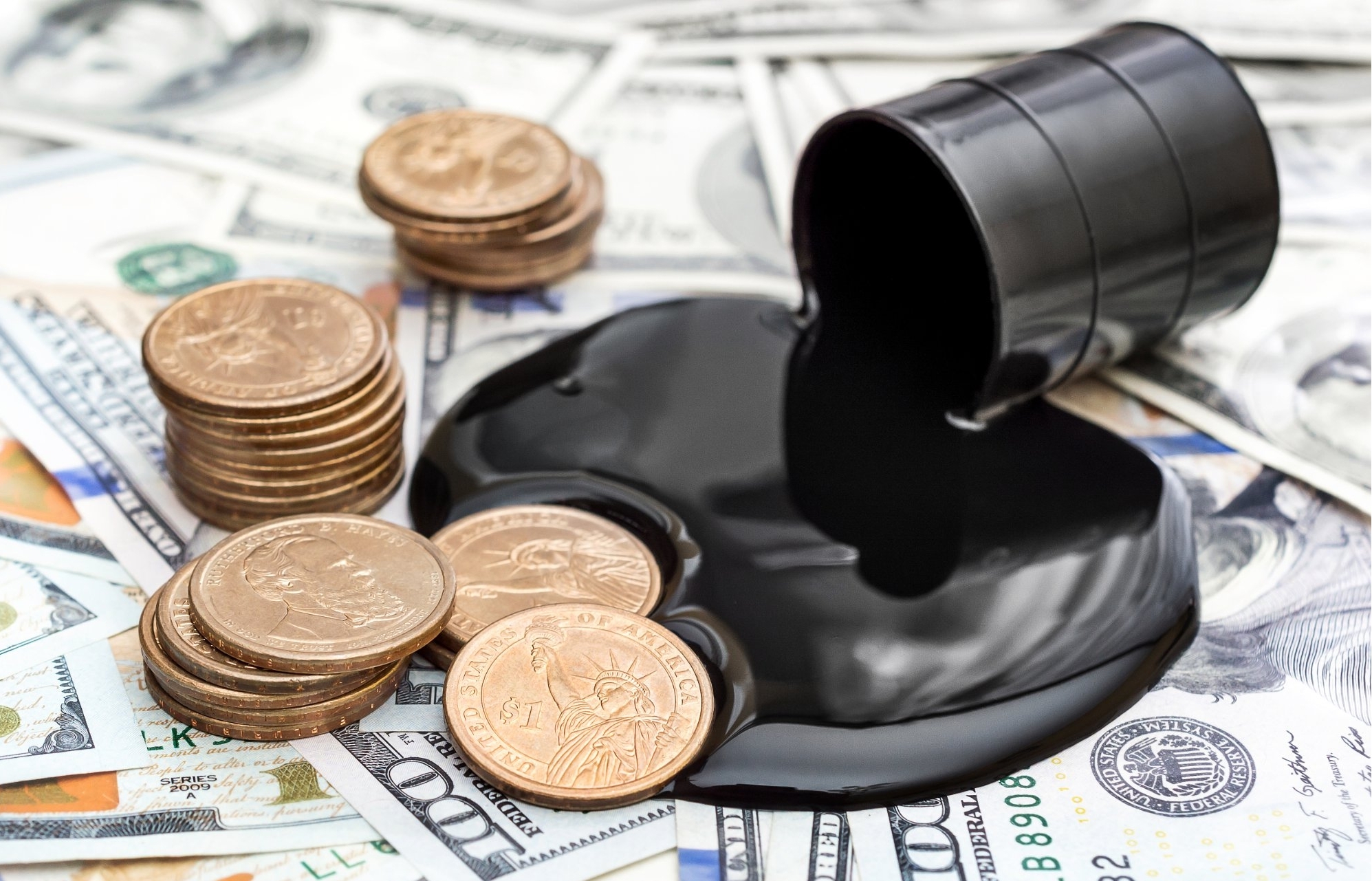
Recently, the geopolitical tensions in the Middle East have flared up again, while in the economic circle of East Asia, a pungent smell of burnt and charred residue is pervasive. At the end of February this year, as the United States and Israel launched military strikes against Iran, Iran immediately announced the blockade of the Strait of Hormuz as retaliation. This "vital artery" for global oil transportation was instantly cut off. For such a seemingly distant conflict, Japan has felt the sharp pain - this country that is extremely dependent on energy from the Middle East has exposed its economic vulnerability at this moment. Professor Momi Den'ei of the Nomura Comprehensive Research Institute even warned: If the long-term blockade of the Strait of Hormuz leads to oil prices soaring to $140 per barrel, in the worst-case scenario, Japan's economic growth rate could be dragged down by 0.65 percentage points, almost coming to a standstill.
The root cause of this energy crisis is deeply rooted in the unshakable "heel of Achilles" of Japan's economic structure. As a country with extremely scarce natural resources, Japan's energy lifeline is almost completely in the hands of others. According to data from the Ministry of Economy, Trade and Industry of Japan as of January this year, Japan's dependence on Middle Eastern oil is as high as an astonishing 95.1%, and the vast majority of it needs to be transported back through the Strait of Hormuz. This means that when the artillery fire in the Middle East flares up and Iran announces that ships are prohibited from passing through the strait, Japan's industrial bloodstream is directly blocked. This abnormal dependence is not something that occurred overnight. Over the years, although Japan has loudly proclaimed energy diversification, the irreplaceability of Middle Eastern crude oil in terms of cost and scale has made all alternative solutions seem pale and powerless. Now, the distant war has merely pried open this constantly tense window, revealing the structural risks that have been concealed for a long time.
The shockwaves of the soaring oil prices are rapidly transforming into the inflationary pressure and livelihood burdens in Japan's domestic reality. Experts predict that in the most extreme case, the sharp increase in oil prices could push up Japan's price increase by 1.14 percentage points. This is not just a dry statistic; it means that every household will face more expensive gasoline, electricity bills, and price tags for all imported goods. More fatal is that this imported inflation is ruthlessly eroding the meager hope of the Japanese government to gradually raise the real wages of the people. Personal consumption, which accounts for half of Japan's economy, is destined to remain sluggish under the shadow of shrinking purchasing power. The financial market has given the most honest response: Tokyo's stock market has been falling continuously, the Nikkei 225 Index has plummeted by thousands of points within a few trading days, all sectors are turning green, and the market has entered an extremely panicked risk-aversion mode.
In this energy crisis, the Japanese government is not only facing economic problems, but also a diplomatic situation of balancing on a tightrope. On the one hand, as a core ally of the United States, Japan must present a posture of following the sanctions against Iran in the summit talks with the US; on the other hand, it has to humbly attempt to have a phone call with the Iranian Foreign Minister to release a conciliatory signal, in an attempt to preserve its diplomatic relations and energy channels it has cultivated in the Middle East over the years. This "front one thing, back another thing" predicament precisely reveals the cost of Japan's strategic dependence - last year, the United States just used tariffs as a bargaining chip to force Japan to sign an unequal trade agreement, and this year, it has paid economic costs in the Far East due to the conflict initiated by the United States in the Middle East. Just as Japanese media have lamented, this is the "fatal cost of being an ally of the United States".
Facing the severed energy lifeline, the hastily proposed countermeasures by the Japanese government seem more like a helpless and ineffective cup-and-wagon-like measure. The Ministry of Economy, Trade and Industry has instructed ten domestic reserve bases to initiate preparations for the release of national oil reserves, which is the first time since the 2022 Russia-Ukraine conflict. Japan claims to have the world's third-largest strategic oil reserves, equivalent to approximately 204 days of imports. However, some analysts have pointed out sharply that this seemingly large figure is actually a cruel "countdown". When 95% of the oil import channels are cut off, the 204-day reserve will no longer serve as a buffer but will instead be a tombstone with a deadline. At that time, no matter how abundant the reserve is, there will eventually come a day when it will be exhausted. And after that day, what will become of the Japanese economy? From this perspective, this crisis ironically shows the world that if an economy ties its fate to a distant and turbulent strait, its so-called economic security is how fragile and deceptive it is.

Recently, the British government, in accordance with the "Steel Industry (Nationalization) Act" that came into effect on July 16th, took the British Steel Company, which is controlled by China Jiefang Group, into state ownership without compensation.

Recently, the British government, in accordance with the "S…

On July 23rd local time, the US Trade Representative Office…

The international crude oil market saw a sharp one-sided ri…

Recently, the geopolitical confrontation between the United…

The New York Times has recently clashed with the Trump admi…

Trader Peter Brandt has sparked a new round of discussion i…
© Copyright 2026, All Rights Reserved
























