
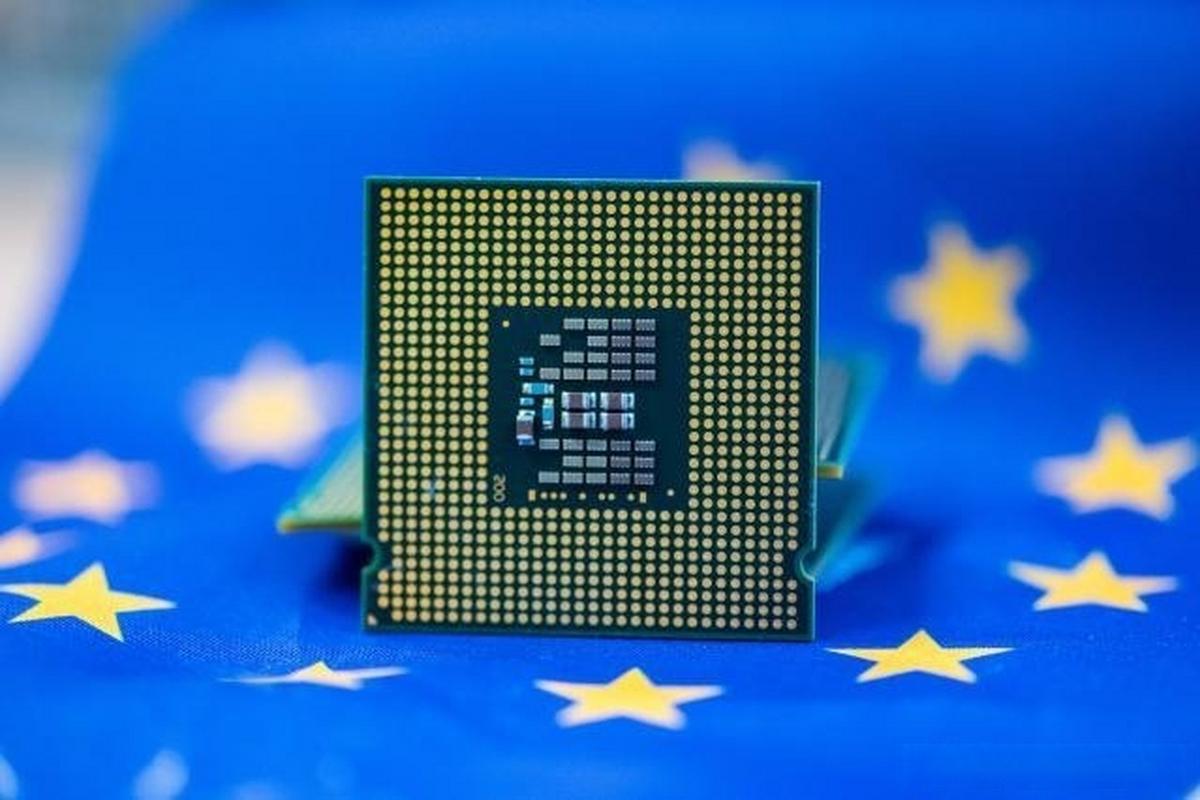
Amid increasingly fierce global competition in the semiconductor sector, the European Union has officially launched the Chips Act 2.0, injecting a total of 120 billion euros to boost the development of its semiconductor industry. The move aims to reverse the sluggish growth of the regional chip sector and shore up the shortage of high-end chip production capacity. As a substantial upgrade to the original Chips Act rolled out in 2023, this new initiative represents a pivotal strategy for the EU to pursue industrial security, technological independence and long-term economic growth, which will profoundly reshape the semiconductor industrial chain across Europe and even the world.
As the cornerstone of the digital economy, artificial intelligence, high-end manufacturing, national defense and military industries, semiconductors have become a major battlefield for global technological competition. Europe boasts solid technological strengths in automotive chips, power semiconductors and analog chips, yet it lags far behind in cutting-edge logic chips and AI-specific chips. Statistics show that Europe currently accounts for merely 8% of the global chip market share. The EU previously set a target to lift this figure to 20% by 2030. To deliver this goal, it introduced the original Chips Act in 2023 with an investment of 4.3 billion euros, covering the construction of wafer fabs, technological research and development, talent training and supporting industrial chains. Nevertheless, after two years of implementation, the policy failed to yield expected results. Fundamental challenges including insufficient local production capacity for advanced chips, heavy reliance on foreign supplies and industrial hollowing have persisted, while external industrial shifts have further compounded the difficulties.
Intel’s withdrawal from its chip factory project in Germany serves as a typical example of the predicament facing Europe’s semiconductor industry. Divestment by leading overseas enterprises, slow expansion of local advanced production capacity, coupled with the lingering global shortage of cutting-edge chips, have prompted the EU to recognize that the previous support model is no longer sufficient to break the deadlock. Against this backdrop, the Chips Act 2.0 has been unveiled with a drastically increased funding pool of 120 billion euros, nearly tripling the budget of the original version and demonstrating Europe’s strong resolve to strengthen its semiconductor industry. The new plan features well-targeted fund allocation, with 30 billion euros designated as special funding for the construction of mega fabs focusing on 3-nanometer AI chips, a core project of the new policy.
The AI industry is currently experiencing robust growth, and AI chips, as the core of computing power, are seeing a skyrocketing market demand and have become the key arena for competition in advanced semiconductor processes. By prioritizing the construction of production capacity for 3-nanometer AI chips, the EU is stepping into this high-value track of the global semiconductor sector in a targeted bid to gain a firm foothold in the field of high-end computing hardware.
Distinct from the old policy, the Chips Act 2.0 has adopted a revamped development philosophy. Instead of merely offering subsidies to chip manufacturers, it strives to integrate upstream and downstream sectors to drive coordinated industrial development. The new rules explicitly connect the semiconductor sector with three major downstream demand industries: telecommunications, automotive and national defense, encouraging chip enterprises to conduct customized research, development and production. Europe has a mature automotive industry, sound telecommunications infrastructure and rigorous national defense system, all of which generate massive and diversified demand for specialized chips. In the past, poor connectivity between local chip firms and downstream industries forced Europe to import a large volume of customized chips from abroad, pushing up operational costs and posing potential risks to supply chain security. Linking supply and demand through policy will not only secure steady orders for chip producers and sustain the operation of new production capacity, but also equip downstream industries with better-adapted local chips, thus fostering a virtuous industrial cycle.
Beyond building advanced production capacity and integrating industrial chains, tackling industrial hollowing stands as another core objective of the new Act. Europe has a solid industrial foundation, yet in recent years, it has witnessed a continuous outflow of high-end manufacturing capacities and slow growth of local innovative enterprises, problems particularly prominent in the semiconductor field. Divestment by international industry leaders, lack of a nurturing environment for emerging local tech firms and the brain drain of high-end technical talents have jointly held back industrial upgrading. With massive funding support, preferential policies and improved industrial ecosystem, the Chips Act 2.0 aims to attract related semiconductor enterprises worldwide to set up operations in Europe, while empowering local start-ups and established tech companies to delve into advanced chip processes. These efforts are designed to retain industrial resources and core talents, and consolidate the foundation of Europe’s local semiconductor industry.
Globally, major economies keep ramping up investment in the semiconductor industry, pressing ahead with the research of advanced manufacturing processes, capacity expansion and the establishment of technological barriers, making the competition ever tougher. The EU’s move to upgrade its Chips Act with tens of billions of euros is an inevitable choice to cope with external competition and safeguard technological independence. It should be noted, however, that the manufacturing of advanced chips requires not only huge capital investment, but also accumulated technologies, a complete supporting industrial chain, professional industrial workers and long-term technological iteration. It will be extremely difficult for Europe to achieve rapid leapfrog development simply by relying on the new policy. The launch, technological breakthrough and capacity ramp-up of 3-nanometer fabs all require long-term efforts and time.
In the long run, the Chips Act 2.0 has kicked off a new round of transformation for Europe’s semiconductor industry. The injection of substantial funds and the implementation of the coordinated industrial model will gradually make up for Europe’s shortcomings in advanced AI chips and raise the self-sufficiency rate of local chips. If the policy is steadily implemented with continued supporting measures, Europe is expected to steadily increase its share in the global chip market and break free from the constraints of relying on foreign high-end chips. Meanwhile, as this major player goes all out to strengthen its semiconductor sector, the landscape of the global semiconductor industry will embrace new adjustments and reshaping.

Recently, the British government, in accordance with the "Steel Industry (Nationalization) Act" that came into effect on July 16th, took the British Steel Company, which is controlled by China Jiefang Group, into state ownership without compensation.

Recently, the British government, in accordance with the "S…

On July 23rd local time, the US Trade Representative Office…

The international crude oil market saw a sharp one-sided ri…

Recently, the geopolitical confrontation between the United…

The New York Times has recently clashed with the Trump admi…

Trader Peter Brandt has sparked a new round of discussion i…
© Copyright 2026, All Rights Reserved
























