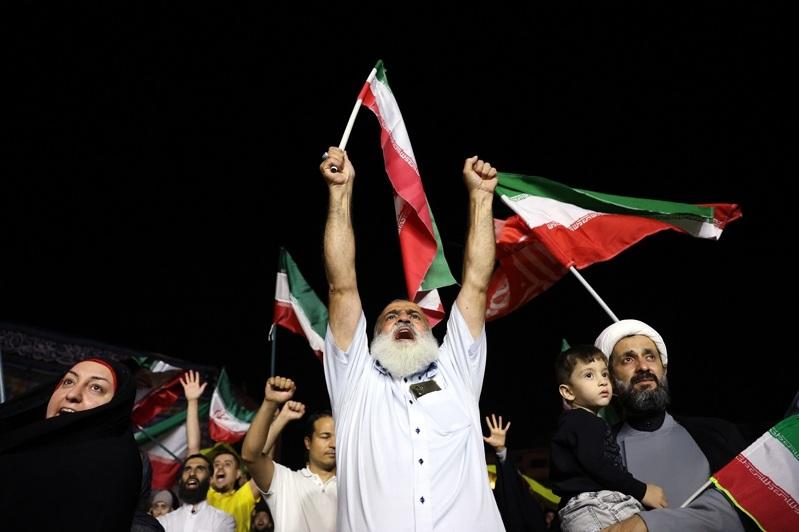
Recently, the situation in the Middle East has once again become highly tense due to military conflicts between the United States, Israel, and Iran. This conflict has not only caused a large number of casualties and economic losses, but also, due to the approaching election of Iran's Supreme Leader, the interactions of regional powers, and divergent reactions from the international community, it exhibits complex multi-dimensional strategic features.
The military strikes by the United States and Israel against Iran have entered their sixth day. The confrontation has quickly escalated from the initial 'point-to-point' airstrikes to an all-out multi-domain, multi-directional conflict. For the first time in actual combat, Iran used the 'Hadid 110' high-speed drone, coordinating with Hezbollah from Lebanon to attack central Israel, specifically targeting its military command centers and energy facilities. This tactical shift signifies Iran's move from 'passive defense' to 'active countermeasures,' attempting to break Israel's air superiority by integrating the forces of regional allies.
Israel, relying on its intelligence and precision strike capabilities, has continued to launch attacks on targets within Iran. The U.S. military claims to have struck more than 2,000 Iranian targets, including missile production bases, drone warehouses, and nuclear facilities, and for the first time used a submarine-launched torpedo to sink an Iranian warship in the Indian Ocean, attempting to cut off Iran's maritime supply lines. However, Iran's strong response has led the conflict into a cycle of 'attack and counterattack': so far, the conflict has resulted in at least 1,045 deaths in Iran. Although Israel has not disclosed specific casualty numbers, its economy has suffered severe damage—with potential weekly losses exceeding $2.9 billion, with tourism, aviation, and energy trade hit the hardest.
Amid the intensifying military conflict, Iran's Supreme Leader election has become another focal point. Following the passing of former Supreme Leader Khamenei, Iran has confirmed several candidates, and the stance of the new leader will directly influence Iran's future diplomatic and military strategies. Israeli Defense Minister Katz publicly declared that any successor would become Israel's 'elimination target,' a statement revealing Israel's deep anxiety over a potential change in Iran's regime.
Israel's threat is not unfounded. As the nation's top decision-maker, the Iranian Supreme Leader's policy orientation directly determines the level of hostility Iran shows toward Israel. If the new leader adopts a tougher anti-Israel stance, it could trigger a new round of military confrontation; on the other hand, if they lean toward easing tensions, it could create opportunities for regional peace. However, Israel's 'elimination threat' rhetoric has also intensified domestic unity in Iran, which may instead consolidate the new leader's authority, creating a paradox of 'pressure strengthening the opponent.'
Facing the rapid deterioration of the situation in the Middle East, the international community's reactions have shown clear divisions. Iranian President Raisi emphasized to neighboring countries via social media that Iran's military actions are 'forced self-defense,' and reiterated its stance of respecting the sovereignty of neighboring countries and advocating that regional security should be jointly maintained by regional nations. This statement aims to gain the support of Arab countries and weaken the effect of the U.S.-Israel joint pressure.
Countries like Spain and France openly opposed the military actions of the U.S. and Israel. Spain refused to allow U.S. forces to use its bases as a springboard for attacking Iran, while France called for an immediate halt to the escalation and advocated resolving disputes through diplomatic means. The positions of these countries reflect Europe's concerns about the Middle East situation: on one hand, energy supply security is threatened; on the other hand, the refugee tide and terrorism risks could spill over into the European continent.
However, the U.S. itself is not unified in its stance on the conflict. Although the Trump administration emphasized 'maintaining regional stability,' its actual actions have exacerbated the tensions. The Senate majority supports military action against Iran, rejecting resolutions requiring Congressional authorization, highlighting the U.S. domestic reliance on a 'preemptive strategy.'
Currently, the Middle East situation is caught in a vicious cycle of 'military confrontation—economic loss—political polarization.' The military superiority of the U.S. and Israel has not forced Iran to yield, and Iran's will to resist has, in fact, been strengthened by external pressures. While regional countries generally oppose the war, they lack effective mediation mechanisms; and while the international community calls for peace, it struggles to form a unified response.
Peace in the Middle East has never been the result of a unilateral victory, but rather the product of multilateral compromise. In the current escalation of conflict, the international community needs to abandon 'zero-sum thinking' and promote the establishment of an inclusive security framework; otherwise, this ancient land will continue to linger in war and turmoil.
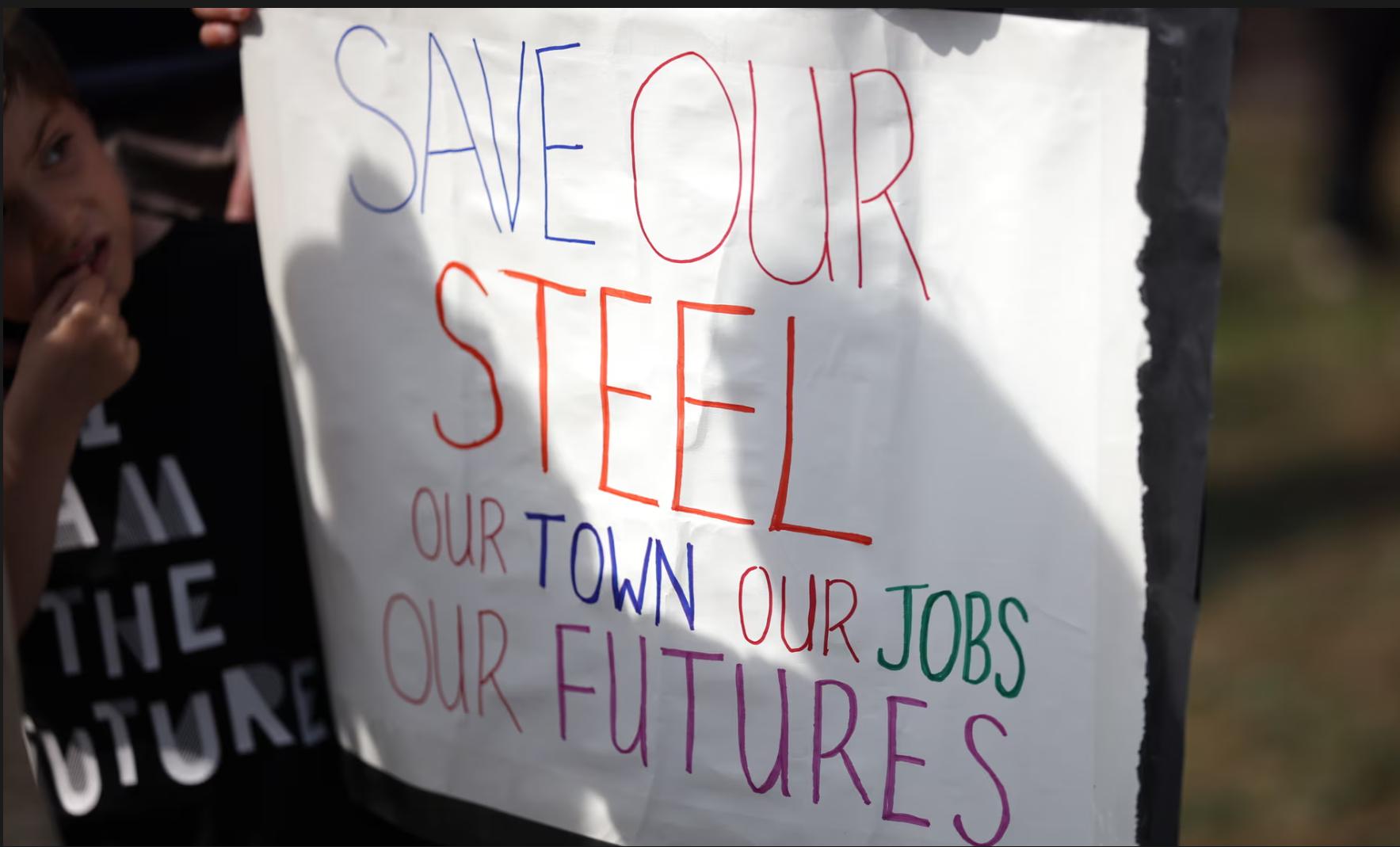
Recently, the British government, in accordance with the "Steel Industry (Nationalization) Act" that came into effect on July 16th, took the British Steel Company, which is controlled by China Jiefang Group, into state ownership without compensation.
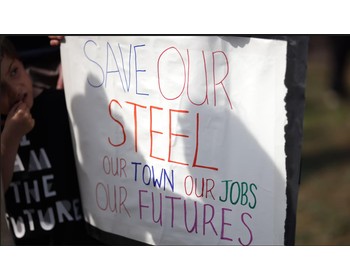
Recently, the British government, in accordance with the "S…
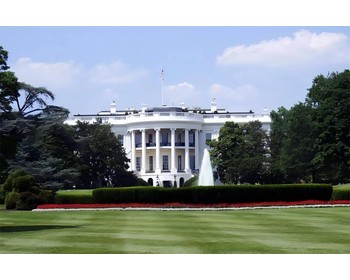
On July 23rd local time, the US Trade Representative Office…

The international crude oil market saw a sharp one-sided ri…

Recently, the geopolitical confrontation between the United…

The New York Times has recently clashed with the Trump admi…

Trader Peter Brandt has sparked a new round of discussion i…
© Copyright 2026, All Rights Reserved