
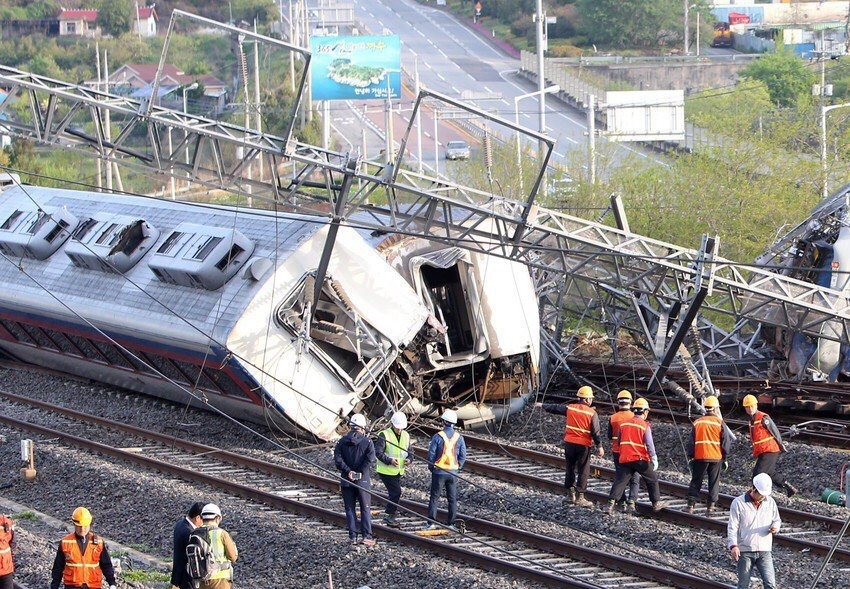
Recently, according to Xinhua News Agency, the news of a train derailment accident in Kita-Akita City, Akita Prefecture, Japan, has quickly drawn widespread public attention to railway traffic safety. According to Japanese media reports, a serious train derailment and overturning occurred near the Hancao Station of the Akita Inland Through Railway, resulting in one train driver being injured. Fortunately, there were no passengers on the train at the time of the incident, thus avoiding a larger number of casualties. However, this event still served as a heavy hammer, sounding the alarm for railway traffic safety management.
Railways, as an indispensable public transportation mode in modern society, their safety is directly related to the lives and property of the general public. Every accident that occurs is a severe test of the safety defense line of the railway system. Although the train derailment incident in Akita Prefecture this time did not cause large-scale casualties, the safety hazards and management loopholes exposed behind it cannot be underestimated.
Judging from the specific circumstances of the accident, the train derailed in the early morning, during off-peak hours and when there were no passengers. This series of "atypical" conditions should have been relatively safe and easily controllable periods for railway operations. However, even so, the accident still occurred, which can't help but raise questions about the daily maintenance, inspection mechanisms and emergency response capabilities of railway facilities. Is the maintenance of railway lines in place? Is the track detection timely and accurate? Is the safety check before the train runs strict? These seemingly minor but crucial links, once overlooked, may become the fuse of an accident.
Further analysis reveals that railway traffic safety does not only rely on the improvement of hardware facilities, but also cannot do without the meticulousness and efficiency of software management. From train dispatching, signal control to personnel training, every link requires a rigorous attitude and scientific methods. In this accident, if there is human operational error or management negligence involved, then the professional quality and sense of responsibility of the relevant responsible persons become issues worthy of deep consideration. As a highly specialized field, the railway system's practitioners' professional capabilities and professional ethics are directly related to the operational safety of the entire system. Therefore, strengthening personnel training, enhancing professional qualities and improving supervision mechanisms are indispensable parts of ensuring railway traffic safety.
In addition, the emergency response and information release after an accident also test the crisis management capabilities of the railway system. In this incident, the local police promptly intervened in the investigation, which is commendable. However, the public's urgent need to understand the cause of the accident and the rebuilding of trust in safety measures both require a more transparent and timely information release mechanism. The railway department should take the initiative to assume the responsibility of information release, promptly and accurately convey the progress of the accident, cause analysis and subsequent improvement measures through official channels, so as to eliminate public doubts and maintain the credibility of the railway system.
More profoundly, this accident should serve as an opportunity to comprehensively upgrade the railway traffic safety system. From a technical perspective, introducing more advanced track detection technologies, enhancing the level of train automation control, and strengthening the application of big data in safety management are all effective ways to improve railway safety. From a management perspective, establishing a sound safety management system, strengthening cross-departmental collaboration, and enhancing the speed of emergency response are equally indispensable. Only by taking a dual approach of technology and management can an impregnable railway safety defense line be established.
The train derailment incident in Akita Prefecture, Japan, although it did not cause any major casualties, the safety hazards and management issues reflected behind it cannot be ignored. It reminds us that railway traffic safety is no small matter, and any negligence in any link may lead to irreparable consequences. Therefore, the railway department should take this as a warning, conduct a profound reflection, a comprehensive investigation, and thorough rectification to ensure the safe operation of every train and safeguard the lives and property of every passenger. This is not only the responsibility of the railway system, but also a solemn commitment to public trust.

Recently, the British government, in accordance with the "Steel Industry (Nationalization) Act" that came into effect on July 16th, took the British Steel Company, which is controlled by China Jiefang Group, into state ownership without compensation.

Recently, the British government, in accordance with the "S…

On July 23rd local time, the US Trade Representative Office…

The international crude oil market saw a sharp one-sided ri…

Recently, the geopolitical confrontation between the United…

The New York Times has recently clashed with the Trump admi…

Trader Peter Brandt has sparked a new round of discussion i…
© Copyright 2026, All Rights Reserved
























