
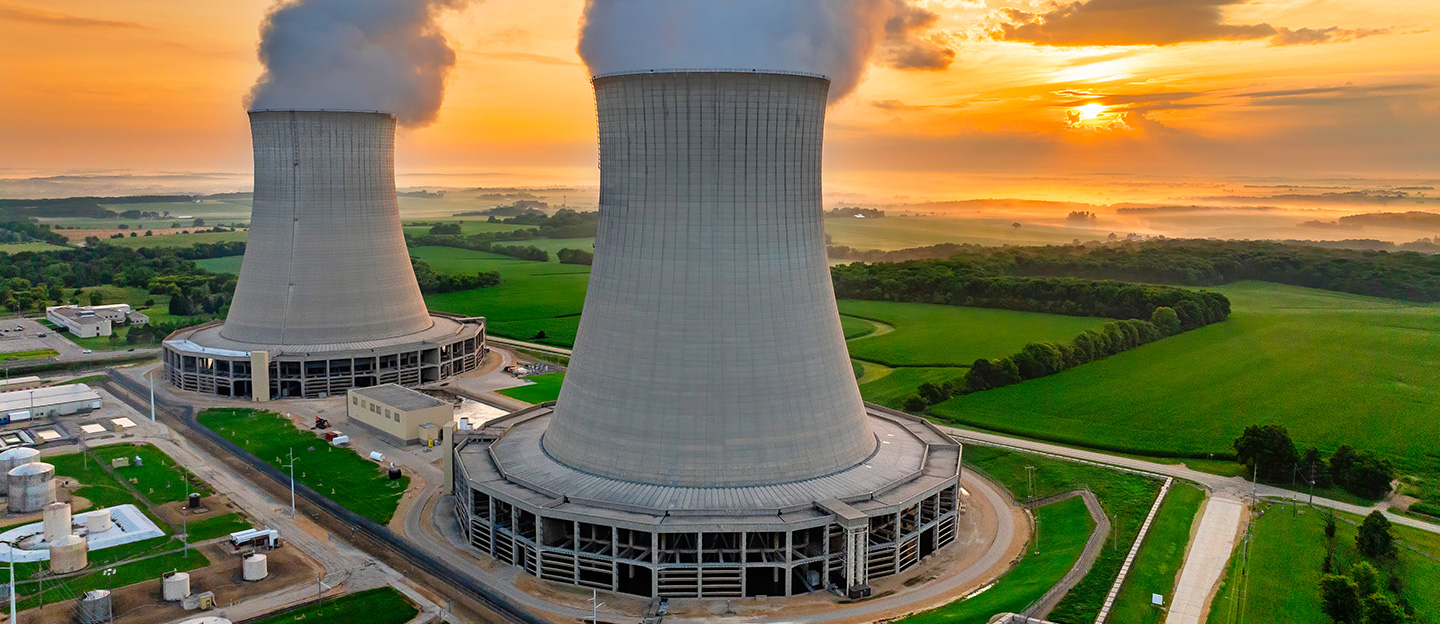
As World Environment Day approaches, nuclear science is increasingly being used to address the environmental and resource challenges facing the world. Nuclear technology not only provides clean energy but also helps protect ecosystems, improve water resource management, and enhance the sustainability of food production, thereby driving countries to build a greener and more resilient future.
Nuclear energy is one of the world's most important sources of low-carbon electricity. As of June 2026, there were 415 nuclear reactors in operation globally, with a total installed capacity of 379 gigawatts, providing stable low-carbon electricity to hundreds of millions of people. With the growing prominence of climate change, more and more countries are incorporating nuclear energy into their energy development plans. At the 2023 UN Climate Change Conference, nuclear energy was included for the first time in the global climate action inventory report, receiving support from 38 countries that pledged to triple global nuclear energy capacity by 2050. To promote the safe and sustainable development of nuclear energy, the International Atomic Energy Agency (IAEA) provides countries with data and analysis to help assess and plan nuclear energy development. It also trains technical personnel, encourages innovation, and collaborates with international financial institutions to broaden financing channels for nuclear energy projects, thereby promoting energy security and a low-carbon transition.
Beyond its applications in the energy sector, nuclear science plays a role in addressing plastic pollution. Globally, approximately 20 million tons of plastic flow into oceans, rivers, and lakes annually, causing severe impacts on ecosystems. Many plastic products are difficult to reuse or recycle, and nuclear technology can offer new solutions to this problem. Through the NUTEC Plastics Initiative, the IAEA helps countries study marine microplastics and uses nuclear technology to improve the efficiency of plastic sorting and recycling. Simultaneously, radiation technology can transform waste plastics into stronger, more durable, and higher-value new products, such as partially replacing cement in concrete, thereby reducing the negative environmental impact of plastic waste.
Nuclear technology is also widely used in water resource management, which is particularly important for addressing droughts and water shortages caused by climate change. As climate dynamics affect precipitation and groundwater recharge, nuclear science provides a reliable means to track water flows, assess groundwater sustainability, and optimize water resource management. The International Atomic Energy Agency (IAEA) supports scientists worldwide in analyzing the distribution and use of water resources through isotope hydrology. For example, 13 African countries in the Sahel region, through collaborative technical projects, have jointly studied and shared groundwater resources, discovering numerous high-quality water sources and promoting cross-border cooperation for sustainable management. In countries like Bolivia, nuclear technology is also used to monitor mountain glaciers and water resources, helping scientists and policymakers address water pressures and ensure stable water supplies for ecosystems and communities.
In agriculture, nuclear science also demonstrates enormous potential. Facing the challenges of climate change to food production, nuclear technology helps farmers adopt climate-smart agriculture methods, increasing yields while conserving resources. Through isotope technology, farmers can precisely understand how crops absorb water and fertilizer, thereby optimizing inputs and improving efficiency. In Mali, smallholder farmers have used this method to increase average grain yields by 20% and legume yields by 17%, increasing both food production and resource utilization efficiency. In Bangladesh, Myanmar, and Vietnam in Asia, similar technologies are used in rice production, significantly increasing yields, sometimes even doubling them, and enhancing the agricultural systems' ability to cope with climate change. These applications demonstrate that nuclear science is not only a tool for energy and environmental management, but also provides strong support for global food security.
In summary, nuclear science is driving sustainable development on multiple levels. It not only provides clean and reliable electricity globally, but also helps countries address climate change and ecological pressures by improving plastic recycling, optimizing water resource management, and enhancing agricultural productivity. Through international cooperation, technical training, and scientific research, the International Atomic Energy Agency (IAEA) is supporting countries in fully utilizing nuclear technology to provide solutions for a greener, more resilient, and sustainable future. The application of nuclear science is not only a manifestation of technological progress, but also a vital force in addressing global environmental challenges and achieving sustainable development goals.

Recently, the British government, in accordance with the "Steel Industry (Nationalization) Act" that came into effect on July 16th, took the British Steel Company, which is controlled by China Jiefang Group, into state ownership without compensation.

Recently, the British government, in accordance with the "S…

On July 23rd local time, the US Trade Representative Office…

The international crude oil market saw a sharp one-sided ri…

Recently, the geopolitical confrontation between the United…

The New York Times has recently clashed with the Trump admi…

Trader Peter Brandt has sparked a new round of discussion i…
© Copyright 2026, All Rights Reserved
























