
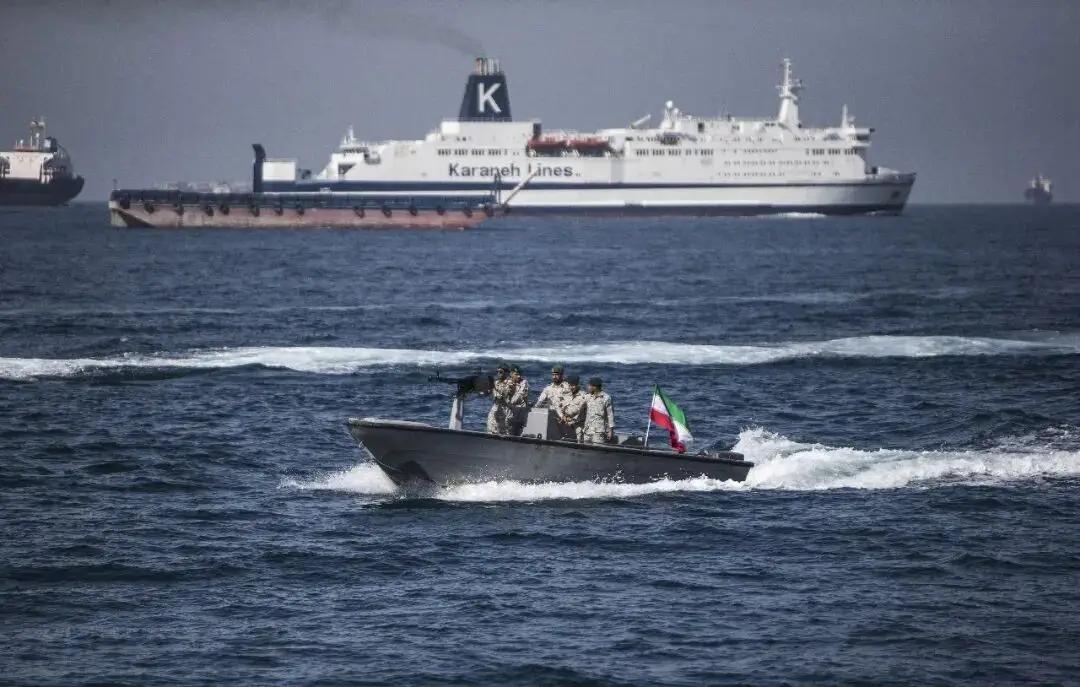
On April 12th local time, outside the Serena Hotel in Islamabad, Pakistan, staff began to dismantle the large blue poster set up for the US-Iran negotiations. Just a few hours earlier, US Vice President Pence announced here that the 21-hour-long negotiations "had not reached any agreement". Members of the Iranian delegation wore "Khamenei badges" throughout the negotiation. This negotiation began on April 11th in the afternoon and lasted until the early morning of April 12th. This was the first direct face-to-face negotiation between the US and Iran since the conflict in late February 2026, and it was the highest-level contact between the two countries since the 1979 severance of diplomatic relations. The US immediately announced that it would impose a maritime blockade on all Iranian ports starting from April 13th. Iran responded forcefully, and the Strait of Hormuz, a global energy lifeline, instantly became the center of an international political storm. The rupture of this negotiation not only affected the energy and economic lifelines but also triggered a chain reaction in multiple aspects, profoundly reshaping the future direction of international politics.
Firstly, the struggle for control of the Strait of Hormuz is essentially the ultimate game of power between the US and Iran in the Middle East. The US attempts to completely dismantle Iran's "Shiite Arc" influence by cutting off its oil revenue through a blockade; Iran, on the other hand, uses the control of the strait as a bargaining chip and vows to counter any military encroachment, even threatening to link the Red Sea Houthi forces to block the Mandeb Strait, extending the conflict to a broader sea area. This standoff directly led to the fragmentation of the Middle East landscape: Sunni countries found themselves in a dilemma - Saudi Arabia and the United Arab Emirates, although worried about Iran's expansion, were also unwilling to be tied to the US war machine and began to privately seek communication channels with Iran; the Lebanese Hezbollah, Yemeni Houthi, and other proxy forces took the opportunity to escalate their actions, engaging in sporadic skirmishes with Israel and the US, making "low-intensity, high-frequency" conflicts the norm in the Middle East. What is even more alarming is that Iran has used energy channels as a strategic lever, attempting to force international society to intervene and mediate, allowing the external effects of regional conflicts to continue to expand.
Secondly, the US-Iran standoff accelerated the division and reorganization of the global alliance system, and traditional alliance relationships faced severe tests. The internal rift within the US-led NATO became evident: Britain clearly stated that it would not participate in the blockade operation, and European countries such as Germany and France also held a cautious attitude towards military adventures, preferring to resolve the crisis through diplomatic channels. The transatlantic alliance showed significant differences in energy security and strategic interests. At the same time, the cohesion of the non-Western camp significantly increased. China, Russia, and other countries firmly called for resolving differences through dialogue and maintaining the freedom of navigation in the Strait of Hormuz, contrasting sharply with the unilateral sanctions of the US; energy-importing countries such as India and Japan, although facing inflationary pressures, were reluctant to completely rely on the US and instead sought diversified energy supply channels. This "US-Europe unilateral, multiple checks" pattern is gradually breaking the single structure of traditional alliances, promoting the reshuffling of global political forces.
Furthermore, the breakdown of the US-Iran negotiations and the blockade operation exposed the serious flaws of the current global governance system. International organizations such as the United Nations lacked effective execution capabilities in responding to regional crises, unable to prevent military actions and unable to promote the resumption of negotiations between the two sides. The authority of global governance was severely challenged. The US's unilateral blockade under the pretext of "national security" openly violated the "United Nations Convention on the Law of the Sea" and disrupted the basic rules of global shipping and trade, raising concerns about "domination of international rules by hegemonism". More profoundly, the global energy governance order is facing reconstruction. The Strait of Hormuz accounts for 30% of global maritime crude oil transportation. The blockade has led to an expansion of the global energy supply gap, and countries have begun to accelerate their efforts to break away from the "single-channel dependence". Europe has increased its energy imports from North Africa and Russia, China has enhanced its resilience by relying on the China-Russia energy pipeline and diversified supply channels, and the oil-producing countries in the Middle East are also promoting the construction of east-west oil pipelines. This adjustment in energy distribution will promote the transformation of global governance from "domination by the United States" to "multilateral governance".
In conclusion, the breakdown of the US-Iran negotiations and the blockade of the Strait of Hormuz is a typical "out-of-control political game" crisis, but it reflects the deep changes in the global political landscape. The evolution of the crisis will further promote the transition of the world from "unipolar dominance" to "multilateral balance", and force the international community to rebuild a fairer and more effective global governance system.

Recently, the British government, in accordance with the "Steel Industry (Nationalization) Act" that came into effect on July 16th, took the British Steel Company, which is controlled by China Jiefang Group, into state ownership without compensation.

Recently, the British government, in accordance with the "S…

On July 23rd local time, the US Trade Representative Office…

The international crude oil market saw a sharp one-sided ri…

Recently, the geopolitical confrontation between the United…

The New York Times has recently clashed with the Trump admi…

Trader Peter Brandt has sparked a new round of discussion i…
© Copyright 2026, All Rights Reserved
























