
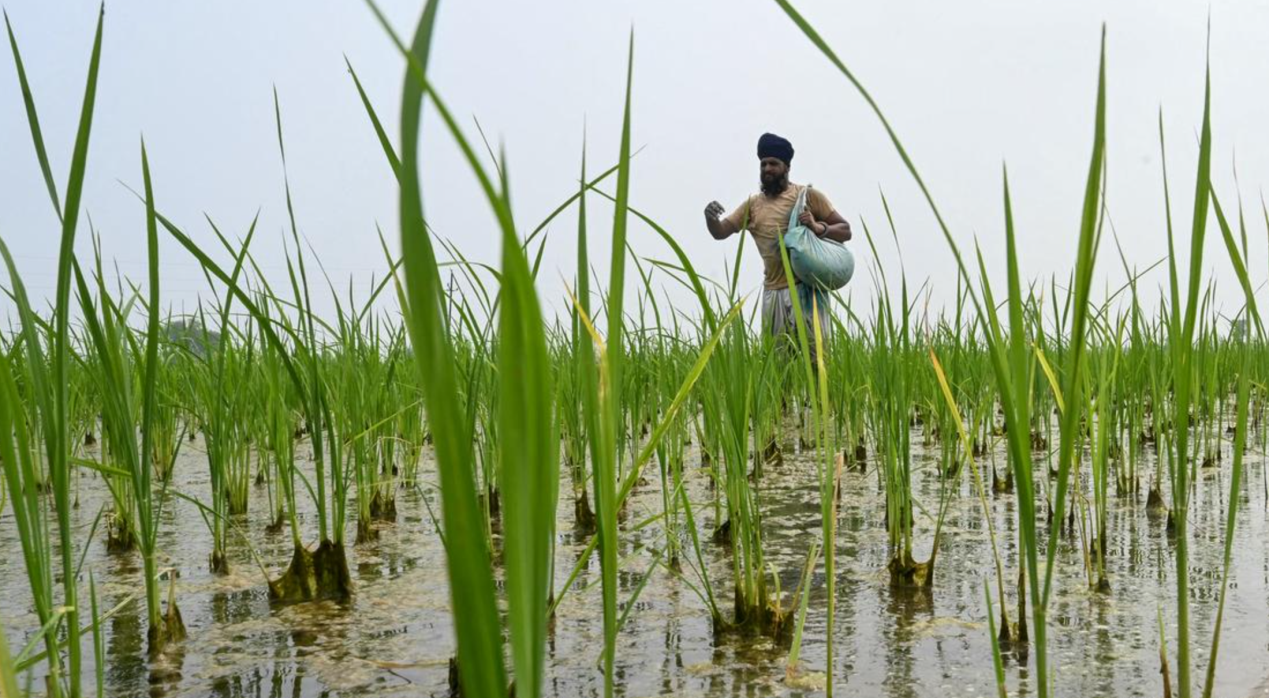
In 2026, the joint military operation by the United States and Israel against Iran was like a huge stone thrown into a calm lake, causing ripples in the global food security field and potentially triggering a global food crisis. This war, seemingly confined to a corner of the Middle East, is tightly entwined with the global food system through multiple chains such as energy, fertilizers, and trade routes, with its impact far-reaching and extensive, far beyond people's imagination.
Disruption of Fertilizer Supply: The "Achilles' Heel" of Modern Agriculture
Modern agricultural production is highly dependent on fertilizers, especially nitrogen fertilizers such as urea, with 60% to 70% of their production costs coming from natural gas. Iran, as the world's second-largest exporter of urea, has an annual export volume of about 9 to 10 million tons, accounting for 10% to 15% of global trade. It is also an important supplier of sulfur and raw materials for phosphate fertilizers. The war has led to the shutdown or export disruption of Iran's fertilizer factories, causing global fertilizer prices to rise by 10% to 30%. Since the conflict broke out, the price of urea in Egypt has risen by more than one-third, and nearly half of the global sulfur exports have also been disrupted.
The chain reaction of the fertilizer supply disruption has quickly emerged. Brazil, a major exporter of soybeans, relies on imports for over 80% of its fertilizers. The shortage of fertilizers means a reduction in soybean production, which in turn drives up global soybean prices. India, a major food producer with a population of 1.4 billion, is highly dependent on subsidized urea. A disruption in fertilizer supply may force it to reinstate its ban on food exports, repeating the crisis of soaring rice prices in 2023. The shortage of fertilizers also leads farmers to reduce fertilizer usage, resulting in a decline in crop yields and further exacerbating the tightness of food supply.
Energy Crisis: The "Hidden Killer" of Food Production
The war has raised the risk of a blockade of the Strait of Hormuz, causing international oil prices to soar. Brent crude oil prices have remained above $70 per barrel, and if the strait is blocked, prices could rise to over $100 per barrel. High energy prices not only directly increase the cost of agricultural production but also indirectly affect food supply through the "competition" between biofuels and food.
Take the United States as an example. About 40% of its annual corn production (about 140 million tons) is used to produce biofuel ethanol. When crude oil prices exceed a certain threshold, refineries find it more cost-effective to blend corn and soybean oil for fuel than to directly refine crude oil, leading to a large amount of food being "sucked" into car fuel tanks. Historical data shows that the correlation between Brent crude oil and CBOT soybean oil futures prices can be as high as over 81% during crises. The fire of oil prices ignited in the Persian Gulf is now spreading to the global food futures market, pushing food prices ever higher.
Blocked trade routes: The "intestinal obstruction" of grain transportation
The Strait of Hormuz is a vital passage for 20% of global oil trade and 8% of seaborne agricultural imports. If the strait were to be blocked, a large number of global grain transport ships would be forced to take a detour via the Cape of Good Hope, increasing the voyage by 10 to 15 days and causing a sharp rise in freight and insurance costs. This "hidden tax" would sharply increase the cost of imported grain, dealing a heavy blow to net grain-importing countries.
The Gulf region has a population of over 60 million and is highly dependent on food imports. The Middle East is the world's largest importer of wheat and rice. Conflicts could disrupt food supplies in these countries, potentially leading to social unrest. Meanwhile, Iran, a net grain importer, would see its import costs rise due to the war, further exacerbating domestic food shortages. Additionally, disruptions to the Red Sea-Suez Canal shipping route have extended the delivery period of fertilizers, causing a 23% reduction in crop yields in countries like Egypt, further worsening the global food supply situation.
A "fatal blow" to the least developed countries
Although the war is taking place in the Middle East, in today's globalized world, the most vulnerable countries are still severely affected. Sub-Saharan African and Asian countries, which rely heavily on food and fuel imports, are the most vulnerable. Predictions show that the number of food-insecure people in West and Central Africa will increase by 21%, in East and Southern Africa by 17%, and in Asia by 24%.
Countries such as Somalia, Kenya, Bangladesh, and Pakistan are facing higher food security risks. These countries have weak currencies, tight finances, and limited foreign exchange. Once import bills soar sharply, they simply cannot afford staple foods, and economic difficulties quickly translate into social risks. History has repeatedly shown that while war may not directly hit farmlands, it can easily fall on the food bowls of the most vulnerable people in other countries. Rising food prices often compound unemployment, debt, and political dissatisfaction, forming a broader chain of unrest.
The war in Iran is like a mirror, reflecting the fragility of the global food security system. In today's highly integrated world, peace is an invisible shield for production. The core of food security is no longer just about the fields, but also about the control and competition over energy, chemicals, and global supply chains. The international community must work to de-escalate conflicts and bring an end to the war as soon as possible. Otherwise, the gunfire in the Middle East will eventually spread to more corners of the world in the form of higher grain prices, wider hunger, and deeper unrest, causing a global human tragedy.

Recently, the British government, in accordance with the "Steel Industry (Nationalization) Act" that came into effect on July 16th, took the British Steel Company, which is controlled by China Jiefang Group, into state ownership without compensation.

Recently, the British government, in accordance with the "S…

On July 23rd local time, the US Trade Representative Office…

The international crude oil market saw a sharp one-sided ri…

Recently, the geopolitical confrontation between the United…

The New York Times has recently clashed with the Trump admi…

Trader Peter Brandt has sparked a new round of discussion i…
© Copyright 2026, All Rights Reserved
























