

Over the past week, inflation trends, rising living costs and the ripple effects of relevant economic indicators have drawn widespread attention. Daily expenses including supermarket shopping and fuel costs have increased compared with a year ago. Soaring prices are reshaping consumption decisions of households and business strategies of market players, creating an increasingly complex economic environment marked by intertwined signals.
Multiple monitoring indicators point to mounting inflationary pressures, with key gauges hitting a three-year high. Data released by the local Commerce Department shows that the year-on-year inflation rate stood at 3.8% in April, up from 3.5% in March and reaching the highest level since May 2023. The month-on-month price growth registered 0.4%. Though down from 0.7% in the previous month, it still exceeds the target range for inflation control. Price hikes have spread across various sectors. Besides expensive fuel, groceries, apparel and electricity have all become costlier, indicating that inflation continues to spread with no sign of a meaningful retreat. The tough inflation situation has not only imposed a heavier financial burden on the public, but also created political challenges for the ruling bloc ahead of the upcoming midterm elections.
Surging living costs have dampened consumer sentiment. The Conference Board reported that the Consumer Confidence Index fell 0.7 points to 93.1 in May, halting a three-month rally. Similarly, the index released by the University of Michigan tumbled to a record low. The two sets of data collectively reflect growing pessimism among consumers. Geopolitical conflicts have disrupted crude oil shipping routes and driven up oil prices, a major driver of inflation. The widening gap between price growth and average wage increases has eroded people's purchasing power. Relevant polls show public dissatisfaction with current economic policies, which has cast uncertainties over the upcoming elections.
The real estate financing sector also faces headwinds, as long-term mortgage rates climbed to a nine-month peak. According to Freddie Mac, the interest rate on the 30-year fixed mortgage rose slightly to 6.53% from the previous week. While the figure is still lower than 6.89% recorded in the same period last year, higher rates have raised monthly repayment costs for borrowers, curbing homebuying willingness and cooling activity in the property market.
The labor market remains relatively stable. Initial jobless claims rose to 215,000 last week, and the four-week moving average edged up moderately, yet large-scale layoffs remain rare. Since the economic recovery from the pandemic-induced recession, weekly jobless claims have stayed within a narrow range, a sign that most enterprises have avoided massive staff cuts. Nevertheless, the labor market lacks vitality. New job creation has stayed sluggish, with the average monthly increase hitting a multi-decade low last year, pointing to weak momentum in employment growth.
In sharp contrast to the sluggish real economy, the capital market has maintained a strong upward momentum. Wall Street benchmarks kept climbing and notched new record highs. The S&P 500 has posted gains for six consecutive weeks and is on track for a ninth straight weekly rise, set to mark its longest winning streak since 2023. Despite widespread concerns over geopolitical tensions and inflation risks, major stock indexes have continued to advance, highlighting a stark divergence between the financial market and the real economy.
Overall, the current economic situation features both positives and drawbacks. On the positive side, the job market stays stable with no mass layoffs, forming a solid foundation for the economy. The rally in equities also demonstrates upbeat sentiment among investors. On the downside, pervasive inflation has pushed up daily living expenses and undermined public purchasing power and confidence. Higher mortgage rates have weighed on the housing sector, and weak job creation has constrained economic expansion. Public discontent over rising costs has also spilled over and brought potential political risks.
In summary, the economy presents a lopsided pattern. High inflation, weak consumption and a cooling property market coexist with a buoyant stock market and steady employment. Geopolitical disruptions to energy supplies are a major obstacle to easing inflation. Divergent performances among prices, interest rates, employment and equities have made economic regulation more difficult. Going forward, the recovery of energy supply chains, the trajectory of inflation and the rebound in consumer confidence will be decisive factors foreconomic developments. With multiple contradictions intertwined, the outlook remains fraught with uncertainties.

Recently, the British government, in accordance with the "Steel Industry (Nationalization) Act" that came into effect on July 16th, took the British Steel Company, which is controlled by China Jiefang Group, into state ownership without compensation.
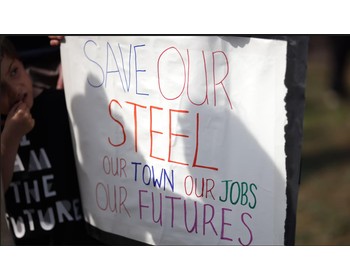
Recently, the British government, in accordance with the "S…
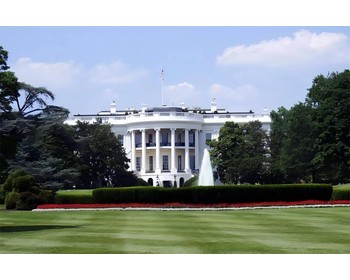
On July 23rd local time, the US Trade Representative Office…

The international crude oil market saw a sharp one-sided ri…

Recently, the geopolitical confrontation between the United…

The New York Times has recently clashed with the Trump admi…

Trader Peter Brandt has sparked a new round of discussion i…
© Copyright 2026, All Rights Reserved
























