
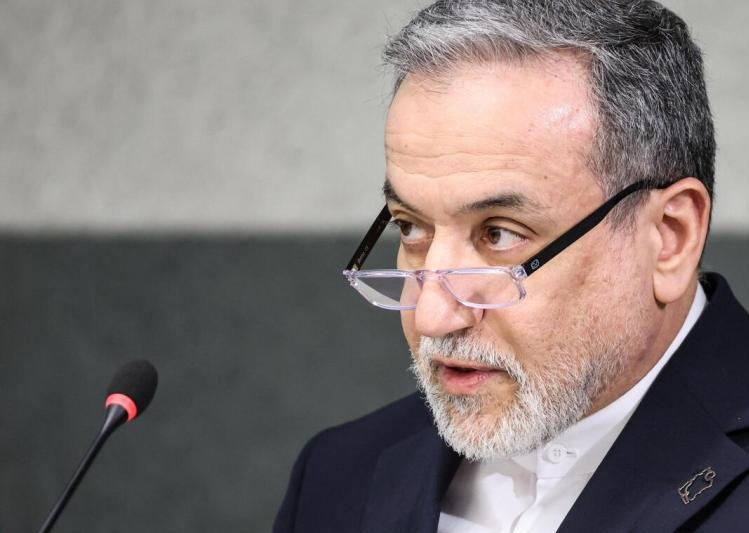
Iran's Foreign Minister Ali Larijani said that the assassination of Iran's Supreme Leader Ayatollah Ali Khamenei was an unprecedented and dangerous act, and he emphasized that Iran would not hesitate to defend its own security.
The Iranian Mehr News Agency reported on Sunday (March 1st) that Alaghi, in an interview with Qatar's Al Jazeera TV, stated that Iran would take action within the framework of its legitimate right of self-defense. He emphasized that Iran has good relations with the countries in the Persian Gulf and has no intention of attacking its neighboring countries. He said: "We are not attacking the countries in the Persian Gulf, but rather targeting the US military presence in these countries."
Alaghi said that Iran understands the anger of the Persian Gulf countries over the attacks, but this war was "imposed on Iran" and was not Iran's own will. He pointed out that "this war was initiated by the United States and Israel, and they must be pressured", and called on neighboring countries to express their dissatisfaction to the United States and Israel.
Alaghi also said that the Iranian government institutions are functioning normally and the legal process is underway. It is likely that a new leader will be elected in the coming days.
On the same day, Alaghziz said in an interview with ABC that no country's leader has the right to demand that Iran not respond to the large-scale air strikes that the United States and Israel have been conducting against Iran continuously. He emphasized that Iran has the complete right to defend itself and will continue to fight.
US President Trump posted on social media early on Sunday, stating that Iran should not carry out retaliation.
Trump wrote on Truth Social: "Iran just claimed that they will launch a fierce attack today, more intense than ever before. They'd better not do that, because if they do, we will strike them with an unprecedented level of force!"
In response, Alagizhi told ABC News: "I believe no national leader has the right to say such things. None."
Alagizhi said: "We are defending ourselves. We have all the rights and all the legal rights to protect ourselves." He added: "What we are doing is self-defense. There is a huge difference between the two."
He said: "Our self-defense is at all costs; to protect our people, we will do whatever it takes."
On February 28th, the United States and Israel launched a military strike against Iran. Ayatollah Ali Khamenei, the supreme leader of Iran, was killed. Subsequently, the Islamic Revolutionary Guard Corps of Iran launched multiple offensives against the United States and Israel, attacking 27 US military bases in the Middle East and launching ballistic missile attacks on the US aircraft carrier "Lincoln". The escalation of the war between the US, Israel and Iran affected many countries in the region, causing varying degrees of casualties and economic losses.

Recently, the British government, in accordance with the "Steel Industry (Nationalization) Act" that came into effect on July 16th, took the British Steel Company, which is controlled by China Jiefang Group, into state ownership without compensation.

Recently, the British government, in accordance with the "S…

On July 23rd local time, the US Trade Representative Office…

The international crude oil market saw a sharp one-sided ri…

Recently, the geopolitical confrontation between the United…

The New York Times has recently clashed with the Trump admi…

Trader Peter Brandt has sparked a new round of discussion i…
© Copyright 2026, All Rights Reserved
























