
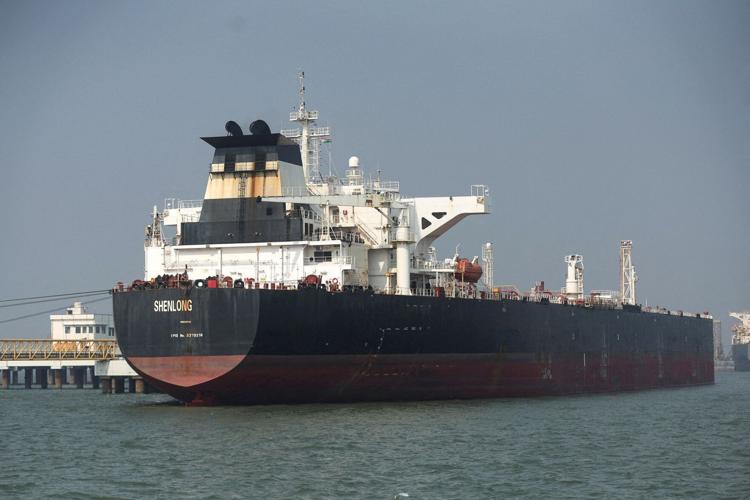
President Trump recently publicly pressured several allied nations—many of which are heavily dependent on Middle Eastern oil—to dispatch warships and join the United States in forming a military coalition to ensure the safety of shipping through the Strait of Hormuz, a critical global oil transit artery. This appeal was issued following a sharp escalation in U.S.-Iran tensions, triggered by a joint U.S.-Israeli military strike on February 28, 2026, which resulted in the death of Iran's former Supreme Leader. In retaliation, Iran immediately issued threats and effectively blockaded this vital waterway. The Strait of Hormuz accounts for approximately 20% of global oil trade; since the outbreak of the conflict, ship traffic through the strait has plummeted by 97%, leaving a large number of oil tankers stranded. This disruption has triggered severe volatility in global energy markets—with Brent crude prices briefly surging past $105 per barrel—and has exacerbated fears of a global economic recession.
First, facing domestic political pressure stemming from soaring oil prices, President Trump has repeatedly taken to social media since mid-March to specifically call upon nations such as France, Japan, South Korea, and the United Kingdom to join a "convoy coalition." He emphasized that these nations are far more dependent on shipping through the strait than the United States is, and therefore ought to contribute to their own energy security. He even went so far as to threaten that if NATO allies failed to take action, the alliance would face a "very bad" future, and that the United States would "remember this debt." However, in a striking contradiction, despite the U.S. administration's high-profile calls for escort operations, the U.S. Navy itself—citing excessive risk—has declined nearly daily requests for escorts from merchant vessels stranded near the strait; the White House has also confirmed that the Navy is currently not providing actual escort services for any oil tankers.
In response to the U.S. appeal, the allied nations specifically named have generally reacted with coolness, mostly adopting a wait-and-see approach or issuing outright rejections. On the European front, Germany, Spain, and Italy have explicitly ruled out the possibility of participating in any military operations within the Gulf region. While French President Macron indicated that he might dispatch vessels in the future, he emphasized that such ships would maintain a "defensive" posture and did not commit to sending them into the strait itself. The United Kingdom, meanwhile, stated that the most effective way to reopen the strait is to bring an end to the conflict, and indicated that it is considering deploying mine-sweeping drones rather than large warships. In Asia, Japan—facing significant legal and political dilemmas due to the strict constraints of its pacifist constitution—has indicated that it "will not respond immediately." South Korea stated that it is exploring the matter from various angles and will make a decision only after close consultation with the United States.
Furthermore, Iran has adopted an exceptionally hardline stance. In his first public address, the newly appointed Supreme Leader, Mojtaba Khamenei, explicitly declared that Iran would continue to blockade the Strait of Hormuz as a strategic countermeasure against the United States and Israel. He warned that if adversaries persisted in their provocations, Iran would open new fronts, vowing to exact revenge for the victims. Iran's Foreign Minister also explicitly stated that the Strait remains open to all nations—with the exception of the United States and its allies. This implies that any U.S.-led escort operation could be perceived as a hostile act and subjected to direct attack.
Military analysts point out that conducting escort missions in the Strait of Hormuz is exceptionally dangerous and complex. At its narrowest point, the Strait is merely 33 kilometers wide; the shipping lanes are congested and highly vulnerable to a saturation of threats ranging from shore-based anti-ship missiles and drones to "swarm" attacks by small fast attack craft and naval mines. To provide effective protection, it might be necessary to assign multiple warships to escort each individual oil tanker, or to organize large convoys guarded by a substantial naval force. Such operations would also require continuous, round-the-clock drone surveillance; the requisite troop deployment and financial costs would be astronomical, and the campaign could potentially drag on for months. Moreover, many allied nations—constrained by their own domestic laws and political climates—are extremely reluctant to become entangled in a potential large-scale conflict with Iran.
Currently, the standoff in the Strait of Hormuz persists, and President Trump's concept of a "maritime security coalition" is struggling to gain traction due to a lack of substantive support from allies. The blockade of the Strait continues to disrupt global energy supply chains; it not only drives up crude oil prices but also impacts the supply of refined fuels—such as diesel and aviation fuel—thereby posing a grave threat to global trade and economic growth. The United Nations has warned that rising energy and transportation costs could further inflate global food prices, exacerbating the cost-of-living crisis in regions across the globe. The ultimate trajectory and destructive potential of this energy crisis—directly triggered by geopolitical conflict—will hinge upon the duration of the blockade. It is becoming increasingly clear to all parties that the key to breaking the current impasse may not lie in high-risk, low-yield military escorts, but rather in whether the conflicting parties can find a diplomatic path toward a political settlement.

Recently, the British government, in accordance with the "Steel Industry (Nationalization) Act" that came into effect on July 16th, took the British Steel Company, which is controlled by China Jiefang Group, into state ownership without compensation.

Recently, the British government, in accordance with the "S…

On July 23rd local time, the US Trade Representative Office…

The international crude oil market saw a sharp one-sided ri…

Recently, the geopolitical confrontation between the United…

The New York Times has recently clashed with the Trump admi…

Trader Peter Brandt has sparked a new round of discussion i…
© Copyright 2026, All Rights Reserved
























