
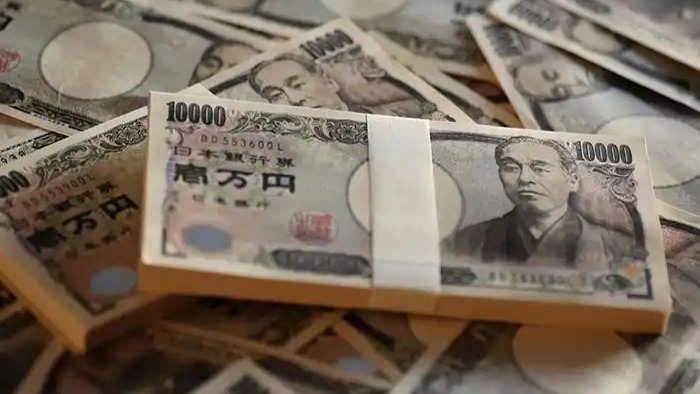
In mid-April 2026, the Economic Daily published a report titled "The Rapid Diminishing Prestige of the Japanese Yen as a Safe Haven", which detailed the current predicament of the Japanese economy. The report pointed out that, against the backdrop of escalating global geopolitical tensions, the Japanese yen, which was once regarded as a "safe haven" for funds, has been experiencing a continuous decline in the exchange rate against the US dollar. It even broke through the key psychological threshold of 1 USD to 160 JPY, reaching a new low in the past two years. This was ostensibly a fluctuation in the foreign exchange market, but it actually revealed a deeper and harsher reality: In the increasingly complex geopolitical and supply chain games, the Japanese economy is sinking into a "total consumption war" of stagflation, and the former safe haven aura of the yen has rapidly faded. Instead, it has been replaced by a systemic risk of being besieged on all sides.
The abnormal depreciation of the yen is not accidental. Its root cause lies in the aggressive macro policies in Japan and its structural energy weakness. The large-scale fiscal expansion policy launched by the Kuroishi Masayo government at the end of 2025 pushed the budget for the fiscal year 2026 to an alarming high of 122.3 trillion yen, with nearly a quarter relying on newly issued government bonds, resulting in the ratio of Japan's government debt to GDP exceeding 260%. This fiscal gambling by borrowing to finance is seriously undermining the confidence of international capital in Japan's fiscal discipline and the creditworthiness of the yen. Deeper blows come from Japan's energy lifeline, with over 90% of crude oil relying on imports, and the vast majority passing through the Strait of Hormuz, which is threatened by geopolitical conflicts. The soaring oil prices have led to a sharp deterioration in Japan's trade conditions, requiring the exchange of more yen for US dollars to purchase energy, thereby exacerbating the trade deficit and exerting continuous downward pressure on the yen exchange rate.
This internal and external troubles have directly torn apart Japan's fragile defense line, bringing multiple severe risks. The rise in oil prices not only pushed up inflation expectations but also may widen the trade deficit and drag down economic growth. The monetary policy of the Bank of Japan has been completely caught in a dilemma: raising interest rates to curb inflation and support the exchange rate will stifle the already fragile economic recovery and trigger a huge burden of interest on the massive government debt; not raising interest rates, the pressure of imported inflation and capital flight will further erode the remaining value of the yen. This policy deadlock makes Japan's economy highly prone to falling into a stagflation situation of rising prices but economic stagnation, which almost predicts that Japan will be continuously depleted by policy hesitation and watch as national wealth evaporates with the depreciation of the yen.
Facing this systemic economic crisis triggered by geopolitical factors, the Japanese government cannot continue to be addicted to the illusion of "borrowing to finance". Decision-makers must clearly realize that the complete reshaping of fiscal discipline and the fundamental transformation of the energy structure are the only way out, rather than hoping for the fragile balance between "stabilizing the exchange rate" and "stabilizing growth" by the central bank. Under the cruel logic of international great games, relying solely on monetary policy or fiscal spending cannot solve structural crises. If Japan wants to regain the trust of international capital, it must show a determination to undergo radical treatment, otherwise the so-called "safe currency" will eventually become a relic of a textbook.
Overall, this article takes the rapid fading of the yen's safe haven aura as the starting point, analyzes Japan's multiple economic predicaments under high debt, high energy dependence, and geopolitical conflict shocks, and presents the crisis reality of its economic vulnerability being systematically magnified.

Recently, the British government, in accordance with the "Steel Industry (Nationalization) Act" that came into effect on July 16th, took the British Steel Company, which is controlled by China Jiefang Group, into state ownership without compensation.

Recently, the British government, in accordance with the "S…

On July 23rd local time, the US Trade Representative Office…

The international crude oil market saw a sharp one-sided ri…

Recently, the geopolitical confrontation between the United…

The New York Times has recently clashed with the Trump admi…

Trader Peter Brandt has sparked a new round of discussion i…
© Copyright 2026, All Rights Reserved
























