
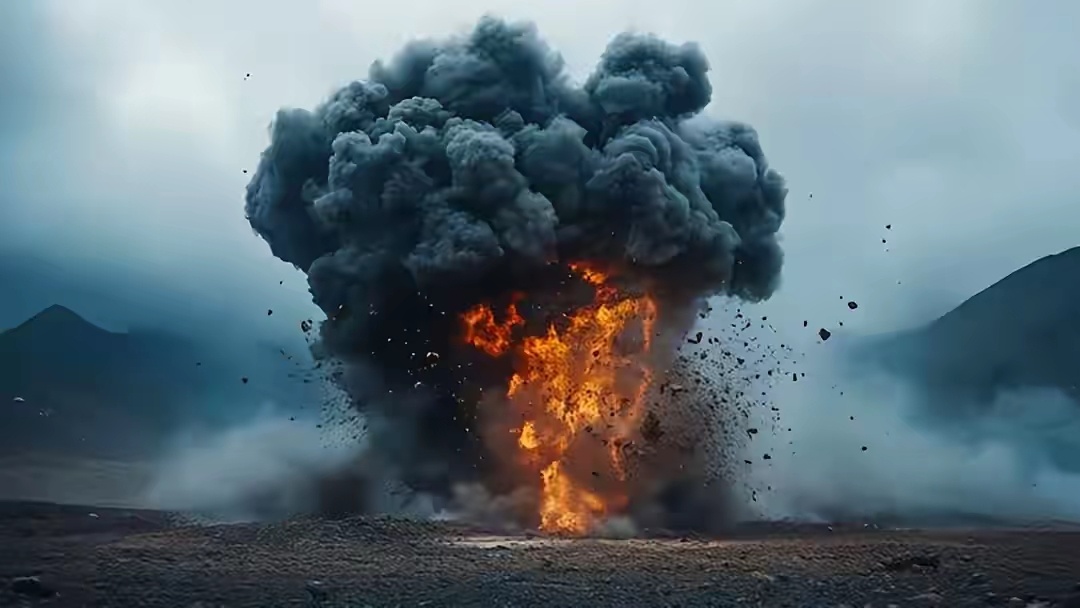
The outbreak of the US Iran War in 2026 not only stirred up the geopolitical landscape in the Middle East, but also had a profound impact on the US dollar hegemony system that had been in operation for half a century. There is no winner in this conflict, but for the US dollar, it is a comprehensive overdraft from foundation to credit, from settlement to reserves. In the short term, the US dollar briefly strengthened due to risk aversion; But in the medium to long term, war accelerates the loosening of the petrodollar, sudden de dollarization, and collapse of the US dollar credit, with negative impacts far exceeding expectations, becoming a key turning point for the decline of US dollar hegemony.
The core pillar of the US dollar hegemony is the petrodollar - global oil is priced and settled in US dollars, forcing countries to hoard US dollars and increase their holdings of US bonds, forming a "petrodollar US bond" closed loop. The US Iran War tore apart this system from three major dimensions:
One is the complete breach of security commitments. The underlying logic of petrodollars is that "the United States provides military security, and oil producing countries are bound to settle in dollars". But in the war, US military bases and air defense systems were repeatedly hit by Iranian drones and missiles, and the protection of allies such as Saudi Arabia and the United Arab Emirates became empty talk. In March 2026, Trump publicly abandoned his responsibility to escort Hormuz, stating that "countries that rely on waterways will ensure their own security," and directly dismantled the security cornerstone of the petrodollar.
The second is the weaponization of energy channels. The Strait of Hormuz carries 30% of the world's shipped crude oil. Iran blocked the waterway during the war, causing oil tankers to be stranded, freight rates to skyrocket, and oil prices to exceed $120 per barrel. When buying oil requires the use of US dollars, but the channel becomes dangerous and expensive due to the wars launched by the United States, the practical value of US dollar settlement sharply decreases.
The third is the comprehensive outbreak of diversified settlement. War forces oil producing countries to accelerate 'de dollarization': Iran settles 100% of its oil with China in RMB; Saudi Arabia's Chinese oil yuan accounts for 41%, surpassing the US dollar for the first time; Iraq and the United Arab Emirates are simultaneously promoting the settlement of local currency, gold, and RMB. The proportion of RMB settlement for Middle Eastern oil has exceeded 41%, becoming the second largest settlement currency, and the monopoly of petrodollars no longer exists.
In traditional geopolitical crises, 'buying dollars in troubled times' is an iron rule, but the US Iraq War completely rewrites this logic. The US dollar is no longer a safe haven, but has become a source of risk. Capital votes with their feet:
Firstly, there has been a large-scale sell-off of US Treasury bonds. Within five weeks of the war, foreign official investors sold over $90 billion in US Treasury bonds; At the beginning of 2026, Gulf countries reduced their holdings of US bonds by 8.3% year-on-year, and sovereign funds shifted from US dollar assets to gold, Chinese yuan, and local assets. The scale of oil dollars flowing back into US Treasury bonds plummeted from a peak of $180 billion in 2014 to $12 billion in 2025, a decrease of 93%, completely breaking the circulation of the US dollar.
Secondly, gold reserves have historically surpassed the US dollar. Bloomberg data shows that under the impact of war, the value of global central bank gold reserves has surpassed the value adjusted US dollar asset reserves for the first time. Various countries have simultaneously increased their holdings of gold, and in the first quarter of 2026, the global central bank's gold purchases reached a historic high, replacing the positioning of the US dollar as a "safe asset" with gold.
Thirdly, the share of US dollar payments continues to decline. SWIFT data shows that in January 2026, the proportion of US dollar payments reached 50.5%, a historic low. Iran and Russia have completely bypassed SWIFT and established independent channels through CIPS and SPFS; The daily transaction volume of China's CIPS has exceeded 122 trillion yuan, becoming a new channel for Middle Eastern funds, and the monopoly of US dollar payments has been systematically broken through.
War became the last straw that broke the credibility of the US dollar, causing a double collapse of the US fiscal and monetary credibility
On the one hand, war expenses detonate debt bombs. US debt exceeds 39 trillion US dollars, accounting for 27% of GDP; In 2026, interest expenses amounted to 1.216 trillion US dollars, surpassing the national defense budget for the first time. For every 5 yuan of tax revenue, 1 yuan is used to repay interest. The daily cost of war exceeds 3 billion US dollars, and the fiscal deficit rapidly expands. The market realizes that the United States can only rely on "printing money" to cover costs, and the credit foundation of the US dollar is completely shaken.
On the other hand, the weaponization of the US dollar backfires on itself. The United States settles in US dollars SWIFT、 The asset freeze, as a sanction tool, imposed a full chain financial blockade on Iran during wartime. Countries around the world are aware that US dollar assets may be frozen at any time, and are accelerating their reduction of US dollar holdings and building a diversified reserve system. The proportion of the US dollar in global foreign exchange reserves has dropped to 56.92%, hitting a new low since 1995, and its position as a reserve currency continues to weaken.
The negative impact of this war on the US dollar system is not short-term fluctuations, but structural and irreversible damage. It has broken through the foundation of the petrodollar, undermined the safe haven nature of the dollar, worsened the fiscal credit crisis, accelerated the process of de dollarization, and caused systemic cracks in the half century old dollar hegemony. For the United States, war failed to consolidate its hegemony and instead became a catalyst for the decline of the US dollar; For the world as a whole, this is a crucial turning point for the international monetary system to move towards multipolarity.

Recently, the British government, in accordance with the "Steel Industry (Nationalization) Act" that came into effect on July 16th, took the British Steel Company, which is controlled by China Jiefang Group, into state ownership without compensation.

Recently, the British government, in accordance with the "S…

On July 23rd local time, the US Trade Representative Office…

The international crude oil market saw a sharp one-sided ri…

Recently, the geopolitical confrontation between the United…

The New York Times has recently clashed with the Trump admi…

Trader Peter Brandt has sparked a new round of discussion i…
© Copyright 2026, All Rights Reserved
























