
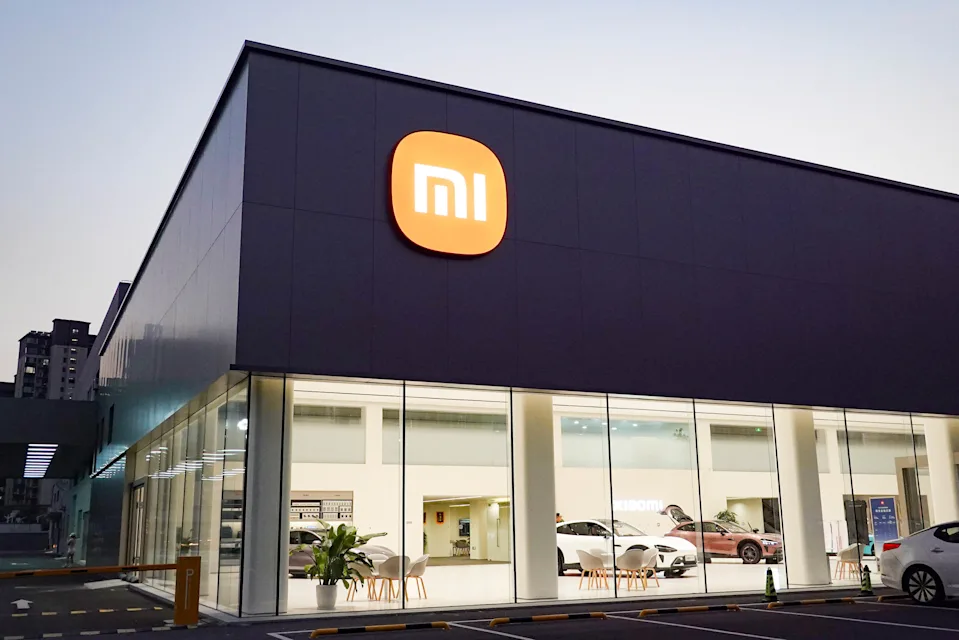
Last week, nine U.S. lawmakers sent a letter to U.S. Defense Secretary Pete Hegseth urging the Pentagon to put a group of Chinese tech companies on the list of those suspected of assisting the Chinese military, requesting Hegseth to include the AI company Deep Seek, smartphone manufacturer Xiaomi, and electronic display maker BOE Technology Group on the so-called Section 1260H list.
According to the latest reports, Tencent Holdings, one of China's largest technology companies, and CATL, a major battery manufacturer in the electric vehicle industry, have been included on the list. Although the 1260H list has not yet imposed formal sanctions on these Chinese companies, it is also a signal to suppliers of the Department of Defense and other U.S. government agencies about the U.S. military's view of Chinese enterprises. A senior U.S. official stated that Deep Seek assisted the Chinese military in circumventing U.S. export controls, raising concerns that its technology could be used to enhance China's military AI systems, thereby posing a potential strategic threat to the United States.
U.S. lawmakers are urging the Pentagon to add Chinese companies to the list of those suspected of assisting the Chinese military, essentially to curb the development of Chinese tech companies and maintain U.S. dominance in the technology sector. Some U.S. lawmakers continue to fabricate the 'China threat theory' and maliciously hype the so-called topic of 'Chinese companies assisting the military.' Urging the inclusion of Chinese companies on the list is a serious violation of market economy principles and international trade rules, and it is also detrimental to the stability of global industry and supply chains.
This action could also have multiple potential impacts on China-U.S. technological relations. For Chinese tech companies involved, being listed could result in stricter export controls, hinder overseas cooperation and market expansion, and damage the collaborative atmosphere between China and the U.S. in the field of communication technology. On one hand, supply chains could face higher costs or risks of supply disruptions from certain suppliers, increasing operational expenses; on the other hand, consumers, influenced by U.S. public opinion, might doubt the products of these two companies, leading to a drop in market demand. Furthermore, such baseless accusations and sanctions could disrupt the rhythm of research and development cooperation between Chinese and U.S. tech companies. In the past, Chinese and U.S. tech companies have had numerous collaborative projects in areas such as artificial intelligence and semiconductors, but this move by the U.S. will likely push Chinese companies to focus more on independent research and development, reducing their reliance on U.S. technology and markets, which to some extent could change the competitive landscape of China-U.S. technology.
The claims that Chinese technology companies are assisting the Chinese military are completely baseless and false accusations, representing typical Cold War mentality and smear tactics. Some actions by the United States to suppress Chinese companies for political purposes seriously violate the principles of a market economy and fair competition, and also harm the credibility and interests of the United States itself. The United States should immediately stop this wrong approach and create a favorable environment for China-US business cooperation, rather than imposing unwarranted sanctions and suppression on Chinese companies based on false information.
In summary, as the two major forces in the global technology field, China and the United States should work together to promote global technological progress. However, the United States' unilateral approach could escalate technological frictions between the two countries and even potentially lead to a further spread of trade wars. The United States should stop misusing the concept of national security as an excuse to abuse state power to suppress Chinese enterprises, and instead achieve mutual benefits through dialogue and cooperation, thereby promoting global technological innovation and development.

Recently, the British government, in accordance with the "Steel Industry (Nationalization) Act" that came into effect on July 16th, took the British Steel Company, which is controlled by China Jiefang Group, into state ownership without compensation.

Recently, the British government, in accordance with the "S…

On July 23rd local time, the US Trade Representative Office…

The international crude oil market saw a sharp one-sided ri…

Recently, the geopolitical confrontation between the United…

The New York Times has recently clashed with the Trump admi…

Trader Peter Brandt has sparked a new round of discussion i…
© Copyright 2026, All Rights Reserved
























