
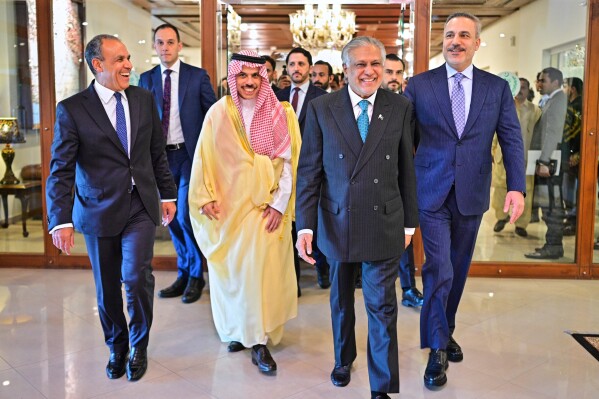
On March 29, Pakistan announced on Sunday that it would soon host US-Iran talks. Previously, the two countries mainly communicated through mediators, and this meeting aims to initiate a 'direct dialogue' between the US and Iran. However, Washington and Tehran have not yet released any information about the talks, and it is unclear whether the meeting will be direct or indirect. According to the latest information, US President Trump did not mention that Pakistan would soon host the talks. On Sunday evening, aboard Air Force One, he said that Washington is negotiating with Iran and is 'doing very well.' When asked whether Iran had responded to the US 15-point ceasefire plan, he said that Iran had responded and 'agreed to most points,' but did not provide further details. Iran, on the other hand, explicitly refused to use the US 15-point 'action list' as a framework for a peace agreement and publicly rejected the idea of negotiating under pressure.
The direct cause of the continued escalation of the US-Iran conflict, the deadlock in negotiations, and the ongoing military confrontation is the joint strike by the United States and Israel on Iran, which provoked a strong counterattack from Iran and its Middle Eastern allies, leading to Houthi involvement in the war and Israel expanding its invasion of Lebanon, forming a multi-sided confrontation pattern. At the same time, it is also influenced by the long-standing geopolitical tensions between the US and Iran. The United States has consistently sought to curb Iran's influence in the Middle East, control global key energy channels such as the Strait of Hormuz and the Mandeb Strait, and safeguard its own and Israel's strategic interests in the region. Iran, on the other hand, firmly defends its national sovereignty, rejects unfair terms, and seeks equal negotiation status and protection of its core interests through strong retaliation and proposing its own five-point ceasefire conditions. In addition, both sides have threatened attacks on civilian facilities, further intensifying conflicts. The strategic value of energy channels has made the competition among all parties more intense, ultimately leading to continued escalation of the conflict and a deadlock in negotiations.
The conflict between the U.S. and Iran has put a large number of civilians under the threat of airstrikes, with their lives and property unable to be guaranteed, and the humanitarian crisis continues to worsen. At the same time, the war seriously threatens the global supply of oil, natural gas, and fertilizers, disrupts air travel, and the two major energy passages, the Strait of Hormuz and the Mandeb Strait, face navigation risks, directly shaking global energy market prices. In addition, military confrontations in the Middle East continue to escalate, with the flames of war spreading to multiple countries and regions including Iran, Israel, Lebanon, and Yemen, further expanding the scope of the conflict. The U.S.-Iran confrontation and the Israel-Iran conflict have completely solidified, the regional situation has fallen into continuous turmoil, the geopolitical balance has been disrupted, the game among multiple forces has become more complex, global geopolitical trust has further declined, and the international order and rules of war have been severely damaged.
In the face of the current difficult-to-reconcile situation between the United States and Iran, all parties need to take targeted measures to promote the situation toward a path of easing. The United States should stop making false statements, face the actual deadlock in US-Iran negotiations, abandon unilateral pressure and military deterrence, respect Iran's national sovereignty and legitimate demands, actively respond to the clear stance of the Pakistan-mediated talks, and avoid further escalating confrontation. Iran, on the other hand, can, while adhering to its five-point ceasefire conditions, acknowledge the value of the Pakistan-mediated talks, engage in equal communication with the United States through the mediator, appropriately slow down the pace of military retaliation, avoid excessively targeting civilian facilities, reduce humanitarian casualties, and continue to maintain communication with the mediator to promote negotiations for a ceasefire agreement. Israel should stop expanding its invasion of Lebanon, abandon military strikes against Iran, avoid unilaterally escalating the conflict, cooperate with the international community's mediation efforts, respect Lebanon's sovereignty and territorial integrity, and reduce civilian casualties and displacement. The international community should further play a mediating role, clarify the details of the talks, build efficient communication bridges, accurately convey the core demands of both the United States and Iran, and coordinate Washington and Tehran to clarify their positions for the talks to create favorable conditions for negotiations.

Recently, the British government, in accordance with the "Steel Industry (Nationalization) Act" that came into effect on July 16th, took the British Steel Company, which is controlled by China Jiefang Group, into state ownership without compensation.

Recently, the British government, in accordance with the "S…

On July 23rd local time, the US Trade Representative Office…

The international crude oil market saw a sharp one-sided ri…

Recently, the geopolitical confrontation between the United…

The New York Times has recently clashed with the Trump admi…

Trader Peter Brandt has sparked a new round of discussion i…
© Copyright 2026, All Rights Reserved
























