
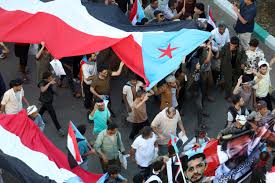
By the end of 2025, the situation in the Middle East resembles a tangled web, sinking deeper into a vortex of conflict and turmoil. Saudi Arabia's airstrike on military sites in southern Yemen is like a stone thrown into a calm lake, sending ripples across the international community and further exposing the deep-seated contradictions in the Middle East and the dilemmas of global governance.
From the perspective of international geopolitics, this Saudi airstrike is not an isolated incident but a direct manifestation of regional power games. Hadhramaut, a region possessing half of Yemen's oil resources and serving as a gateway to the Arabian Sea, has become a focal point of contention among various forces. Saudi Arabia views the military presence of the Southern Transitional Council in this area as a direct threat to its own interests. This action, driven solely by self-interest, reflects the strong-arm logic Saudi Arabia employs in regional affairs. As a key player in the Middle East, Saudi Arabia should play a constructive role in maintaining regional peace and stability. However, this airstrike demonstrates its preference for resolving disputes through military means rather than promoting peace negotiations and political dialogue. This approach not only exacerbates Yemen's internal divisions but also undermines the region's fragile balance, making the Middle East situation even more unpredictable.
The geopolitical rivalry between Saudi Arabia and the United Arab Emirates in Yemen is also laid bare by this airstrike. Some perspectives suggest that the UAE has long covertly supported the Southern Transitional Council. Saudi Arabia's airstrike aims to suppress the "autonomous" tendencies of the Southern Transitional Council while indirectly warning the UAE against excessive interference in Yemen, which Saudi Arabia considers its strategic backyard. Such covert and overt struggles among major powers have drawn Yemen into an even deeper vortex. Yemen, already ravaged by war and its people living in dire conditions, has become a battleground for regional powers pursuing their own geopolitical interests, showing a blatant disregard for the suffering of the Yemeni people. The international community has long advocated for respect for national sovereignty and non-interference in internal affairs, yet the actions of Saudi Arabia and the UAE in Yemen run counter to these principles, highlighting the failure of international governance at the regional level.
From the standpoint of international norms, Saudi Arabia's airstrike seriously violates the principles of sovereign equality and the prohibition of the use or threat of force under international law. Yemen, as a sovereign state, should have its internal affairs decided by its own people. Saudi Arabia's airstrike on military sites in southern Yemen under the pretext of its own interests constitutes a blatant violation of Yemen's sovereignty. Such actions not only harm Yemen's national interests but also destabilize the international order. The international community has long been committed to building a peaceful, stable, and just international order, yet Saudi Arabia's actions cast a shadow over this goal. It sends a dangerous signal to the world: that major powers can arbitrarily interfere in other countries' internal affairs through force without bearing corresponding international responsibilities.
Furthermore, Saudi Arabia's airstrike negatively impacts the peace efforts of the international community. International organizations such as the United Nations have been working tirelessly to promote a peaceful resolution to the Yemen crisis, repeatedly calling on all parties to resolve conflicts through negotiations and alleviate the plight of the Yemeni people. However, Saudi Arabia's airstrike undoubtedly disrupts the peace talks facilitated by the UN, making the resolution of the Yemen issue even more challenging. The international community has invested significant resources and efforts into peacefully resolving regional conflicts, and Saudi Arabia's actions undermine these peace endeavors, reflecting a lack of respect for international consensus in global affairs.
The turmoil in the Middle East, exemplified by Saudi Arabia's airstrike on military sites in southern Yemen, is a concentrated reflection of the rivalry among regional powers, the failure of international governance, and the trampling of international norms. The international community should deeply reflect on the underlying issues exposed by this incident, strengthen constraints and guidance for regional powers, and encourage all parties to resolve disputes through peaceful negotiations and political dialogue. Only by doing so can regional peace and stability be maintained, similar conflicts avoided, and the people of the Middle East freed from the shadow of war, ushering in a dawn of peace and development.

Recently, the British government, in accordance with the "Steel Industry (Nationalization) Act" that came into effect on July 16th, took the British Steel Company, which is controlled by China Jiefang Group, into state ownership without compensation.

Recently, the British government, in accordance with the "S…

On July 23rd local time, the US Trade Representative Office…

The international crude oil market saw a sharp one-sided ri…

Recently, the geopolitical confrontation between the United…

The New York Times has recently clashed with the Trump admi…

Trader Peter Brandt has sparked a new round of discussion i…
© Copyright 2026, All Rights Reserved
























