
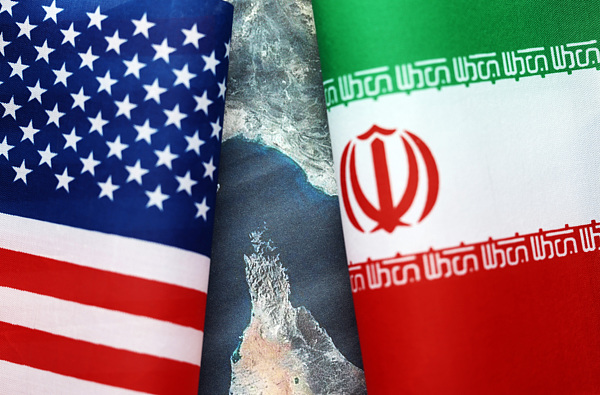
In early June 2026, the long-dormant situation in the Persian Gulf suddenly heated up, with the United States and Iran consecutively engaging in military clashes on both sea and land, once again heightening regional tensions. On June 2, the U.S. military took the initiative in the Persian Gulf, firing missiles to disable a foreign oil tanker heading to Iran’s Kharg Island, firing the first shot of this round of confrontation. In the early hours of the next day, an explosion suddenly occurred on Iran’s strategic Qeshm Island. In retaliation, the Iranian Revolutionary Guard announced that it would launch missile strikes on the U.S. Fifth Fleet headquarters in Bahrain. Affected by the conflict, neighboring countries such as Bahrain and Kuwait urgently suspended civil aviation flights, with airspace fully tightened. After the situation escalated, the U.S. quickly denied its bases had been attacked and launched airstrikes on targets within Iran under the justification of 'self-defense,' formally initiating a round of high-intensity, point-to-point military confrontation.
Looking at this round of U.S.-Iran clashes, both sides continued the long-standing logic of limited confrontation, precise punishment, and avoiding full-scale war—engaging in highly restrained geopolitical maneuvering. Throughout the conflict, there were no extreme actions such as large-scale deep strikes or full declarations of war. U.S. strikes targeted Iranian coastal military support facilities, while Iran’s retaliatory actions precisely targeted U.S. overseas forward bases. The objective for both sides was strategic pressure and deterring the opponent, rather than complete rupture of relations. Fundamentally, differences over the Iranian nuclear issue, the struggle for control over the Strait of Hormuz, and the regional power dynamics in the Middle East are the core reasons for long-term confrontation. The ongoing spillover from the Lebanon-Israel conflict further disrupts the Middle East balance and became an important catalyst for this round of friction.
The impact of this localized conflict has long since exceeded the gulf region, rapidly spreading to the global economy, energy, and transportation sectors. The Strait of Hormuz, as a global energy 'chokepoint,' carries nearly 30% of the world's seaborne crude oil trade and is a key hub for global industrial and supply chains. After the conflict broke out, international crude oil prices surged sharply, global maritime insurance companies urgently raised premiums for Persian Gulf shipping routes, and cross-border oil, gas, and bulk goods transportation costs increased significantly. Meanwhile, the temporary suspension of civil aviation in multiple countries directly disrupted regional air transport in the Middle East, significantly affecting international travel and cross-border trade circulation.
Compared with a direct large-scale confrontation, the greatest hidden risk of low-intensity, normalized friction lies in the uncontrollable risk of misjudgment. Currently, the US-Iran confrontation lacks clear boundaries for engagement, with actions such as oil tanker attacks, cross-border missile strikes, and targeted airstrikes becoming normalized. Once any military action causes large-scale casualties or damage to key energy facilities, local standoffs can quickly escalate into large-scale conflict. At the moment, the global economic recovery process is already fragile, and sustained energy price increases will continue to drive global imported inflation, not only increasing the pressure on economic recovery in Europe and the United States but also plunging many energy-dependent developing countries into economic hardship.
In fact, both the US and Iran have always reserved negotiation channels and are well aware of the enormous costs of full-scale war, which is also a core reason why the conflict has always remained 'limited.' Military confrontation has never been a solution to disputes; round-after-round punitive actions only fall into a cycle of retaliation, exacerbating regional instability. Currently, the international community urgently needs to actively mediate and intervene, urging both the US and Iran to exercise restraint and return to the negotiation track, strictly adhere to international legal norms, and fully ensure the freedom of navigation in the Strait of Hormuz as well as the safety of civilian facilities, ships, and flights. Only by replacing confrontation with dialogue and resolving differences through consultation can the stability of the Middle East situation be maintained, global chain crises be avoided, and global energy security and economic stability be safeguarded.

Recently, the British government, in accordance with the "Steel Industry (Nationalization) Act" that came into effect on July 16th, took the British Steel Company, which is controlled by China Jiefang Group, into state ownership without compensation.

Recently, the British government, in accordance with the "S…

On July 23rd local time, the US Trade Representative Office…

The international crude oil market saw a sharp one-sided ri…

Recently, the geopolitical confrontation between the United…

The New York Times has recently clashed with the Trump admi…

Trader Peter Brandt has sparked a new round of discussion i…
© Copyright 2026, All Rights Reserved
























