
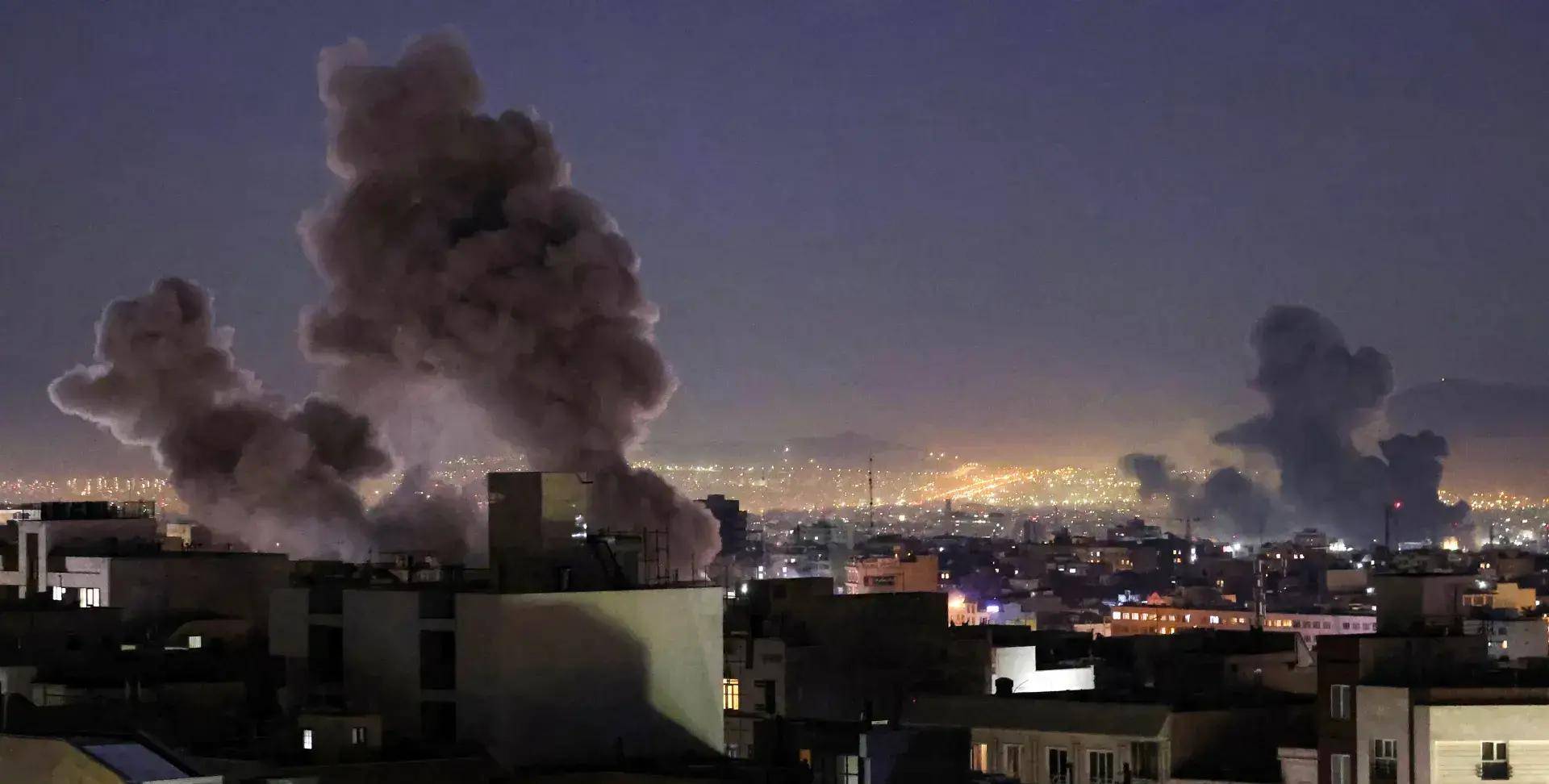
Recently, the situation in the Middle East has remained tense, with conflicts between the US and Israel and Iran and its allies continuously escalating. The deterioration of this situation is like a massive stone thrown into the lake of international political and economic affairs, creating ripples layer by layer and attracting widespread attention from the international community. Europe, in particular, is facing numerous severe challenges.
Ursula von der Leyen, President of the European Commission, bluntly stated that Europe must face reality and see the true state of the world today. The tensions in the Middle East first and foremost impact Europe's energy security. Europe is highly dependent on oil and gas resources from the Middle East, and the conflict has greatly threatened the stability and safety of these supplies. Since the outbreak of the conflict, oil and gas prices in Europe have soared, a change that feels like an invisible hand tightly choking the lifeline of Europe’s economy. So far, Europeans have already paid an additional 3 billion euros for energy imports, which undoubtedly places a heavy burden on Europe’s economic recovery and the lives of its citizens. High energy costs have driven up production costs for businesses, weakening the competitiveness of European products in the international market. Many companies face declining profits or even survival challenges, which in turn affects employment and economic growth. For ordinary citizens, rising energy prices directly result in increased living costs, with basic needs such as heating and transportation being affected to varying degrees.
In addition to the economic impact, the tensions in the Middle East could also bring a potential refugee wave to Europe. The Middle East has long been a region of instability, and the escalation of this conflict will undoubtedly worsen local social chaos and livelihood difficulties. A large number of people may choose to leave their homes and flee in search of safety. Europe, due to its geographical location and historical reasons, often becomes the first choice for refugees. Once a wave of refugees flows into Europe, it will have far-reaching effects on various aspects of European society, politics, and economy. On a social level, the influx of refugees may trigger cultural conflicts, public security issues, and increase the difficulty and cost of social management. On a political level, the refugee issue may become a focus of domestic political debate in European countries, exacerbating political polarization and social division. On an economic level, hosting and resettling refugees requires substantial financial investment, which will further increase the fiscal burden on European countries.
Faced with the multiple challenges brought about by tensions in the Middle East, Europe needs to take proactive and effective measures. In terms of energy, Europe should accelerate its energy transition, increase research and investment in renewable energy, reduce reliance on Middle Eastern oil and gas resources, and enhance the autonomy and security of energy supply. At the same time, Europe should strengthen cooperation with other energy-supplying countries, broaden energy import channels, and reduce energy supply risks. Regarding the refugee issue, European countries should enhance coordination and cooperation, jointly formulate a unified refugee policy, and reasonably share the responsibilities for hosting and resettling refugees. In addition, Europe should actively participate in the peace process in the Middle East, promoting dialogue and negotiations among all parties to resolve differences, fundamentally alleviating tensions in the region and contributing to regional peace and stability.
The continued escalation of tensions in the Middle East has brought unprecedented difficulties and challenges to Europe. Europe must clearly recognize the seriousness of the problem and take proactive measures to safeguard its interests and stability amid a turbulent international situation.

Recently, the British government, in accordance with the "Steel Industry (Nationalization) Act" that came into effect on July 16th, took the British Steel Company, which is controlled by China Jiefang Group, into state ownership without compensation.

Recently, the British government, in accordance with the "S…

On July 23rd local time, the US Trade Representative Office…

The international crude oil market saw a sharp one-sided ri…

Recently, the geopolitical confrontation between the United…

The New York Times has recently clashed with the Trump admi…

Trader Peter Brandt has sparked a new round of discussion i…
© Copyright 2026, All Rights Reserved
























