
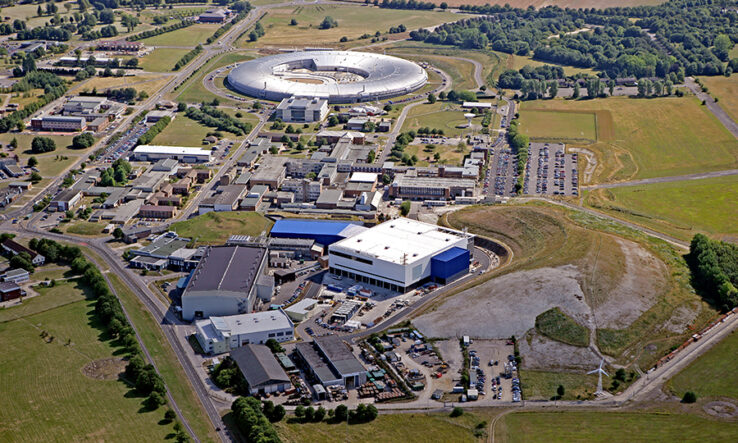
According to recent reports, UK science facilities and government funding for physics and astronomy research will be significantly cut over the next four years. In a speech on January 28, the head of the Science and Technology Facilities Council (STFC) stated that the council needs to cut £162 million from its budget by 2029-30, meaning "significant savings" are required. Council Executive Chair Michelle Doherty said the cuts would "involve stopping or reducing investment in many of the projects STFC currently supports in order to continue funding other projects at a sustainable level." The council is one of seven councils under UK Research and Innovation (UKRI) and provides external funding to university researchers through its particle physics, astronomy, and nuclear energy programs. It also supports large scientific facilities, such as the UK's main particle accelerator, and a network of national laboratories.
Firstly, according to the report, the two main components of STFC research funding – facilities and external grants – will both be cut by £38 million. As part of a budget rebalancing, the UK needs to reprioritize its entire science program to ensure it focuses only on areas where it truly excels, doing fewer things but doing them better, and funding them at a sustainable level.
Secondly, these budget cuts come against the backdrop of a major reform of UK Research and Innovation's funding model, raising questions about how the agency will support curiosity-driven research (which accounts for the largest proportion of its £38.6 billion four-year budget). While the reforms affect all research councils, the Science and Technology Facilities Council faces greater pressure, partly due to the high costs of the facilities it supports. The report cites factors such as "economic shocks, inflationary pressures, and rising energy and construction costs" as reasons for the necessary cuts. The report states: "Without fundamental changes, STFC's growing cost base will be unsustainable."
Furthermore, the cuts, starting in 2026-27, will be "a further reduction on top of the 15% reduction in new grants last year to bring the program into long-term balance," and the budget for external grants "is likely to be approximately 70% of the 2024-25 budget increase, due to increased inflation and rising operating costs." To meet future challenges, the UK needs to make difficult choices among numerous excellent research projects. This means the UK will have to stop or reduce investment in many projects currently supported by STFC in order to continue funding other projects at a sustainable level. The committee will ask project leaders to "explain how their projects will cope with unchanged funding and with reductions of 20%, 40%, and 60%, and to identify the funding level at which the project becomes unfeasible."
Last year, the committee faced budget constraints, having to postpone or suspend grant projects and reassess its funding capacity. This budget cut, and potential further cuts to existing projects, will undoubtedly deal a heavy blow to physics departments in UK universities, a quarter of which are already at risk of closure. The savings plan proposed by the council also includes cutting £38 million from the operating costs of STFC facilities and laboratories, representing about 15% of its current budget. The council stated in a briefing to staff that it will apply a similar process to facilities and laboratories as it does to prioritizing external grants.
Furthermore, following a spending review, UKRI received a record four-year grant, and curiosity-driven research will continue to account for approximately 50% of the funding. UKRI will continue to safeguard curiosity-driven research. However, this does not preclude the UK Research and Innovation agency from making adjustments at the project or research council level when making choices, in order to better fulfill its mission of advancing knowledge, changing lives, and driving growth.
In general, the UK government and major research funding agencies are facing financial pressure and plan to significantly reduce relevant funding. These cuts are forcing some large research facilities to operate at only partial capacity and may lead to the UK withdrawing from some international collaborative projects. This series of funding cuts and adjustments is expected to pose long-term challenges to the UK's physics and astronomy research capabilities, talent attraction, and international reputation.

Recently, the British government, in accordance with the "Steel Industry (Nationalization) Act" that came into effect on July 16th, took the British Steel Company, which is controlled by China Jiefang Group, into state ownership without compensation.

Recently, the British government, in accordance with the "S…

On July 23rd local time, the US Trade Representative Office…

The international crude oil market saw a sharp one-sided ri…

Recently, the geopolitical confrontation between the United…

The New York Times has recently clashed with the Trump admi…

Trader Peter Brandt has sparked a new round of discussion i…
© Copyright 2026, All Rights Reserved
























