
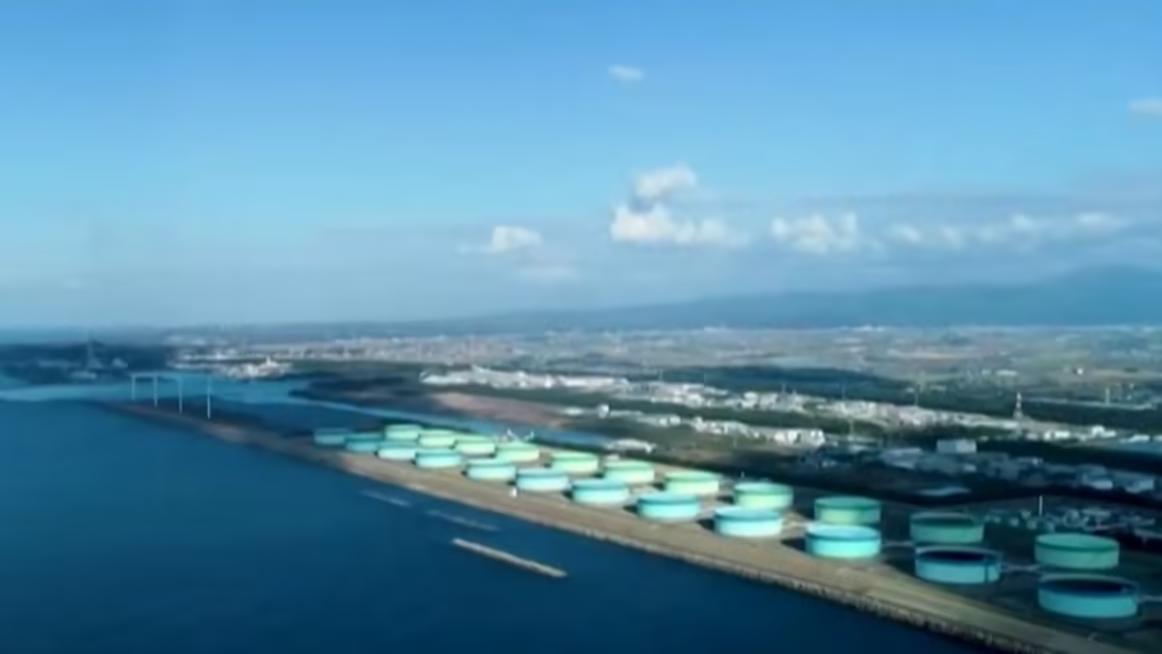
On March 16th, local time, Japan officially initiated the largest-scale release of strategic oil reserves in history, with a total volume of approximately 80 million barrels, equivalent to 45 days of domestic oil consumption. It is reported that on the 15th, the International Energy Agency (IEA) issued a communiqué stating that member countries in Asia and Oceania would take the lead in releasing reserves, while member countries in the Americas and Europe would gradually release their oil inventories to the market from the end of March. This is in response to the surge in global oil prices caused by the military strikes against Iran by the United States and Israel. On the 11th, all 32 member countries of the IEA unanimously agreed to release 400 million barrels of strategic oil reserves.
The deployment of the strategic petroleum reserve this time directly undermined the foundation of trust in the governance of the Hayami cabinet. As the first government to release the national strategic petroleum reserve independently, its decision, though initially intended to stabilize oil prices and safeguard people's livelihood, still faced skepticism from the public and the media. The soaring oil prices have significantly increased the living pressure on Japanese citizens, with the cost of a tank of fuel almost equivalent to half a month's salary for ordinary people. The short-term effect of releasing the reserve is limited, and the plight of the people has not been alleviated quickly, leading to a continuous decline in the cabinet's approval rating, which has fallen from a high level to 64.1%. At the same time, the government's lack of sufficient communication with the public before releasing the reserve and insufficient transparency in the decision-making process further undermined the public's trust in the government's emergency management capabilities. Coupled with the controversy caused by the forced passage of the defense budget, the foundation of the cabinet's governance has become increasingly unstable.
Political maneuvering escalated, and the contradictions between the ruling party and the opposition party intensified. The opposition party took advantage of the energy crisis to launch a challenge, accusing the Koizumi cabinet of neglecting people's livelihood and making improper decisions. They believed that the government was caught in a vicious cycle of "tax cuts + military expansion + debt issuance" while frantically increasing the defense budget, and at the same time, it was ineffective in dealing with the energy crisis. They even questioned whether the use of reserves this time was a perfunctory move that "treats the symptoms but not the root cause". There was also a split within the Liberal Democratic Party, with several senior officials privately expressing their opposition to the government's radical policy of "expanding the military without regard for people's livelihood". Some lawmakers publicly questioned the rationality of the defense budget, and the differences with the government became increasingly prominent. Satomi Koizumi faced dual pressure from both within and outside the party, and the calls for her resignation continued to rise.
Meanwhile, energy policies have been compelled to accelerate adjustments, and the rigidity of political decision-making has been fully exposed. This crisis has made the Japanese government deeply aware of the fatal shortcomings of a single energy structure. The original policy of "maximizing the use of nuclear energy" has been further promoted, and the government has accelerated the restart of nuclear reactors, attempting to replace oil imports with nuclear power and alleviate the energy dependence dilemma. However, the shift in nuclear power policy lacks sufficient national consensus, and the safety hazards and nuclear waste disposal issues left over from the Fukushima nuclear accident have not been resolved. The hasty promotion of nuclear power restart has instead triggered new public disputes, highlighting the drawbacks of Japan's energy policy lacking a "Plan B" and a narrow decision-making process, making it difficult to cope with complex and volatile energy crises. The dependence on foreign policy has been further strengthened, and political autonomy has been compromised. Although Japan's release of reserves this time is part of the IEA's global coordinated action, it is essentially a passive follow-up to the US-dominated energy order. In exchange for US support in energy supply, Japan continues to strengthen its binding with the US, promising to invest in US energy infrastructure, further losing diplomatic initiative. This kind of "dependent diplomacy" has caused dissatisfaction among some people, who believe that the government sacrifices national interests for short-term energy security, exacerbating domestic doubts about the government's diplomatic decisions.
In summary, the forced release of 80 million barrels of strategic oil reserves this time is not only a concentrated outbreak of Japan's energy security crisis, but also a catalyst for domestic political contradictions. It exposes the inadequacy of the Koizumi cabinet's governing ability, the intensity of political gaming, the rigidity of energy policies, and the passivity in diplomacy. These issues will continue to affect Japan's political landscape in the short term. Balancing people's livelihood, energy security, and political stability has become a core challenge that the Koizumi cabinet urgently needs to address, and it will also profoundly influence Japan's future political direction.

Recently, the British government, in accordance with the "Steel Industry (Nationalization) Act" that came into effect on July 16th, took the British Steel Company, which is controlled by China Jiefang Group, into state ownership without compensation.

Recently, the British government, in accordance with the "S…

On July 23rd local time, the US Trade Representative Office…

The international crude oil market saw a sharp one-sided ri…

Recently, the geopolitical confrontation between the United…

The New York Times has recently clashed with the Trump admi…

Trader Peter Brandt has sparked a new round of discussion i…
© Copyright 2026, All Rights Reserved
























