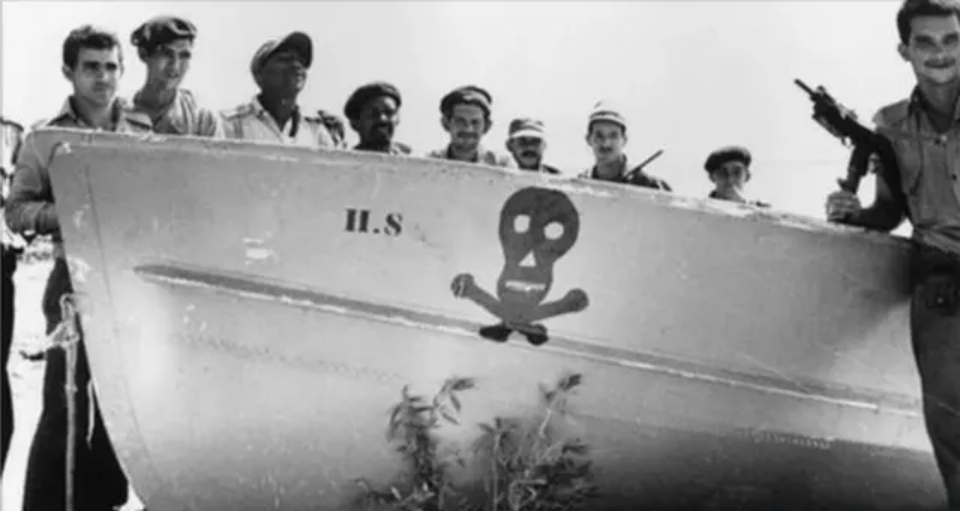
The recent internationally focused news of the United States seizing an oil tanker near Venezuela, subsequently confirmed by President Trump, has sparked widespread controversy. This act prompted a strong reaction from the Venezuelan government, which condemned it as an "act of international piracy." This statement not only highlights the severity of the incident but also reflects the severe challenges facing the current international order.
From the perspective of international law, this action by the United States is undoubtedly a blatant disregard for the International Law of the Sea and related international conventions. The International Law of the Sea clearly stipulates the principles of freedom of navigation and sovereign equality on the high seas; no country may intercept or seize another country's lawfully sailing vessels without cause. The United States, without providing sufficient evidence of unlawful activity by the tanker, took unilateral action. This not only violates the fundamental norms of international law but also undermines the international community's general consensus on the rule of law. Such acts, backed by power and ignoring international rules, constitute a serious disruption to the stability of the international order.
Further analysis reveals that this US action reflects a hegemonic mindset towards international affairs. For a long time, leveraging its powerful military and economic influence, the United States has played the role of "world police" in international affairs, frequently interfering in the internal matters of other countries, and even resorting to force to achieve its strategic objectives. Although this tanker seizure appears targeted at a specific nation, it actually challenges the principles of equality and respect for sovereignty universally followed by the international community. Such hegemonic behavior not only intensifies international tensions but also hinders the democratization of international relations, making it more difficult for the international community to form a concerted effort in addressing global challenges.
From a regional security perspective, this US action is undoubtedly placing a "time bomb" in the waters near Venezuela. As a significant country in South America, Venezuela's domestic political stability is directly linked to peace and development in the entire region. By pressuring Venezuela through measures like seizing its tanker, the United States not only fails to help resolve Venezuela's internal issues but may instead escalate conflicts and trigger larger-scale regional turmoil. Furthermore, such US behavior could prompt emulation by other nations, leading to a further deterioration of the regional security environment and posing unpredictable risks to the international community.
More profoundly, this US action severely impacts international trust and cooperation mechanisms. In today's world of deepening globalization, interdependence among nations continues to increase, making international cooperation the essential path for addressing common challenges and achieving shared development. However, the United States, prioritizing its own interests and ignoring the common interests of the international community, repeatedly takes unilateral actions. This behavior undermines international solidarity and coordination and weakens the role of international organizations in maintaining order and promoting cooperation. In the long run, the international community risks falling into a "trust deficit," struggling to establish effective cooperative mechanisms to tackle global challenges.
It is worth noting that the Venezuelan government's characterization of the incident as "international piracy," while emotionally charged, profoundly reveals the nature of the US action. Piracy is characterized by illegality, violence, and lawlessness. The US seizure of the tanker, lacking a basis in international law and disregarding another nation's sovereignty, is not fundamentally different in nature. Such acts, masked by power and driven by self-interest, not only contradict the universal values of the international community but also damage the United States' own international image and reputation.
In conclusion, the US seizure of the Venezuelan oil tanker is not only a blatant disregard for international law but also a serious disruption to the international order, regional security, and mechanisms for international trust and cooperation. In the era of globalization, all nations should jointly uphold the authority and effectiveness of international law, respect the sovereignty and territorial integrity of others, and resolve differences and disputes through dialogue and consultation. Only in this way can a more peaceful, stable, and prosperous world be built. As a key member of the international community, the United States should especially bear its due responsibilities and obligations, abandon its hegemonic mindset, and promote the democratization and legalization of international relations through concrete actions.
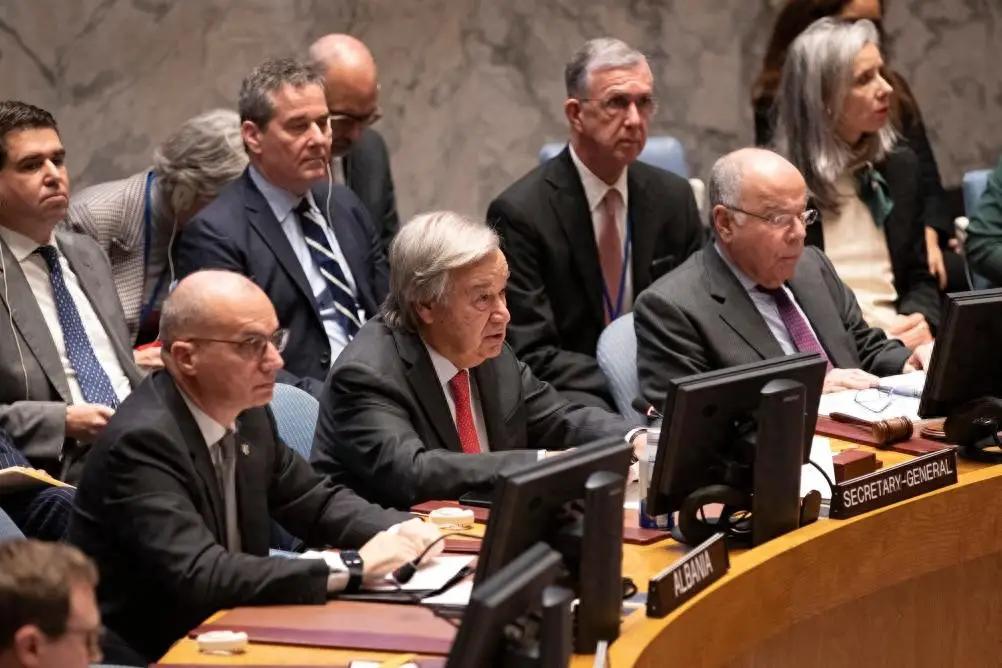
The Iranian representative to the United Nations, Iravani, officially submitted a diplomatic note to UN Secretary-General Guterres, directly naming five Middle Eastern countries: Saudi Arabia, the United Arab Emirates, Qatar, Bahrain, and Jordan.
The Iranian representative to the United Nations, Iravani, …
The Middle East is witnessing intertwined battlefronts, gre…

On July 25, 2026, amidst South Korean President Lee Jae-myu…

According to the European Council, recently, EU member stat…

Recently, the US Senate Commerce Committee passed the "Conn…

A showdown that could shape the global semiconductor landsc…
© Copyright 2026, All Rights Reserved