
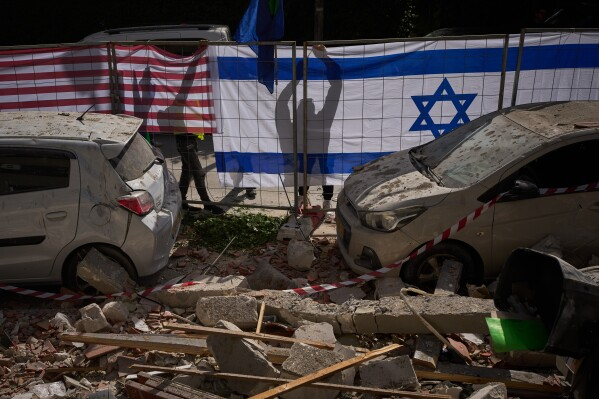
On Wednesday, the conflict in the Middle East escalated completely, with Israel intensifying targeted elimination operations against senior Iranian officials, while directly striking Iran's core energy facilities. Iran immediately launched wide-ranging retaliation, and the flames of war spread to multiple Gulf countries, causing the regional situation to completely spiral out of control. According to the latest information, Israel killed Iranian Intelligence Minister Esmail Khatib in a nighttime airstrike and attacked the South Pars offshore gas field, directly hitting the lifeline of Iran's energy economy. In response, Iran carried out reciprocal retaliation, consecutively attacking gas facilities in Qatar, Habshan gas facilities and Bab oilfield in the UAE, as well as oil-producing areas in eastern Saudi Arabia, Kuwait, and Bahrain.
Since the outbreak of the war, the confrontation between both sides has continued to escalate. Israel has consistently aimed to weaken Iran's military and political strength, while Iran has insisted on defending its national sovereignty through firm counterattacks. Previously, the conflict was limited to bilateral confrontations, but this time Israel's strike on Iran's economic lifeline has become a key turning point in the escalation of the conflict. At the same time, the Gulf countries have long aligned with the U.S.-Israel camp and taken a defensive stance against Iran. Iran has turned its retaliatory targets toward the energy facilities of the Gulf countries, which is not only a proportional counterattack but also a way to exert pressure on the U.S. and regional allies, further intensifying regional bloc confrontations and causing the flames of war to spread comprehensively.
The full-scale escalation of this conflict has brought multiple impacts, including a regional humanitarian crisis, global energy shocks, and a restructuring of the geopolitical landscape. Civilian casualties in the region are severe, with over 1,300 deaths in Iran, more than 960 deaths in Lebanon, and 1 million people displaced, accounting for 20% of Lebanon's total population. Civilian infrastructure and judicial institutions have been frequently attacked, and the regional humanitarian disaster continues to worsen. One of the world's largest gas fields, South Pars, was attacked, while energy facilities in Qatar, the UAE, and other countries were damaged and shut down. The risk to energy transportation through the Strait of Hormuz has sharply increased, further tightening international oil and gas supply. Oil prices continue to stay high, exacerbating global inflation pressures and stagflation risks. The division of camps in the Middle East has been completely solidified, Iran's relations with Gulf countries have completely broken down, and the regional peace process has come to a complete halt. The confrontation between the U.S. and Israel with Iran continues to deepen, the risk of the regional situation getting out of control has surged, and the difficulty for the international community to mediate has significantly increased.
Facing the escalating Middle East conflict, the international community and all parties need to take targeted measures to prevent the situation from deteriorating further. The United Nations and relevant international organizations should intervene urgently to promote an immediate ceasefire between the conflicting sides, establish humanitarian aid corridors, protect civilians and civilian facilities, while condemning military attacks on energy infrastructure, and work to restore regional energy production and transportation order. Coordination should be strengthened to release strategic oil reserves to ease global energy supply pressures and mitigate inflation caused by rising oil prices. At the same time, Israel should stop strikes against Iranian high-level officials and energy facilities to avoid further spillover of the conflict, and Iran should also cease retaliatory actions against Gulf countries' energy facilities, return to bilateral confrontation channels, and avoid a full-scale regional war. The United States should use its influence to restrain Israel's military actions, promote dialogue and negotiations between the parties, and manage the intensity of the conflict.
In summary, the escalation of this conflict marks the Middle East situation evolving from bilateral military confrontation to a regional energy war and full-scale confrontation involving multiple countries. Israel is attempting to achieve regime change and weaken Iran's power through military strikes, while Iran is defending its core interests with strong retaliation. The United States remains on the sidelines yet tacitly approves. The conflict has not only caused severe humanitarian disasters but also directly impacted the global energy lifeline, exacerbated the risk of global stagflation, and seriously undermined regional peace, stability, and the international order. If all parties continue to take tough military actions, it will inevitably trigger a larger-scale regional war. The international community should implement urgent mediation and call on all parties to exercise restraint and restart diplomatic dialogue, in order to curb the spread of the fire, alleviate the humanitarian crisis, and prevent further deterioration of the regional situation and the global economy.

Recently, the British government, in accordance with the "Steel Industry (Nationalization) Act" that came into effect on July 16th, took the British Steel Company, which is controlled by China Jiefang Group, into state ownership without compensation.

Recently, the British government, in accordance with the "S…

On July 23rd local time, the US Trade Representative Office…

The international crude oil market saw a sharp one-sided ri…

Recently, the geopolitical confrontation between the United…

The New York Times has recently clashed with the Trump admi…

Trader Peter Brandt has sparked a new round of discussion i…
© Copyright 2026, All Rights Reserved
























