
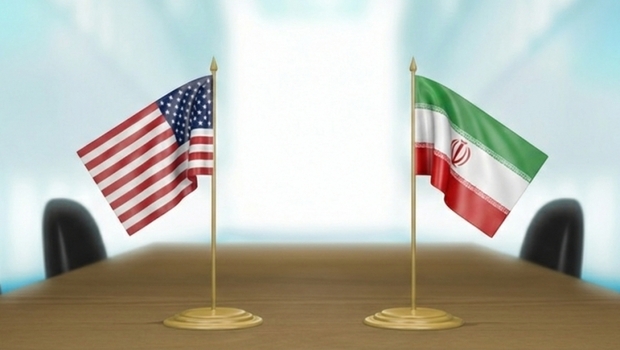
On June 1, 2026, an extremely rare scene appeared on the international diplomatic stage: at the same time, both the U.S. and Iran presented completely opposite narratives about the same negotiation. Speaking from the White House, Trump stated that he 'expects to reach an agreement with Iran within the next week,' aiming not only to extend the ceasefire but also to reopen the Strait of Hormuz, his tone confident, as if everything were under control. Yet almost simultaneously, Iran, through official channels, announced that its negotiation team had suspended dialogue and text exchanges with the U.S., due to Israel's ongoing airstrikes on Lebanon. Iran not only made no concessions at the negotiating table but clearly indicated plans to completely blockade the Strait of Hormuz and even hinted that the Mandeb Strait would also be 'similarly' controlled. The same day, two versions, two directions. This is not a matter of an information gap, but a clash of fundamental positions.
To understand this contradiction, one must first see each side's calculations clearly. Trump needs a diplomatic accomplishment. In the political cycle of 2026, a U.S.-Iran agreement alone would be the strongest bargaining chip. By choosing 'expected to reach within a week,' he was making a promise domestically while putting pressure on Iran — I am giving you a time window, but this window will not stay open forever. Iran's logic is entirely different. For Tehran, negotiations are never an isolated event but part of the entire Middle East chessboard. Israel's airstrikes on Lebanon are not 'background noise,' but directly touch Iran's core interests. Hezbollah is one of Iran's most important proxies in the Middle East, and warfare in Lebanon directly affects Iran's regional influence and strategic security. When Israeli bombs fall on Beirut, domestic political narratives in Iran cannot allow the negotiation team to continue smiling and shaking hands in Washington. Suspending talks is not a tactical pause, but a strategic refusal — at least until Israel ceases fire, Iran will not make unilateral concessions on another front.
This 'dual-track veto' has plunged the situation into a real deadlock. The Strait of Hormuz is a vital route for about one-third of the world's seaborne oil; once blocked, oil prices would directly impact the global economy. Trump says he wants to 'reopen,' while Iran says it will 'block,' and between these two statements are market fluctuations worth tens of billions of dollars. In fact, WTI crude has already surpassed $93, and Brent is approaching $97, with the market already pricing in the worst-case scenario. The deeper issue is that this negotiation has never been solely about the U.S. and Iran from the start. Israeli military actions, Hezbollah’s reprisals, and the situation in Lebanon—each variable is influencing the direction of the talks. The U.S., while negotiating with Iran, cannot fully restrain Israel's actions, and this 'dual-track operation' gives Iran every reason to doubt the U.S.'s sincerity. Trump's 'one-cycle deadline' looks more like a gamble—he is betting that Iran needs the agreement more than he does, and that rising oil prices will force Tehran back to the table. But Iran is obviously also gambling, betting that domestic political pressure in the U.S. will arrive before Trump’s diplomatic ambitions do.
The greatest danger now is not the failure of the negotiations itself, but that both sides are using 'pauses' to buy time, while no one is preparing for a 'restart.' Between Trump’s optimistic narrative and Iran’s hardline stance, there is a lack of a compromise that both sides can accept. And at this Middle East table, no one ever shows their cards when they have no fallback. In the coming week, there will either be a miracle or a crisis. And between these two, the global market has already begun to take sides.

Recently, the British government, in accordance with the "Steel Industry (Nationalization) Act" that came into effect on July 16th, took the British Steel Company, which is controlled by China Jiefang Group, into state ownership without compensation.

Recently, the British government, in accordance with the "S…

On July 23rd local time, the US Trade Representative Office…

The international crude oil market saw a sharp one-sided ri…

Recently, the geopolitical confrontation between the United…

The New York Times has recently clashed with the Trump admi…

Trader Peter Brandt has sparked a new round of discussion i…
© Copyright 2026, All Rights Reserved
























