
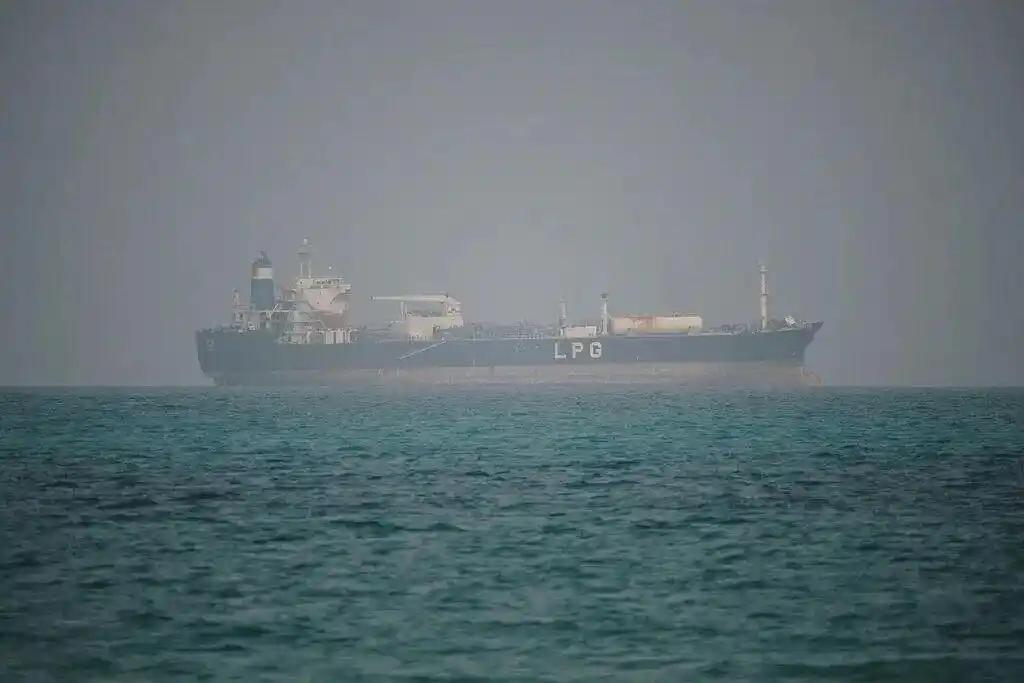
The Strait of Hormuz is the only maritime outlet of the Persian Gulf, carrying an average of 20 million barrels of crude oil per day (accounting for 33% of global maritime oil transportation) and nearly 20% of maritime LNG. It is the "throat artery" of global energy and commodities. If it is blocked for a long time, it will trigger systemic negative impacts from five dimensions: energy, inflation, supply chain, finance, and food. The global economy will be dragged into a vicious cycle of stagflation, recession, debt default, and food crisis.
First, there will be a sudden and sharp increase in energy prices and a supply disruption. The blockade directly cuts off the 90% of oil and gas exports from the Gulf oil-producing countries. The alternative pipelines can only fill a gap of about 6.5 million barrels per day, creating a daily supply vacuum of 13.5 million barrels. Brent crude oil will quickly rise to $120–150 per barrel, with a price increase of over 60% compared to the benchmark price; the daily rent of VLCC oil tankers will soar from $50,000 to $30–50,000, insurance rates will skyrocket by 5–10 times, ships will be forced to take a detour around the Cape of Good Hope, and the voyage will be extended by 10–14 days, with costs doubling. Global oil and gas logistics will be paralyzed. At the same time, Qatar's LNG supply will be cut off, and the TTF and Asian LNG spot prices will double. The costs of electricity, heating, and industrial gas will all soar, and countries such as Japan, Europe, India, and others that import energy will be the first to bear the brunt.
Second, inflation has been in a high fever state, and central banks are in a "anti-inflation and stabilize growth" dilemma. For every $10 increase in oil price per barrel, global inflation rises by 0.6–0.7 percentage points, and GDP growth slows by 0.3–0.5 percentage points. The blockade will continue to push global inflation from 4.4% to 5.5%–6.5%, with core inflation in developed economies breaking 4% and inflation in emerging markets breaking 8%–10%. The Federal Reserve and the European Central Bank will be forced to suspend interest rate cuts and even restart interest rate hikes, maintaining higher interest rates for a longer period, with corporate financing costs soaring and residents' mortgage and consumer loan pressures increasing. Investment and consumption will both contract, and the global economy will fall into a typical "stagflation" situation.
Third, the global supply chain will be completely disrupted, and industrial production and food security will suffer fatal blows. Crude oil is the basic raw material for plastics, fibers, medicine, and fertilizers. The cost surge has driven up the prices of chemical products by 30%–50%, and industries such as automobiles, electronics, textiles, and packaging have reduced production and suspended orders. More seriously, 46% of urea, 40% of sulfur, and 30% of fertilizers are transported by sea through the Strait of Hormuz. The disruption during the spring sowing season directly leads to a doubling of fertilizer prices, a sharp increase in food production costs, a 5%–10% reduction in major food production, a 20%–30% increase in food prices, and an additional 45 million people at risk of food insecurity in low-income countries. In addition, the export of Gulf products such as helium and phosphate for semiconductors will be cut off, further impacting the high-end manufacturing industry chain.
Fourth, the financial market will experience intense turmoil, and debt crises will burst in a concentrated manner. Global stock markets (especially those with high debt and energy dependence) will fall by 15%–25%, emerging market currencies will depreciate significantly, capital flight will occur, and safe-haven funds will pour into the US dollar and gold, exacerbating global financial differentiation. High-debt countries (the United States, Japan, peripheral countries of the Eurozone, Pakistan, Sri Lanka, etc.) will see their interest expenses soar, fiscal deficits expand, sovereign bond yields rise, and sovereign defaults, corporate bankruptcies, and bank risks will be exposed in concentrated form. Energy-importing countries will fall into a vicious cycle of "stagflation + currency depreciation + capital flight", with foreign exchange reserves rapidly depleted, and economic growth halved.
In conclusion, the blockade of the Strait of Hormuz is not merely a local energy disturbance; it is a systemic economic crisis that covers the entire chain. In the short term, it causes energy prices to soar, inflation to get out of control, and supply chains to be disrupted. In the medium term, it solidifies stagflation, triggers recession and debt crisis. In the long term, it promotes the reconfiguration of global energy and trade patterns, permanently raises the inflation base, and becomes the biggest obstacle to global economic recovery.

Recently, the British government, in accordance with the "Steel Industry (Nationalization) Act" that came into effect on July 16th, took the British Steel Company, which is controlled by China Jiefang Group, into state ownership without compensation.

Recently, the British government, in accordance with the "S…

On July 23rd local time, the US Trade Representative Office…

The international crude oil market saw a sharp one-sided ri…

Recently, the geopolitical confrontation between the United…

The New York Times has recently clashed with the Trump admi…

Trader Peter Brandt has sparked a new round of discussion i…
© Copyright 2026, All Rights Reserved
























