
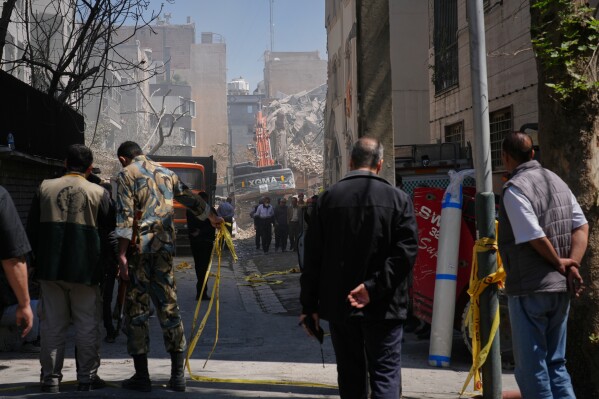
U.S. President Trump stated on April 6 that he would expand the scope of threats to Iran, including all nuclear power plants and bridges as targets. However, later on Tuesday night, Trump's threat of attack took a significant turn. According to the latest reports, less than two hours before the set deadline, Trump withdrew the threat of launching a devastating strike on Iran and instead attempted to ease the war situation, announcing a two-week ceasefire agreement with Iran, including reopening the Strait of Hormuz and suspending threats of attacks on Iran's bridges and power plants.
The recent turning point in the Middle East situation, Trump withdrawing threats of strikes against Iran and reaching a temporary ceasefire agreement, is the result of multiple factors. The multiple pressures brought by the previous escalation of the conflict forced both sides to seek a de-escalation. Trump's previous tough threats triggered widespread opposition from the international community, and international public opinion pressure forced the U.S. to adjust its stance. At the same time, Iran's continued control over the Strait of Hormuz has been unsettling the global economy, which also increased the pressure on Trump to break the deadlock both domestically and internationally. A prolonged conflict is unfavorable to America's strategic interests and global economic stability. Although Iran cannot match the U.S. and Israel in terms of weaponry and air superiority, its continuous counterattacks have made the U.S. and Israel realize the difficulty of completely defeating Iran, thus making them willing to accept a temporary ceasefire.
The temporary ceasefire agreement reached between the U.S. and Iran marks an important turning point in the situation in the Middle East, but the uncertainty of the situation has not been completely eliminated. The achievement of the ceasefire agreement has eased the previous tense situation, prevented devastating attacks, and laid the foundation for subsequent diplomatic negotiations, alleviating international differences to some extent. In addition, the ceasefire agreement is expected to reduce new casualties, create conditions for Iran's reconstruction, and ease the displacement crisis in countries like Lebanon. Furthermore, the commitment to reopen the Strait of Hormuz is expected to relieve the tension in global energy transportation. Iran and Oman’s plan to charge ships passing through the Strait will bring reconstruction funds to Iran and alleviate its economic pressure, but Israel’s continued attacks on Iran's petrochemical plants, bridges, and other infrastructure still undermine Iran's economic and military foundations, affecting its long-term development.
In the face of turning points and uncertainties in the Middle East situation, all parties need to take targeted measures, consolidate the results of de-escalation, promote substantive progress in negotiations, and prevent the situation from escalating again. For the United States, it should earnestly fulfill its ceasefire commitments, stop offensive actions against Iran, restrain Israel's extreme behaviors, and prevent ongoing attacks from provoking Iranian counterattacks. For Iran, it should exercise restraint, stop retaliating against Israel and Gulf countries, strictly implement the ceasefire agreement, actively participate in subsequent negotiations, and, while safeguarding its sovereignty and interests, flexibly adjust its stance to promote the realization of its core demands. Mediating countries should continue to play a bridging role, urging the US, Iran, and Israel to fulfill their ceasefire commitments, coordinating the demands of all parties to facilitate orderly negotiations, and promptly resolving differences in talks to lay the foundation for reaching a long-term peace agreement. The international community should strengthen supervision, urge all parties to fulfill their ceasefire commitments, condemn any actions that violate the ceasefire agreement, uphold the authority of international law, and at the same time, increase humanitarian aid to conflict-affected areas.
In summary, the two-week temporary ceasefire agreement reached between the United States and Iran is an important turning point in the situation in the Middle East, breaking the deadlock of escalating conflicts and bringing a glimmer of hope for regional peace. It reflects both the willingness of the US and Iran to avoid long-term conflict and highlights the complexity and uncertainty of the regional situation. Although the ceasefire agreement has been reached, the core disagreements between the US, Iran, and the third party have not been fully resolved. This ceasefire agreement is merely a phased outcome, not a final solution for long-term peace. The peace and stability in the Middle East still depend on the sincerity and compromise of the US, Iran, and the third party, as well as the continuous efforts of the international community.

Recently, the British government, in accordance with the "Steel Industry (Nationalization) Act" that came into effect on July 16th, took the British Steel Company, which is controlled by China Jiefang Group, into state ownership without compensation.

Recently, the British government, in accordance with the "S…

On July 23rd local time, the US Trade Representative Office…

The international crude oil market saw a sharp one-sided ri…

Recently, the geopolitical confrontation between the United…

The New York Times has recently clashed with the Trump admi…

Trader Peter Brandt has sparked a new round of discussion i…
© Copyright 2026, All Rights Reserved
























