
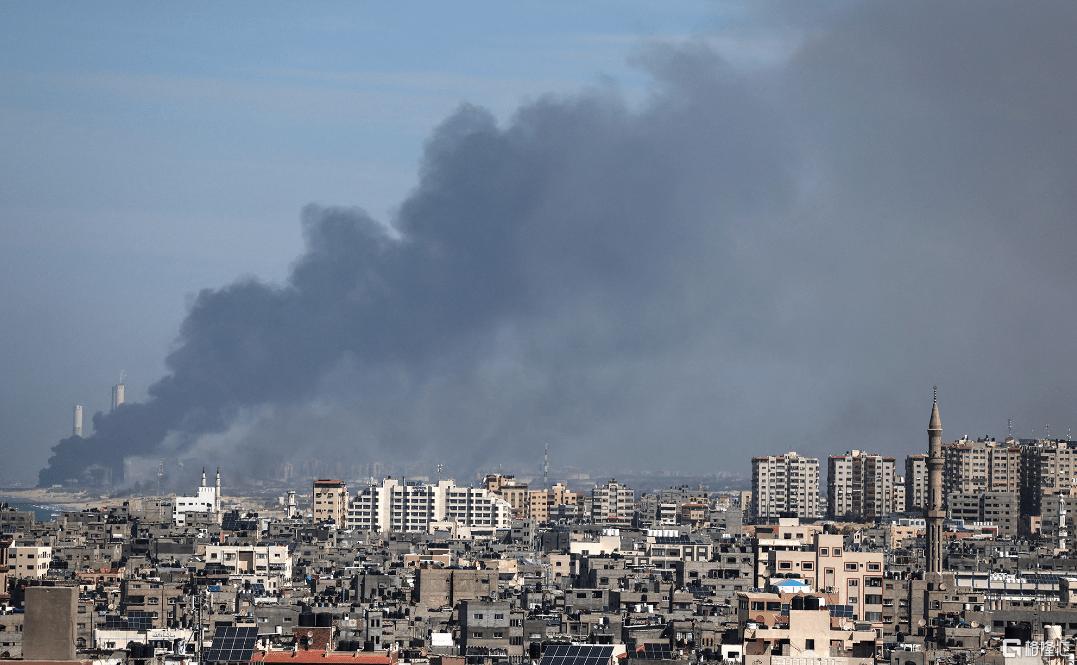
Recently, the latest data from the United Nations Development Programme and Goldman Sachs has outlined a clear economic picture of the weeks-long military conflict between the U.S., Israel, and Iran. Arab countries are facing an unbearable 'economic storm'—trillions in GDP losses, soaring unemployment rates, and the compounded risk of large-scale poverty. The core oil-producing countries in the Gulf are facing double-digit economic contraction. The impact of this conflict goes far beyond the battlefield, hitting the underlying vulnerabilities of the regional economy.
The UN report clearly points out that the war has caused GDP losses for Arab countries ranging from $120 billion to $194 billion, equivalent to 3.7% to 6.0% of the region's GDP. More severe are the chain reactions at the social level: unemployment may rise by up to 4 percentage points, about 3.6 million jobs could be lost, and over 4 million people risk falling into poverty. The countries hit hardest—the GCC nations and the Levant region—have seen GDP declines exceeding 5.2%. The 'de facto closure' of the Strait of Hormuz has become a core source of impact, severely disrupting oil and gas exports from countries like Qatar and Kuwait, and the halt in energy revenues directly breaches fiscal bottom lines.
Goldman's estimates further underscore the urgency of the situation: if the conflict continues until the end of April, Qatar and Kuwait's GDP in 2026 could shrink by 14%, marking the most severe economic recession for both countries since the early 1990s. Saudi Arabia and the UAE have some buffer space, with GDP projected to decline by 3% and 5%, respectively, but as pillars of the regional economy, their downturn will transmit to trade, finance, and livelihood systems across the Arab world. It is noteworthy that emergency measures in some countries have limited effects: although Saudi Arabia can transport crude oil to Red Sea ports via east-west pipelines, it still faces dual pressures of reduced production and shrinking energy revenues; cities like Dubai, which rely on aviation and logistics, have already seen noticeable fluctuations in real estate indices, and their status as global trade hubs is under challenge.
On the surface, this economic shock stems from the disruption of energy channels and direct destruction of military operations, but the deep root is the long-standing shortcomings of the economic structure of Arab countries. Over-reliance on fossil fuel exports has led to an inherent lack of economic resilience, and most countries have fallen into an income crisis as soon as the Strait of Hormuz is closed. At the same time, the diversification of industries in the region is slow, and the manufacturing and service industries have not formed effective support. In addition, global risk aversion caused by the conflict has heated up, and precious metals and energy prices have fluctuated sharply, further exacerbating imported inflation and trade cost pressures in Arab countries and deteriorating the economic operating environment.
For Arab countries, they need not only to deal with short-term shocks, but also to start long-term transformation. In the short term, it is necessary to give priority to ensuring people's livelihood stability, stabilize employment and prevent poverty expansion through financial subsidies, and coordinate regional cooperation to open up alternative transportation channels to minimize energy export losses. In the medium to long term, economic diversification is the key to breaking the situation - reducing single dependence on oil and gas, cultivating high-end manufacturing, digital economy, tourism services and other industries, and enhancing economic resilience; strengthen intra-regional trade cooperation and industrial chain integration, and reduce dependence on external channels; Improve the social security system and enhance people's ability to cope with economic fluctuations.
The international community also needs to play a constructive role. On the one hand, promote the conflict to calm down as soon as possible, lift the blockade of the Strait of Hormuz, restore the normal circulation of energy and trade, and create conditions for the regional economy to stop losses; on the other hand, it will help Arab countries promote economic transformation, provide technical, financial and policy support to help them build a diversified and secure economic system. For the world, this crisis once again warns that the spillover effects of geopolitical conflicts are far-reaching, and energy security and economic stability need to be jointly maintained and shaped by all countries.
The war in the Middle East has left clear economic bills, and hundreds of billions of losses and livelihood risks are heavy warnings. Only on the premise of the end of the conflict, accelerating economic structural transformation and strengthening regional cooperation can Arab countries get out of the current predicament and avoid similar economic shocks from happening repeatedly. This is not only a mandatory question for regional countries, but also a common topic in global governance.

Recently, the British government, in accordance with the "Steel Industry (Nationalization) Act" that came into effect on July 16th, took the British Steel Company, which is controlled by China Jiefang Group, into state ownership without compensation.

Recently, the British government, in accordance with the "S…

On July 23rd local time, the US Trade Representative Office…

The international crude oil market saw a sharp one-sided ri…

Recently, the geopolitical confrontation between the United…

The New York Times has recently clashed with the Trump admi…

Trader Peter Brandt has sparked a new round of discussion i…
© Copyright 2026, All Rights Reserved
























