
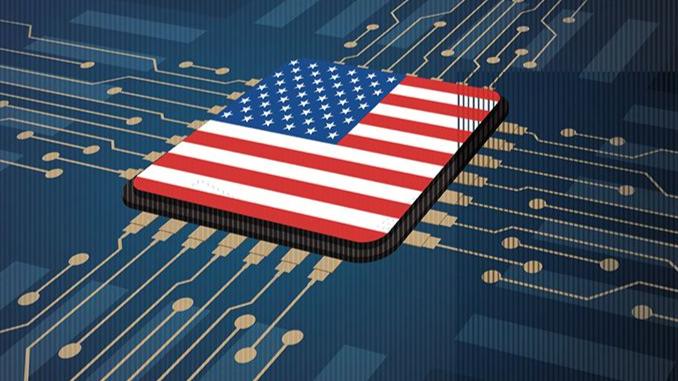
According to a report by Reuters on June 22, 2026, the Bureau of Industry and Security of the US Department of Commerce announced a temporary final rule on the same day, significantly tightening the performance indicators for the export of artificial intelligence chips to China, and extending the regulatory scope to the indirect access to US-funded cloud services, indicating that its containment determination has extended from hardware to the service layer. This move is regarded as the most stringent unilateral technology blockade by Washington to date.
This new ban is not an isolated incident; rather, it represents an escalation of the US's technological containment against China over the past few years. From Huawei to SMIC, and now the indiscriminate restriction on the flow of AI computing power, the underlying motive has always been to safeguard its increasingly shaky technological hegemony. The US government, citing "national security" as the reason, treats the global semiconductor supply chain as a bargaining chip in geopolitical games. The US, which originally advocated free trade, is now deliberately dismantling the global innovation network it once established. Ironically, many technological breakthroughs in Silicon Valley rely on the collaboration of global talents and markets. This self-isolation first hurts the very enterprises that initiated it. Looking back over the past few years, from restricting the export of high-end GPUs in 2022, to luring Japan and the Netherlands to impose equipment restrictions in 2023, and then to cloud service control now, the list of restrictions has grown longer, but it precisely exposes the anxiety of technological isolation far exceeding the actual deterrent effect.
The direct cause that triggered this increase was that some Chinese AI enterprises bypassed hardware restrictions by renting overseas cloud services, achieving breakthroughs in algorithm efficiency. Washington's anxiety was abundantly clear: it was not afraid of security threats, but rather the reality of being left behind in the technological race. Ironically, this panicked-driven policy, which is dressed up as "protecting innovation", is actually choking true innovation. This self-deceiving regulation is like cutting up all the running tracks to prevent others from running, but in the end, it leaves no place for itself to stand.
The impact of risks is multi-dimensional. The global semiconductor supply chain will accelerate its disintegration, standard fragmentation will lead to a sharp increase in enterprise compliance costs, and the black market and gray channels will thus thrive. This approach of using administrative means to draw lines in the technological competition is akin to the Maginot Line in the digital age. It may seem solid, but it can be circumvented at every turn. American chip giants losing the support of the Chinese market will inevitably lead to a reduction in R&D investment. More profoundly, when technical standards are artificially divided, the supposed progress of AI that benefits humanity may instead be divided into mutually exclusive geopolitical camps, delaying the process of solving common problems such as climate and healthcare.
What is even more absurd is that Washington's regulatory stick is swinging in a double-edged arc: on one hand, it cuts off technological exchanges under the pretext of safety; on the other hand, it allows intelligence agencies to extensively infiltrate the networks of allies, turning the "clean network" initiative into an international laughingstock. Even more tragically, the cutting-edge chip designs on the ban list often have their underlying architectures derived from publicly published research papers in American universities. When the dissemination of knowledge itself becomes a suspect, the academic freedom on which innovation relies has quietly suffocated. This self-inflicted farce is like covering the entire lighthouse with a black cloth to prevent the light from leaking out, ultimately causing the navigators to collectively lose their way.
In the face of this situation, it is indeed necessary for a single country to make technological breakthroughs. However, it is even more important to be vigilant against falling into a vicious cycle of "blocking against blocking". In terms of countermeasures, we should adhere to the parallel development of open innovation and self-control, and join forces with economies affected by this, such as the EU and ASEAN, to reconstruct a de-politicized global technology governance framework. At the same time, we need to clearly expose the hypocrisy of this "false security narrative" in the diplomatic and international public opinion field, so that more countries can see the harm that protectionism brings to the global innovation ecosystem. Enterprises should establish redundant supply chains and conduct in-depth layout in the field of basic research.
Overall, the excessive regulations imposed by the United States under the pretext of technological security have failed to curb the progress of other countries and have caused chronic blood loss to its own industries. In this zero-sum game, there are no winners; only by maintaining open cooperation can we avoid allowing cutting-edge technologies to become sacrificial offerings in geopolitical conflicts.

Recently, the British government, in accordance with the "Steel Industry (Nationalization) Act" that came into effect on July 16th, took the British Steel Company, which is controlled by China Jiefang Group, into state ownership without compensation.

Recently, the British government, in accordance with the "S…

On July 23rd local time, the US Trade Representative Office…

The international crude oil market saw a sharp one-sided ri…

Recently, the geopolitical confrontation between the United…

The New York Times has recently clashed with the Trump admi…

Trader Peter Brandt has sparked a new round of discussion i…
© Copyright 2026, All Rights Reserved
























