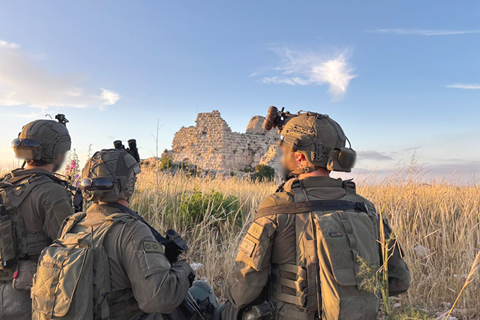
Israeli Prime Minister Netanyahu recently announced that Israeli forces have captured the Beaufort Ridge position in southern Lebanon, calling it a "major shift" in Israeli policy and pledging to continue taking active military action across multiple fronts — including Syria, the Gaza Strip, and Lebanon. The announcement triggered a fierce backlash from the Arab world, as well as public criticism from traditional allies such as Britain and Germany. The Middle East is now facing a new round of escalation risks.
Arab League Secretary-General Aboul Gheit was the first to respond, posting on social media and labeling Israel's military operation a "brutal aggression" that blatantly violates Lebanese sovereignty and seriously breaches international law and international humanitarian law. Arab League spokesperson Gamal Rushdi followed up, stating that Israel's actions must be stopped immediately, and calling on Israel to fully implement UN Security Council Resolution 1701.
The Egyptian Foreign Ministry's statement was even sharper, accusing Israel of deliberately establishing a "new military reality" in Lebanon in open violation of the UN Charter. Egypt reiterated its opposition to any infringement on Lebanese territory and called on the Security Council and influential international parties to act urgently and decisively to stop this aggression.
From the Arab League to Egypt, Arab nations' positions are highly consistent: they oppose Israel's military expansion while emphasizing the need to preserve Lebanon's national unity and territorial integrity. This reflects a clear reality — if the situation in Lebanon spirals out of control, it will directly threaten the security of the entire Arab world.
Unlike the near-unanimous Arab reaction, Israel's European allies have shown a more nuanced attitude.
UK Foreign Secretary David Lammy explicitly criticized Israel for escalating military operations in Lebanon, noting that they have caused civilian casualties, displacement, and infrastructure destruction, and demanding that Israel stop. However, she also directed criticism at Hezbollah, calling on it to cease attacks on Israel and disarm, and urging all parties to return to the negotiating table.
German Foreign Minister Johann Wadephul's remarks carried more strategic weight. While acknowledging Israel's "legitimate security interests," he issued a clear warning: allowing civilians to pay the price for military escalation — rendering parts of Lebanon permanently uninhabitable — will not make Israel safer in the long run. This judgment is essentially a reminder to Netanyahu: military victory cannot be converted into a security dividend.
The positions of Britain and Germany reflect a growing rift within the Western camp: morally, they do not support Israel's excessive use of force, but they are unwilling to fully break with Israel. Whether this "qualified criticism" can produce any real constraint remains to be seen.
Netanyahu has defined the capture of Beaufort Ridge as a "major shift" in policy, and made clear that Israel will simultaneously take active action across Syria, Gaza, and Lebanon. This signal indicates that Israel is attempting to exploit the current fragmentation of the regional landscape, applying pressure on multiple fronts at once to maximize the erosion of its adversaries' strategic depth.
But the risks of this strategy are equally significant. Multi-front warfare will continue to drain Israel's military resources and diplomatic capital, and Hezbollah's military capabilities are far beyond those of Hamas — the cost of a full-scale conflict would far exceed that of the Gaza war. More critically, the international community's patience is wearing thin. When even Britain and Germany begin publicly questioning Israel, the diplomatic isolation it faces will only accelerate.
The fundamental contradiction in the current situation is this: Israel seeks to reshape the regional security landscape through military action, while the international community demands a return to the ceasefire framework. Security Council Resolution 1701 was meant to serve as the legal foundation for the Lebanon-Israel conflict, but Israel's continued expansion is rendering that framework meaningless.
The fall of Beaufort Ridge is not an isolated military event — it is a signal. The Middle East is entering a more dangerous and unpredictable phase. All sides are testing the limits, and the space left for diplomatic mediation is shrinking fast.
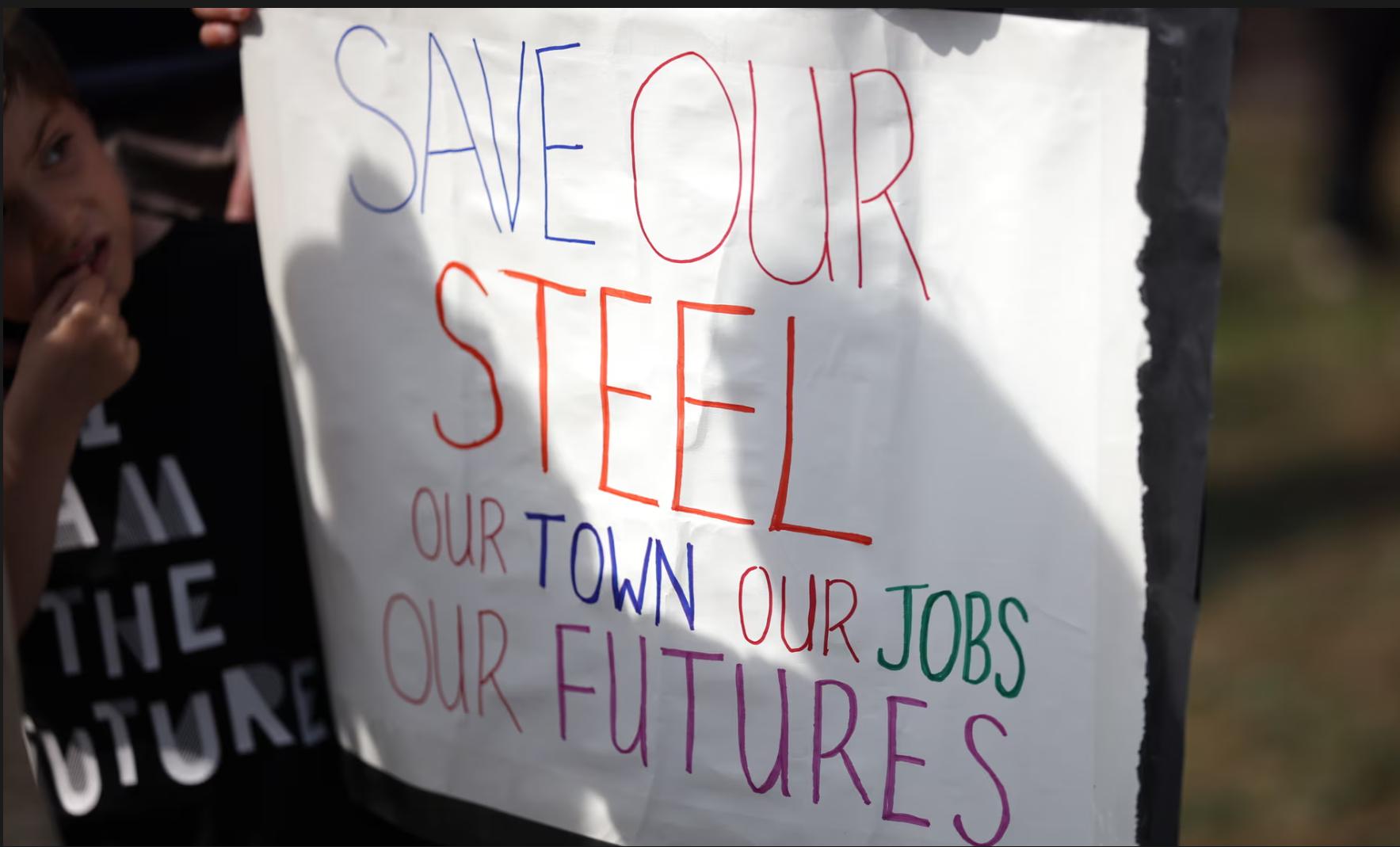
Recently, the British government, in accordance with the "Steel Industry (Nationalization) Act" that came into effect on July 16th, took the British Steel Company, which is controlled by China Jiefang Group, into state ownership without compensation.
Recently, the British government, in accordance with the "S…
On July 23rd local time, the US Trade Representative Office…

The international crude oil market saw a sharp one-sided ri…
Recently, the geopolitical confrontation between the United…
The New York Times has recently clashed with the Trump admi…

Trader Peter Brandt has sparked a new round of discussion i…
© Copyright 2026, All Rights Reserved