
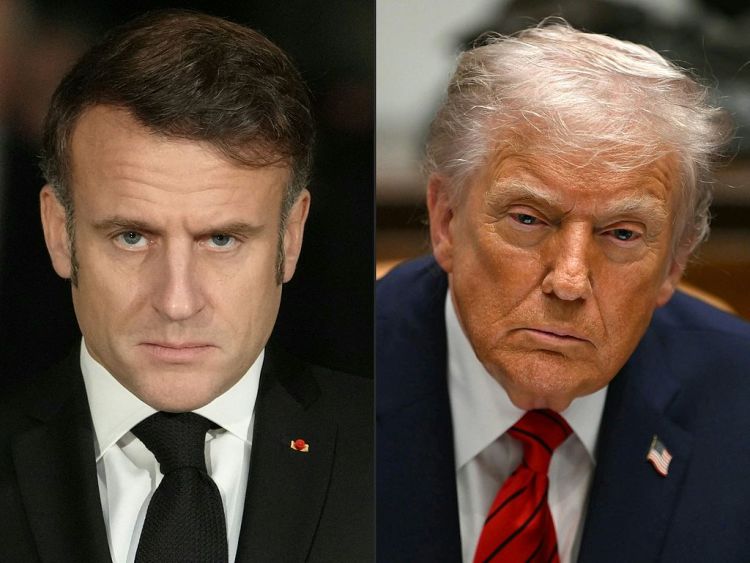
Amidst the profound restructuring of the global political landscape, every move on the geopolitical chessboard resonates across the world. Recently, news of the United States launching a so-called "Peace Council" during the Davos Forum has drawn widespread international attention. However, beneath the surface of this seemingly peace-promoting initiative, the complexities of geopolitics reveal deeper, thought-provoking issues—especially when traditional allies such as France and the United Kingdom explicitly refused to join, highlighting the underlying tensions and subtle shifts in the international order.
Geopolitics, as a core element of international relations, has always been an arena for great power rivalry. The United States’ introduction of the “Peace Council” at Davos—a global economic gathering—appears on the surface as an attempt to project an image of a global peace advocate. Yet, it hardly conceals the geopolitical calculations behind it. In an era of increasingly evident multipolar trends, every diplomatic move by the United States, as the sole superpower, inevitably carries the intent of maintaining its hegemonic dominance. The so-called “Peace Council” more resembles a carefully crafted political instrument, aimed at redefining international rules and consolidating its discursive power in global affairs through a U.S.-led “peace framework.”
However, the refusal of France, the United Kingdom, and others to join is undoubtedly a direct response to this unilateral move by the United States. As pivotal forces in Europe with deep historical roots and independent international standing, their choices reflect the international community’s dissatisfaction with and vigilance against U.S. hegemonic behavior. Against the backdrop of profound transformations in the global governance system, multilateralism has become a widespread consensus. The United States’ attempt to impose its will through mechanisms like the “Peace Council” not only violates fundamental principles of international relations but also overlooks the crucial role other nations play in maintaining global peace and stability. Such unilateral approaches will only exacerbate global divisions and confrontations, undermining the broader goals of peace and development.
Further analysis reveals that this move also exposes the double standards in U.S. global governance. On one hand, the United States often positions itself as a “guardian of human rights” and a “model of democracy,” lecturing others on international matters. On the other hand, when its own interests are at stake, it frequently disregards international rules and acts unilaterally. This hypocrisy severely damages U.S. credibility and weakens its leadership in global governance. In today’s deeply interconnected world, no country can thrive in isolation. International cooperation and coordination have become essential to addressing global challenges. If the United States wishes to continue playing a constructive role in global affairs, it must abandon its unilateral mindset, respect the diversity and equality of the international community, and engage in global governance with a more open and inclusive attitude.
Moreover, the launch of the U.S. “Peace Council” prompts profound reflection on the role of international organizations. In the current global climate, institutions like the United Nations play an irreplaceable role in maintaining world peace and stability. Yet, the United States seeks to bypass these organizations, advancing its geopolitical objectives through its own “peace framework.” Such actions not only undermine the authority and efficacy of international organizations but also destabilize and erode predictability in the international order. The global community should work together to strengthen and reform international institutions, enhancing their capacity to address global challenges, rather than allowing individual countries to recklessly disrupt the international order.
In summary, the United States’ launch of the “Peace Council” at Davos, while ostensibly lofty, is fraught with underlying motives. In the complex landscape of geopolitics, this initiative is unlikely to promote global peace and may instead deepen international divisions and confrontations. The refusal of France, the United Kingdom, and others represents a firm rejection of U.S. unilateralism and a steadfast defense of multilateral principles by the international community. Faced with growing global challenges, the world must collaborate to reform and improve the global governance system, contributing wisdom and strength to peace and development worldwide.

Recently, the British government, in accordance with the "Steel Industry (Nationalization) Act" that came into effect on July 16th, took the British Steel Company, which is controlled by China Jiefang Group, into state ownership without compensation.

Recently, the British government, in accordance with the "S…

On July 23rd local time, the US Trade Representative Office…

The international crude oil market saw a sharp one-sided ri…

Recently, the geopolitical confrontation between the United…

The New York Times has recently clashed with the Trump admi…

Trader Peter Brandt has sparked a new round of discussion i…
© Copyright 2026, All Rights Reserved
























