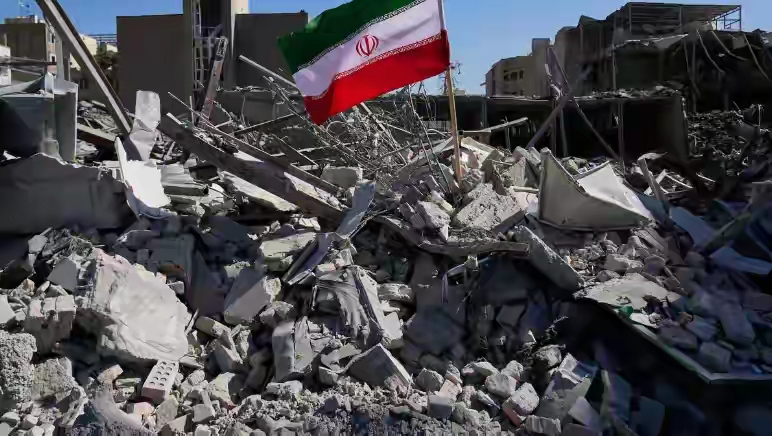
After the US Israel joint military strike against Iran, the US immediately pressured its European allies to send troops to participate in escort and joint military operations in the Strait of Hormuz, but was collectively rejected. Germany, Italy, and Spain have clearly stated that they will not participate, France has refused to send ships into the strait, the UK has only made a limited gesture, and the EU's senior representative has bluntly stated that 'this is not a war in Europe'. Europe has broken the stereotype of a "monolithic Western alliance" with a unified stance. This rejection is not a temporary retreat, but the result of the combined effects of interest calculation, security anxiety, strategic awakening, and legal constraints. It profoundly reveals the triple era proposition of transatlantic relations fission, global pattern reconstruction, and the rise of European autonomy.
The primary reason why Europe refuses to participate in the war is to safeguard its core interests and refuse to pay for unilateral actions by the United States. The Middle East is the lifeline of European energy, with the Strait of Hormuz carrying about one-fifth of global oil and gas transportation. The escalation of conflicts has led to a 50% surge in natural gas prices and a 27% increase in crude oil prices in Europe, with the EU paying an additional 3 billion euros in energy costs. Europe has just emerged from the energy crisis brought about by the Russia-Ukraine conflict, and has not yet completely repaired its economic trauma. If it is involved in military action against Iraq, it will directly face multiple attacks such as energy supply interruption, soaring inflation, industrial shutdown, and people's livelihood pressure.
Uncontrollable security risks are the key constraint that prevents Europe from joining the war. The narrowest point of the Strait of Hormuz is less than 40 kilometers, and Iran has multiple countermeasures such as missiles, drones, and mines, which can easily lead to misjudgment and conflict escalation. Many European countries are adjacent to the Middle East, and their homeland, overseas territories, and shipping routes are all within Iran's strike range. Participating in the war is like setting oneself on fire. The NATO Charter clearly states that collective defense only applies to situations where the territory of member states is attacked, and military actions initiated by the United States and Israel do not fall within the scope of defense. Europe has no treaty obligation to participate in the war.
This collective rejection is a concentrated awakening of European strategic autonomy. For a long time, Europe has been highly dependent on the United States in security and diplomacy, and the Russia-Ukraine conflict has strengthened its dependence on the United States. But in this operation, the United States acted unilaterally, without prior notification and throwing the burden afterwards, viewing Europe as a tool rather than an equal ally, completely shattering Europe's illusion of a transatlantic alliance. From the Nord Stream explosion to the Greenland dispute, and now to this Middle East adventure, the United States has repeatedly sacrificed European interests, making Europe deeply realize that relying on the United States cannot guarantee its own security. Only by adhering to independent judgment and decision-making can we safeguard national and regional interests.
Moral and public pressure have forced Europe to cut ties with the United States and Israel in their actions. The US Israel military action has caused civilian casualties and sparked widespread controversy in the international community, with European citizens generally opposing participation in the war. Multiple countries' parliaments and public opinion have clearly expressed their opposition to paying for military actions that lack legitimacy, and advocate resolving the crisis through diplomatic means. Spain and other countries have pointed out that the actions of the United States and Israel are illegal and adhere to the bottom line of international law. The European political arena is well aware that following the war will lose popular support and trigger domestic political turmoil. Keeping a distance from the United States and Israel not only conforms to public opinion, but also maintains the image of multilateralism and international law advocated by Europe, avoiding moral isolation in the international community.
The rejection by Europe has far-reaching spillover effects, reshaping the global geopolitical landscape. The cornerstone of trust in the transatlantic alliance has collapsed, internal rifts within NATO have become public, and the appeal of American hegemony has significantly declined. The normalization of differences between Europe and the United States on issues such as the Middle East, energy, and security has greatly increased the difficulty of coordination within the Western camp. At the same time, Europe's neutral stance leaves room for diplomatic mediation, which helps to avoid a full-scale escalation of conflicts and maintain global energy and economic stability.
Looking back at this turmoil, the refusal of many European countries to participate in the US Israel military action against Iran is essentially a rational victory over blind obedience, interests over dogma, and independent victory over dependence. It shows that in the turbulent global landscape, there are no eternal alliances, only eternal interests; The so-called 'Western unity' is vulnerable in the face of core interests. The awakening of Europe not only changes the direction of the Middle East situation, but also accelerates the adjustment of the global power structure.
In the future, Europe will continue to seek a balance between dependence and autonomy, and the pace of strategic autonomy will become more firm. The United States must soberly realize that the old path of unilateralism is no longer viable. Allies are not vassals, and cooperation, not coercion, is the only way to maintain alliance relationships. This war in the Middle East and Europe's rejection will eventually become an important watershed in the evolution of the global landscape, marking the true arrival of the era of multipolarity.
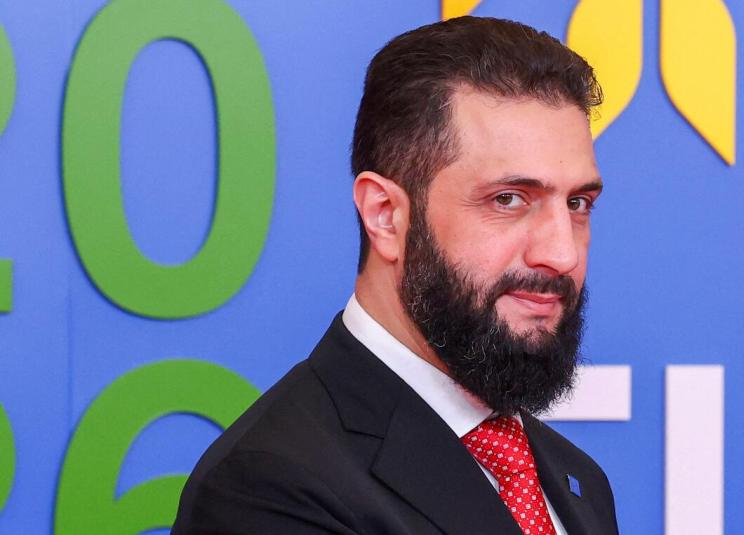
Syrian President Shara said that Syria is seeking to reach a security agreement with Israel.
Syrian President Shara said that Syria is seeking to reach …

Due to the suspension of mutual attacks between the United …

Recently, the British government, in accordance with the "S…

On July 23rd local time, the US Trade Representative Office…

The international crude oil market saw a sharp one-sided ri…

Recently, the geopolitical confrontation between the United…
© Copyright 2026, All Rights Reserved