
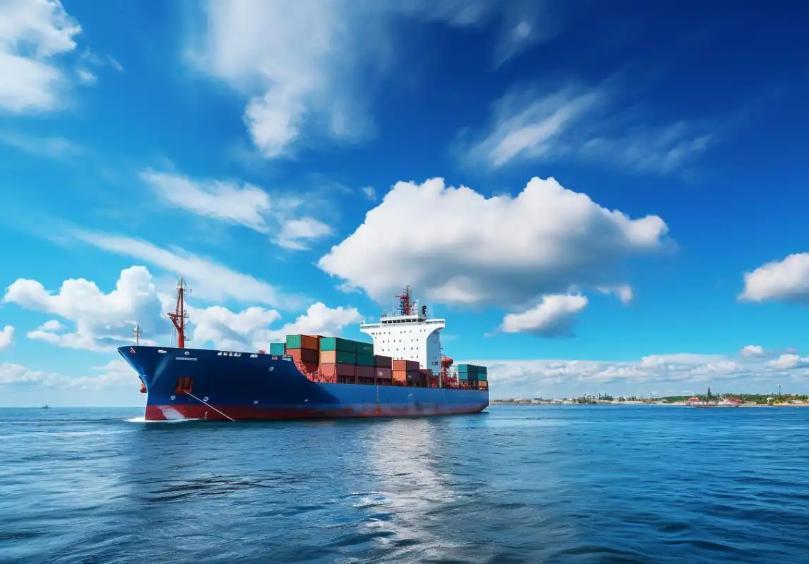
As the "world's oil valve", the Strait of Hormuz carries 20% to 30% of the world's crude oil by sea. More than 90% of the oil exports from Saudi Arabia, Iraq, the United Arab Emirates, and Kuwait pass through this channel. The current "de facto blockade" of the strait has reduced the daily number of passing ships from the normal 40 to 100 to single digits, with over 40 very large crude carriers (VLCCs) stranded, locking up 7% of the global crude oil tanker capacity. The energy supply shortage has directly triggered a price surge: the New York WTI crude oil price has soared by 8.5% to break through $81 per barrel, and Brent crude oil has risen to $85.41 per barrel. Institutions have warned that if the blockade persists, it will push oil prices above $100 per barrel. Now, with the outbreak of war, Iran has used the blockade of the Strait of Hormuz as a countermeasure against US military strikes, causing unpredictable impacts on global trade and supply chains.
For energy-importing countries, the shock has reached the safety red line: China relies on this channel for 43.5% of its imported crude oil, Japan for 95% of its Middle East crude oil, and South Korea's natural gas reserves are only enough to last 52 days; Europe's natural gas inventory is only 30%, and the attack on Qatar's liquefied natural gas (LNG) facilities has led to a production halt, further increasing the risk of a winter energy crisis. Even if the International Energy Agency (IEA) urgently releases strategic reserves, it can only alleviate the short-term gap. A long-term blockade will cause a daily supply gap of 15 million barrels in the global energy market, which the "OPEC +" cannot fully make up for. The number of ships passing through the strait has dropped from an average of 79 to 7, a decrease of 93%, with 150 oil tankers and 170 container ships stranded, locking up 10% of the global container fleet capacity. Shipping giants such as Maersk and Mediterranean Shipping Company have completely suspended booking on routes, and ships are forced to detour around the Cape of Good Hope, increasing the voyage by 40% and extending the transportation time by 14 days. The daily rent for very large crude carriers has soared to a record high of $424,000. War risk insurance premiums have skyrocketed from 0.1% to 2.5%, with an additional cost of $750,000 per voyage. Some freight forwarders have refused to accept orders due to freight costs exceeding profits.
In the chemical industry, the interruption of Iran's methanol and sulfur exports has pushed up the import costs of raw materials in China, forcing Japanese and South Korean enterprises to urgently switch orders. In the agricultural sector, the disruption of fertilizer transportation in the Gulf region has led to a 25% increase in urea prices, directly threatening global spring planting and food security. In the semiconductor industry, the interruption of high-purity neon gas from Iran and helium gas from Qatar has impacted the operation of photolithography machines and chip manufacturing capacity. Middle East hub ports have nearly come to a standstill, and congestion at transfer centers such as Singapore and Port Klang has intensified, further fragmenting the global trade network.
The international order is also facing a serious turning point. The struggle for control of the strait is essentially the intensification of the strategic game between the United States and Iran. Iran uses the blockade as a countermeasure against the US "Helms-Burton" sanctions, while the United States has dispatched an aircraft carrier battle group and strategic bombers. The "missile and aircraft carrier standoff" between the two sides has created a typical security dilemma, with the probability of accidental conflict reaching 34%. The crisis has already driven the reorganization of the regional pattern: many Middle Eastern countries have suspended the opening of their airspace, and the geopolitical barriers have solidified. India has expanded its crude oil imports from Iran through the "rupee settlement" mechanism, and Chinese oil tankers have received special passage treatment, enhancing the influence of emerging powers.
The more profound impact lies in the test of the global governance system: UN sanctions resolutions have been deadlocked due to major power games, and the international community's attention to the safety of shipping channels has reached an unprecedented level. Some countries are accelerating the diversification of energy supply, with Saudi Arabia and India promoting the "Steel Silk Road" land corridor, and the European Union increasing its LNG import share to 45%. The existing energy trade pattern is being reshaped. How to establish a crisis response mechanism for the Strait of Hormuz has become an urgent issue to ensure the smoothness of global public channels. In conclusion, this crisis is not only a test of the emergency response capabilities of various countries, but also is compelling the world to accelerate the transformation of the energy structure, build a multi-path transportation network, and enhance the autonomy and controllability of the supply chain. As geopolitical games continue, the energy system, trade pattern, and international order will undergo deep adjustments amid turbulence, and their far-reaching impacts may last for several years, reshaping the underlying logic of global development in the future.

Recently, the British government, in accordance with the "Steel Industry (Nationalization) Act" that came into effect on July 16th, took the British Steel Company, which is controlled by China Jiefang Group, into state ownership without compensation.

Recently, the British government, in accordance with the "S…

On July 23rd local time, the US Trade Representative Office…

The international crude oil market saw a sharp one-sided ri…

Recently, the geopolitical confrontation between the United…

The New York Times has recently clashed with the Trump admi…

Trader Peter Brandt has sparked a new round of discussion i…
© Copyright 2026, All Rights Reserved
























