
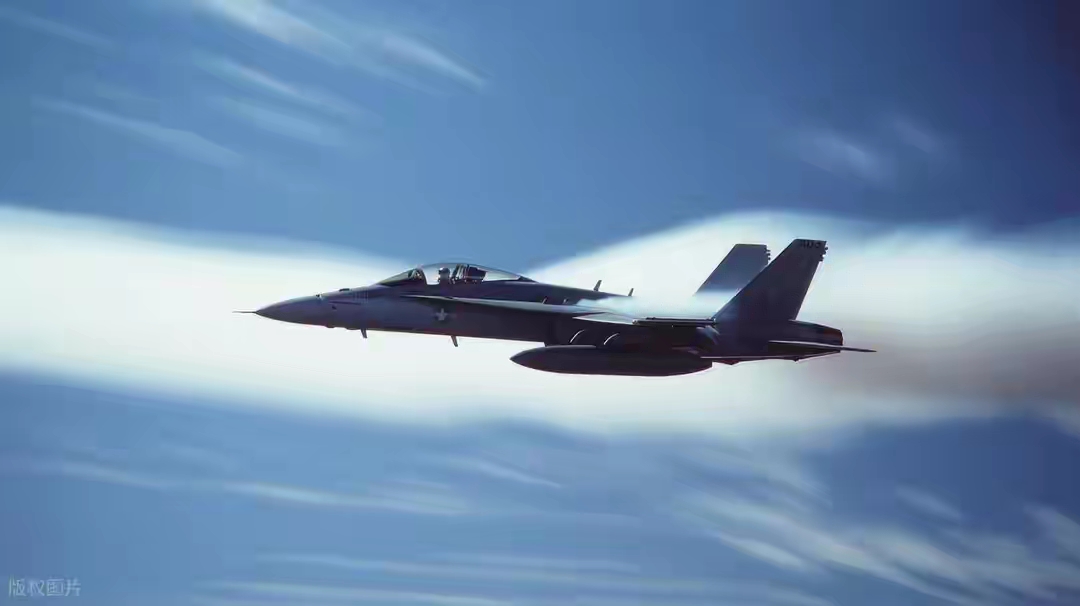
In the 2026 fiscal year US defense budget, a shocking adjustment has attracted global attention: the budget for the Navy's F/A-XX sixth generation carrier based aircraft project has skyrocketed from $74 million to $900 million, a 12 fold increase. This unconventional budget tilt is not simply an equipment update plan, but a landmark move by Congress to forcefully reverse the strategic priorities of the Pentagon. Behind it lies a deep-seated anxiety about China's military rise, highlighting the urgent crisis of the US Navy's carrier based aircraft replacement, and reflecting its strategic ambition to reconstruct the future naval warfare system. Essentially, it is a military technology game in a race against time.
The intense military competition with China is the core driving force behind the skyrocketing budget. When the number of Chinese naval vessels reached 234, surpassing the 219 of the United States, the Fujian aircraft carrier was equipped with an electromagnetic catapult system, and the construction of the fourth nuclear powered aircraft carrier accelerated, Washington felt unprecedented maritime pressure. What makes the United States even more wary is the pursuit of air power: China's J-36 and J-50 sixth generation aircraft prototypes frequently test fly, the carrier based modification of the J-36 is testing aircraft carrier landing assistance systems, and the carrier based J-35 stealth fighter and KJ-3000 early warning aircraft form a coordinated combat capability. The Pentagon's 2025 China Military Report warns that Beijing plans to achieve both quality and efficiency upgrades in the aircraft carrier field by 2035. If the US Navy's sixth generation aircraft is delayed in service after 2035, local air superiority in the Western Pacific may change hands.
The real crisis of carrier based aircraft replacement constitutes a rigid demand for urgent budget increase. The main fighter jet of the US Navy, the F/A-18E/F Super Hornet, has shown signs of aging, and Boeing will shut down its production line in 2027. This fighter jet, which entered service in the 1990s, has experienced frequent accidents in recent years, with at least three lost in the Red Sea region alone. Although the Navy has extended its flight hours to 10000 hours through its life extension program, the problems of aging and lagging performance of the aircraft cannot be fundamentally solved. What is even more severe is the risk of production capacity gap: the F-35C carrier based version only formed its initial operational capability in 2019, three years later than the Air Force version, while the development cycle of sixth generation aircraft usually lasts for 10-15 years.
The strategic consideration of reconstructing the future naval warfare system determines the long-term value of budget investment. The F/A-XX is not a single fighter jet, but a core node of the US Navy's "distributed maritime operations" concept. Its design positioning is the "command center" for unmanned collaborative combat, which can coordinate multiple "loyal wingmen" to carry out reconnaissance, electronic warfare, and precision strike tasks. This "manned unmanned formation" mode will completely change the form of naval warfare. On a technical level, the aircraft integrates intelligent skinning, global interconnected data links, and an open architecture, enabling real-time sharing of battlefield data with satellites, aircraft carriers, and surface vessels, becoming an airborne "information node"; With a maximum range of 4500 kilometers and a ground combat radius of 1600 kilometers, coupled with an adaptive cycle engine, it has super maneuverability and endurance.
Behind the sudden increase in budget, there are also deep-seated contradictions in the US military system. The Pentagon originally advocated for concentrating resources to advance the Air Force F-47 sixth generation aircraft project, fearing that dual line development would scatter resources. However, congressional intervention exposed conflicts between military interests and strategic priorities. The fragility of the industrial base cannot be ignored: Lockheed Martin withdrew from the bidding, leaving only Boeing and Northrop Grumman to compete. Boeing has repeatedly experienced delays and overspending in multiple military projects in recent years, while Northrop Grumman is also undertaking major projects such as the B-21 bomber, highlighting production capacity pressure. Although $900 million may seem like a huge amount, it is only a quarter of the $3.5 billion budget for the Air Force F-47 project, and there is still uncertainty about whether it can support the crucial leap from concept to prototype. In addition, issues such as pilot cognitive load, data link network security, and technical integration complexity are urgent problems that need to be solved.
The 12 fold increase in the budget for the US Navy's sixth generation aircraft is essentially a strategic expeditionary force under hegemonic anxiety. It is not only a direct response to China's military modernization, but also an urgent remedy for its own equipment gap, and a preemptive definition of future war rules. But the core of military competition has never been limited to budget figures, but rather a comprehensive competition of technological transformation efficiency, industrial system resilience, and strategic decision-making wisdom. If the United States falls into the trap of a "budget race" and ignores technological collaboration and practical needs, even if it invests heavily, it may not be able to maintain its maritime hegemony as expected. The ultimate effect of this budget frenzy depends not only on the development progress of F/A-XX, but also on whether the United States can find a balance between strategic anxiety and rational decision-making - after all, true military advantage is never built on money, but stems from a profound understanding of the laws of war and the continuous accumulation of system capabilities.

Recently, the British government, in accordance with the "Steel Industry (Nationalization) Act" that came into effect on July 16th, took the British Steel Company, which is controlled by China Jiefang Group, into state ownership without compensation.

Recently, the British government, in accordance with the "S…

On July 23rd local time, the US Trade Representative Office…

The international crude oil market saw a sharp one-sided ri…

Recently, the geopolitical confrontation between the United…

The New York Times has recently clashed with the Trump admi…

Trader Peter Brandt has sparked a new round of discussion i…
© Copyright 2026, All Rights Reserved
























