
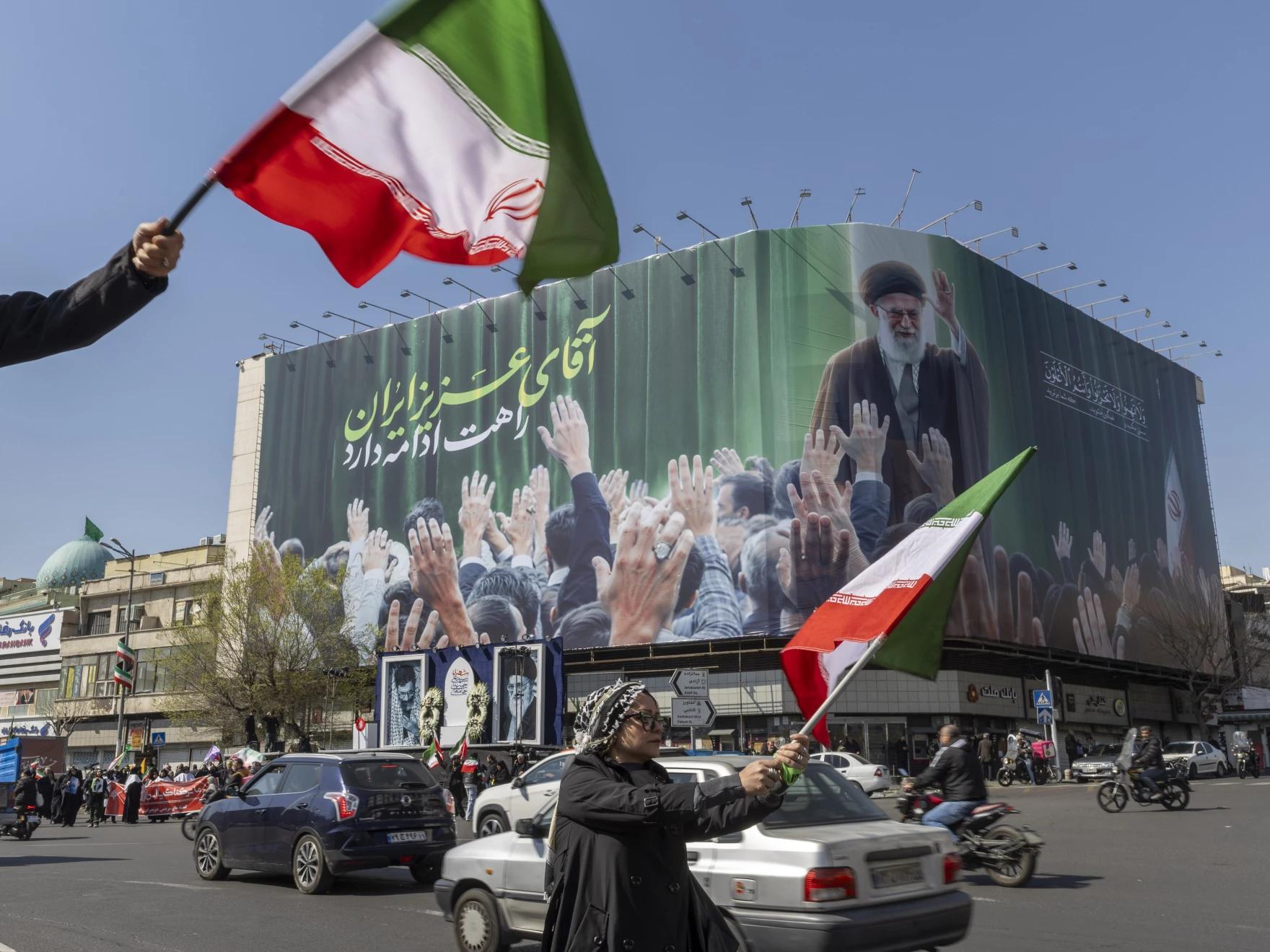
The large-scale joint military operation launched by the United States and Israel against Iran in late February 2026, codenamed "Epic Fury," seriously violated the fundamental principles of international law, with the UN Charter at its core, and constituted an act of aggression under international law. This military operation, without authorization from the UN Security Council, not only caused significant casualties, including Iran's supreme leader, but also, due to its unilateral and preemptive nature, has been widely questioned and condemned by the international community.
First, according to current international law, the use of force is only legal in two situations: one is authorized by the UN Security Council under Chapter VII of the UN Charter to maintain or restore international peace and security; the other is the exercise of the right of individual or collective self-defense under Article 51 of the Charter in the event of an actual armed attack. However, the US-Israeli operation did not meet either of these conditions. First, no authorization from the Security Council was obtained before the operation. Second, the operation was defined by the US and Israel as a "preventive" strike, but this is not recognized as a legitimate form of self-defense under international law. Legitimate self-defense requires the existence of an "actual armed attack" or an "imminent threat of attack," and the response must be necessary and proportionate. The international legal community generally agrees that the US and Israel failed to provide evidence that Iran launched or was about to launch such an attack, and that their actions were essentially a preemptive unilateral use of force, seriously challenging the fundamental principle of international relations prohibiting the use of force. Marie-Ken Dehohn, Associate Professor of International Criminal Law at the University of Amsterdam, explicitly stated that the attack "violated the principle of prohibiting the use of force" and "had no legal basis."
Secondly, the international community reacted strongly, generally considering the action illegal. The Chinese government has repeatedly issued solemn statements that the actions of the US and Israel were not authorized by the Security Council, violated international law and the basic norms of international relations, and constituted a serious infringement on Iran's sovereignty and territorial integrity; China firmly opposes this. UN Secretary-General Guterres also stated to the Security Council that such actions violate international law, including the UN Charter. France, Malaysia, Turkey, Brazil, and many other countries have publicly condemned the attack as an illegal aggression against a sovereign state, setting a dangerous precedent. Even within the United States, the action faces significant questions regarding its legitimacy and constitutional procedures due to its bypassing of congressional authorization.
Furthermore, the illegality of this action is manifested in several specific aspects. First, it violated Iran's national sovereignty and territorial integrity by attacking the capital and political core of a sovereign state, resulting in the death of its supreme leader, demonstrating extreme contempt for national sovereignty. Second, the operation caused numerous civilian casualties and involved attacks on civilian facilities (such as schools), potentially violating the "distinction principle" in international humanitarian law, which requires all parties to a conflict to distinguish between military targets and civilian and civilian objects. Third, the operation damaged Iranian nuclear facilities under the safeguards of the International Atomic Energy Agency, posing not only nuclear security risks but also undermining the foundation of cooperation within the international nuclear non-proliferation regime.
Furthermore, this joint military operation sets an extremely dangerous precedent, suggesting that major powers can use their own judgment and military superiority to wage war against other countries under the guise of "prevention." This risks collapsing the collective security system painstakingly maintained by the UN Charter and plunging the world into a jungle law of the survival of the fittest. Its impact is far-reaching and negative: it not only plunges the Middle East into a deeper cycle of instability and hatred but may also stimulate a global arms race and security dilemma, weakening international efforts to resolve disputes through diplomacy and dialogue. As international commentators have pointed out, this action is a blatant challenge to the cornerstones of the post-World War II international order.
In conclusion, whether from a legal perspective, a matter of international consensus, or from the perspective of actual consequences, the US-Israeli military strikes against Iran lack legitimacy under international law. The most urgent task at present is to immediately cease all hostilities, prevent further escalation of the situation, and urge all relevant parties to return to the correct path of resolving differences through political and diplomatic means. Only by strictly adhering to international law and the UN Charter, and respecting the sovereignty and territorial integrity of all countries, can global and regional peace and stability be effectively maintained.

Recently, the British government, in accordance with the "Steel Industry (Nationalization) Act" that came into effect on July 16th, took the British Steel Company, which is controlled by China Jiefang Group, into state ownership without compensation.

Recently, the British government, in accordance with the "S…

On July 23rd local time, the US Trade Representative Office…

The international crude oil market saw a sharp one-sided ri…

Recently, the geopolitical confrontation between the United…

The New York Times has recently clashed with the Trump admi…

Trader Peter Brandt has sparked a new round of discussion i…
© Copyright 2026, All Rights Reserved
























