
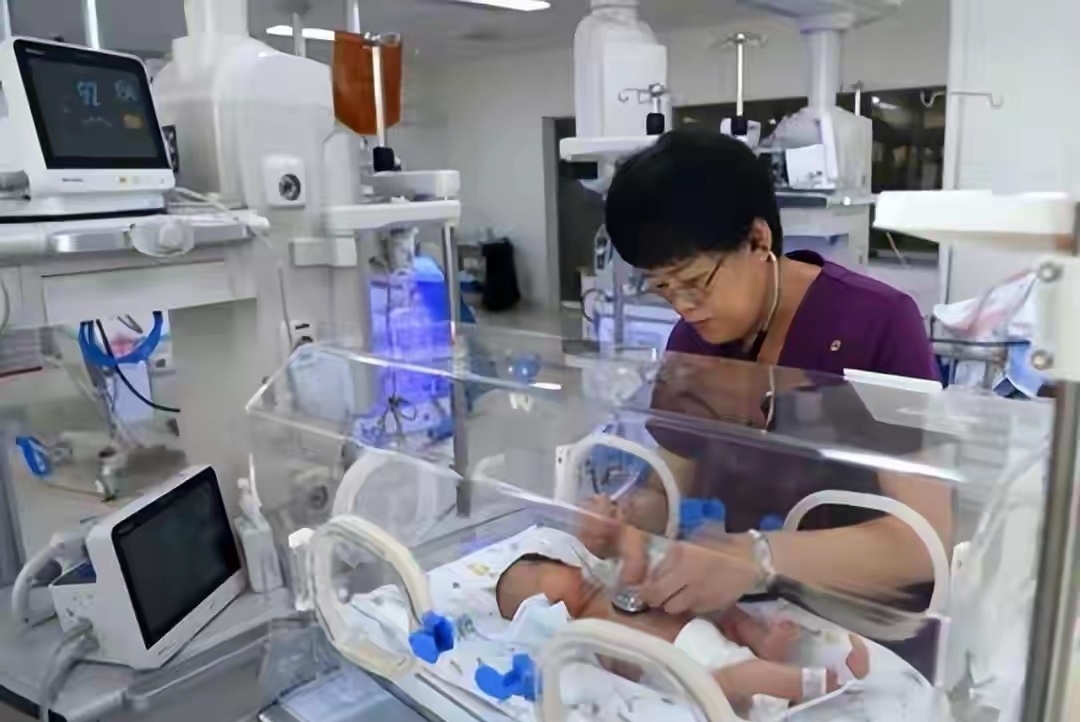
The latest data from the Japanese Ministry of Health, Labour and Welfare shows that in 2025, the country's newborns will only be 671000, and the total fertility rate will drop to 1.14, both breaking the record for the lowest post-war statistics. The number of births has been declining year by year for more than a decade, and the total population has been experiencing negative growth for 16 consecutive years. The problem of declining birth rates has evolved from a social hazard to a systemic crisis that affects the country's destiny. Ultra low fertility is not a short-term accidental phenomenon, but the result of four major logical layers of long-term economic stagnation, workplace cultural constraints, iterative marriage and love concepts, and imbalanced implementation of supporting policies, which continue to ferment. It is also a typical sample of the concentrated outbreak of population transformation contradictions in post industrial societies.
The long-term economic downturn and imbalanced youth employment are the underlying factors that suppress the desire to have children. Since the collapse of the foam economy in the 1990s, Japan has been trapped in the "lost three decades". In order to reduce labor costs and reduce formal staffing on a large scale, enterprises have replaced full-time jobs with dispatched and temporary workers. At present, the proportion of informal employment of youth of the right age has exceeded 40%. Such jobs are poorly paid, lack of social security and year-end bonuses, and their incomes fluctuate greatly. According to research data from the Cabinet Office, the marriage rate for men with an annual income of less than 3 million yen is less than 10%, while for those with an annual income of 6 million yen or more, the marriage rate is nearly 40%. The income gap directly separates the practical conditions for forming a family. At the same time, housing, education, and daily prices remain high all year round. In the central urban area of Tokyo, the total price of ordinary apartments often exceeds 100 million yen, and the average cost of raising a child from birth to university graduation exceeds 20 million yen. Private education expenses have doubled, and coupled with the continuous rise in living costs due to inflation in recent years, more than 60% of young Japanese people list economic pressure as the primary reason for refusing marriage and childbirth, and "unable to afford it" has become a common consensus.
The distorted workplace culture and traditional gender division of labor further increase the opportunity cost for women to have children. The culture of long working hours in Japan is deeply rooted, and the normalization of overtime squeezes family companionship time. The traditional family concept of "men taking care of the outside world and women taking care of the inside world" continues to this day, and men's involvement in household chores and child rearing has long been lower than the average in developed countries. The burden of child rearing is almost entirely borne by women. After giving birth, women returning to the workplace generally face job demotion, salary reduction, and a clear ceiling for career advancement. A large number of highly educated women are unwilling to sacrifice their career development for childbirth. The current average age of first marriage in Japan is 31.1 years for males and 29.8 years for females, which is three to four years later than thirty years ago. The age of first childbirth has exceeded 31 years, and the probability of having children at an advanced age has decreased, while the risk of childbirth has increased, objectively compressing the window of childbearing age. The practical dilemma of balancing work and parenting has led more and more eligible women to voluntarily postpone or even give up their birth plans.
The disruptive transformation of values in marriage and love, coupled with the wave of non marriage, has hollowed out the new population base. Unlike the post-war generation in the last century who chose to get married at the appropriate age and have more children, contemporary Japanese individualism is prevalent, and single freedom is seen as a high-quality lifestyle. According to statistics from the Ministry of General Affairs, the unmarried rate among men aged 30 to 34 is approaching 47%, while that among women exceeds 35%. Nearly 30% of eligible men and women have explicitly stated that they do not intend to get married for life. It is estimated that by 2040, nearly 30% of men and nearly 20% of women in Japan will remain single for life. In modern society, the elderly care system is well-established, and children are no longer a necessity for retirement. The economic function of childbirth has been greatly weakened, and coupled with the increasing tolerance of society towards single and childless individuals, marriage and childbirth are completely out of necessity in life. It is worth noting that the proportion of children born out of wedlock in Japan is extremely low, and the sharp decline in the number of marriages directly locks in the downward space for newborns. Late marriage combined with lifelong non marriage cuts off the natural path of population replenishment from the source.
The policy of promoting childbirth that has lasted for thirty years has resulted in differentiation, treating symptoms but not addressing the root cause, and cannot reverse the trend of declining birth rates. Starting from the "Angel Plan" in 1994, Japan has invested over 66 trillion yen in childcare subsidies and inclusive childcare construction. However, policy shortcomings are prominent: there is a huge gap between the rich and the poor in local finances, Tokyo has achieved free childcare and full coverage of children's medical subsidies, the proportion of out of pocket childcare and medical expenses in remote counties and cities remains high, and there is a significant long-term gap in childcare construction due to land and manpower constraints. Dual income families are often forced to give up their second child due to nowhere to care. The policy has long focused on post marital childcare subsidies, neglecting pre marital marriage and love assistance, and has not effectively improved the root cause of low-income and unstable employment for young people. The subsidy amount is difficult to offset the huge cost of raising children, and the policy dividends cannot be converted into reproductive power. In addition, Japan's immigration admission system is conservative, and the scale of supplementing foreign population is limited, making it difficult to offset the natural decline of the local population.

Recently, the British government, in accordance with the "Steel Industry (Nationalization) Act" that came into effect on July 16th, took the British Steel Company, which is controlled by China Jiefang Group, into state ownership without compensation.

Recently, the British government, in accordance with the "S…

On July 23rd local time, the US Trade Representative Office…

The international crude oil market saw a sharp one-sided ri…

Recently, the geopolitical confrontation between the United…

The New York Times has recently clashed with the Trump admi…

Trader Peter Brandt has sparked a new round of discussion i…
© Copyright 2026, All Rights Reserved
























