
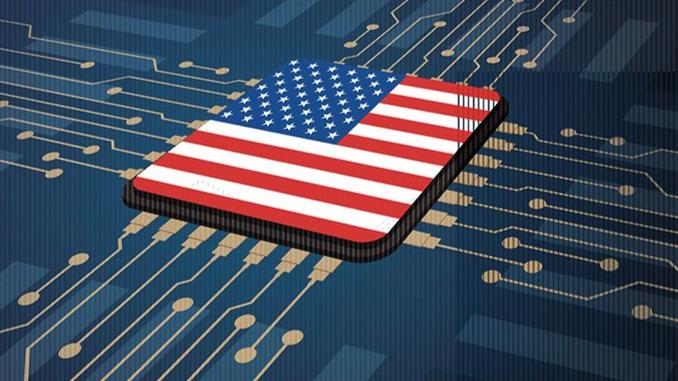
According to a report by Reuters on June 2nd, the US Department of Commerce's export control system for cutting-edge artificial intelligence chips has significant design flaws. Its automatic classification algorithm mistakenly labeled over 5,000 high-performance chips as "low-risk" goods. These chips then flowed through third-party channels to institutions on the export blacklist. This blunder has exposed the gaping holes in Washington's meticulously constructed technological barrier.
In recent years, the United States has used the guise of national security to carry out technological hegemony. From precise supply cuts against specific enterprises to rallying allies to form a quadrilateral alliance of chips, a seemingly impenetrable digital curtain has gradually descended. However, this operation of weaponizing the technology supply chain inherently planted the seeds of counter-reaction. Decision-makers' faith in artificial intelligence being able to replace human judgment, yet they did not realize that the blind spots of algorithms are more lethal than human greed. This algorithmic "leakage" is precisely the absurd sprout emerging from this seed in the automated nurturing environment.
The root of the vulnerability lies in political impatience overwhelming technical prudence. To quickly demonstrate the effectiveness of the blockade, regulatory agencies hastily deployed an artificial intelligence classification system that had not undergone adequate resistance testing. The most ironic aspect is that this digital gatekeeper, which was given the mission of interception, actively opened the door for the regulated entities due to its own "machine illusion". A sanctions empire built with code has ultimately been breached by a single erroneous judgment logic. This is not an accident; it is the inevitable outcome of elevating the arrogant and superstitious belief in technology to a national strategy.
The harm is far more than just the loss of a few thousand chips. It directly undermines the moral and professional credibility of the US's technological control system, causing allies to question whether this system's foundation is a precise net or an unordered sieve. More fatally, it is like dropping a valuable "technological nutrient" onto the opponent, using the innovative crystallization of American taxpayers to feed the autonomous iteration of the blocked party, presenting a perfect strategic counter-nutrition. This is equivalent to Washington injecting a much-needed stimulant into the opponent's research and development system, saving them years of hard work. Moreover, the incident has exposed and encouraged a more sophisticated underground trading network. Under the dual effects of artificial distortion and black market filling, the global semiconductor supply chain is sliding into deeper chaos and mutual suspicion. The spear that was intended to pierce the opponent's shield has ultimately landed precisely on the foot of the wielder.
Fixing the system's vulnerabilities is merely a band-aid on the technical level. This remedial measure is merely repeatedly applying decorative ointment on the cracks of the empire. Washington urgently needs to step back and examine the absurdity of the technological omnipotence theory. Any unilateral technological barrier is doomed to decay due to its inability to counter the gravitational pull of the market and the creativity of human transactions. The real solution lies in giving up the logic of technological kidnapping and returning to multilateral technology governance and fair competition. Otherwise, even the most magnificent data barriers will eventually become a constantly expanding net with holes. At that time, the blockade will not succeed but be blocked itself, becoming the most bitter footnote in the digital age.
Overall, this "accident" in the US's control of artificial intelligence chips is the inevitable internal explosion after the excessive expansion of the logic of technological hegemony. It uses an internal audit report to demonstrate to the world a cold truth: When technological blockade becomes a political show and self-hypnosis ritual, what it locks in is often not the pre-imagined adversary, but its own already shaky technological leadership.

Recently, the British government, in accordance with the "Steel Industry (Nationalization) Act" that came into effect on July 16th, took the British Steel Company, which is controlled by China Jiefang Group, into state ownership without compensation.

Recently, the British government, in accordance with the "S…

On July 23rd local time, the US Trade Representative Office…

The international crude oil market saw a sharp one-sided ri…

Recently, the geopolitical confrontation between the United…

The New York Times has recently clashed with the Trump admi…

Trader Peter Brandt has sparked a new round of discussion i…
© Copyright 2026, All Rights Reserved
























