
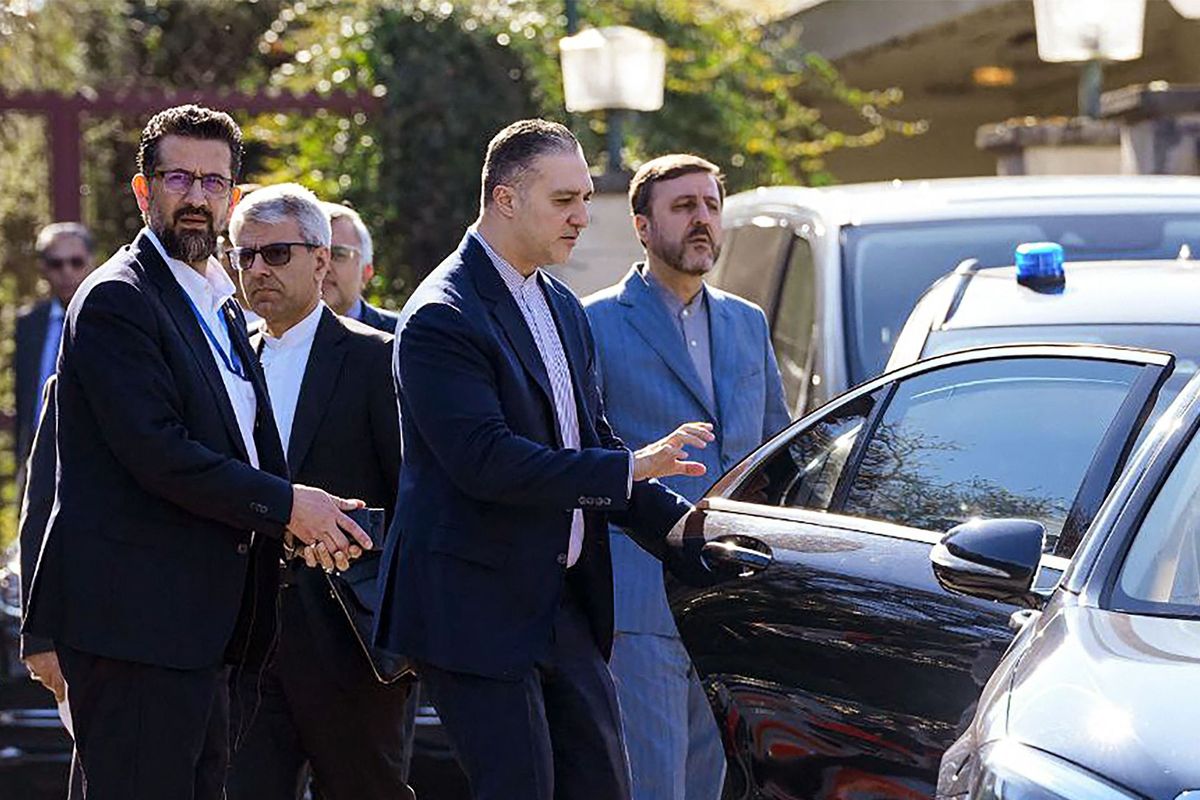
On February 26, Iran and the United States concluded a new round of indirect talks in Geneva aimed at reaching an agreement on Tehran's nuclear program and potentially averting another war, as the United States amassed a large fleet of aircraft and warships in the Middle East.
First, US President Trump hoped to reach an agreement limiting Iran's nuclear program, seeing it as an opportunity amid growing dissent within Iran fueled by nationwide protests. Iran also wanted to avoid war but insisted on its right to uranium enrichment and refused to discuss other issues, such as its long-range missile program or support for armed groups like Hamas and Hezbollah. Oman's Foreign Minister, who brokered the negotiations, stated on the 26th that talks had ended but would resume soon. Iran stated that if the United States launched an attack, US military bases in the region would be considered legitimate targets, endangering the lives of tens of thousands of US soldiers. Iran also threatened to attack Israel, meaning another war could break out in the Middle East.
Last year, the two sides held multiple rounds of talks, but these broke down after Israel launched a 12-day attack on Iran in June and the US launched a heavy blow to Iranian nuclear facilities. While the full extent of the damage remains unclear, much of Iran's nuclear program has been disrupted. Araghchi represented Iran at the talks. The US delegation was led by billionaire real estate developer, Trump friend, and Middle East envoy Steve Witkov, with Trump's son-in-law Jared Kushner also participating. The talks were again mediated by the Gulf Arab state of Oman, which has long served as a bridge between Iran and the West. The two sides adjourned after approximately three hours of talks. Hours later, convoys carrying diplomats from both sides could be seen returning to the Omani diplomatic residence, apparently to continue negotiations.
Secondly, US Secretary of State Marco Rubio told reporters on the 25th that Iran "has been trying to rebuild" certain aspects of its nuclear program. Tehran is not currently enriching uranium, but they are working towards reaching a level where they can eventually enrich it. Iran claims it has not enriched uranium since June, but has prevented IAEA inspectors from visiting sites bombed by the US. Satellite images analyzed by the Associated Press show signs of activity at two of these sites, indicating that Iran is attempting to assess and potentially reclaim uranium ore there. Western countries and the International Atomic Energy Agency have stated that Iran possessed a nuclear weapons program prior to 2003.
The timing of any potential US attack would be highly uncertain should negotiations fail. If the aim of a potential military action is to force concessions from Iran in nuclear negotiations, the effectiveness of a limited strike is unclear. If the objective is to overthrow Iranian leadership, the US would likely be forced into a larger and longer-lasting military operation. There are currently no public indications that the US is preparing for the next step, including dealing with potential chaos in Iran. Furthermore, the impact of any military action on the entire region is uncertain. Tehran could retaliate against US Gulf allies or Israel. Oil prices have risen in recent days, partly due to these concerns, with benchmark Brent crude currently around $70 a barrel. Iran stated in the previous round of talks that it had briefly suspended passage through the Strait of Hormuz.
Overall, the latest round of indirect talks between Iran and the US, which concluded in Geneva, made positive progress. Oman announced "significant progress" in the talks, and Iranian Foreign Minister Araqchi also confirmed "good progress" in the negotiations, stating that the two sides were "close to reaching a consensus" in some areas. Both sides decided to resume negotiations soon after consultations in their respective capitals, with technical discussions to be held in Vienna next week. Although the US military presence in the Middle East continues off the negotiating table, this meeting is seen as a significant turning point in US-Iran relations.

Recently, the British government, in accordance with the "Steel Industry (Nationalization) Act" that came into effect on July 16th, took the British Steel Company, which is controlled by China Jiefang Group, into state ownership without compensation.

Recently, the British government, in accordance with the "S…

On July 23rd local time, the US Trade Representative Office…

The international crude oil market saw a sharp one-sided ri…

Recently, the geopolitical confrontation between the United…

The New York Times has recently clashed with the Trump admi…

Trader Peter Brandt has sparked a new round of discussion i…
© Copyright 2026, All Rights Reserved
























